How to Make Affogato: The Dessert That Doubles as Coffee

Okay but hear me out.
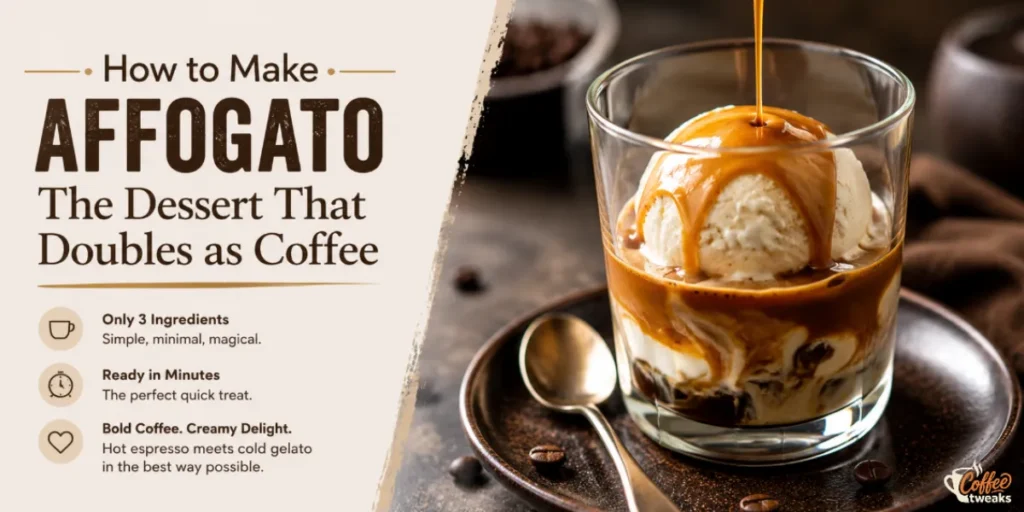
The first time I served affogato after dinner, my friend Lucía actually asked me which pastelería I had ordered from. I was standing in the kitchen holding an empty espresso cup and a scoop. I had done nothing. Genuinely nothing. The whole thing took less time than it did to find my serving glasses.
That is affogato. Two ingredients, two minutes, and somehow it always feels like you planned something special.
If you have been looking for how to make affogato at home, the real version, with the right gelato, the right espresso, the right glass, the full picture, this is the guide. I am going to walk you through everything I know, from the basics to the variations I have tested over far too many dinner parties to count.
What Affogato Actually Is (And Why Italians Never Have to Choose Between Dessert and Coffee)
Affogato, pronounced ah-fo-GAH-to, is one of those Italian inventions that makes you wonder why the rest of the world took so long to catch up. The word means drowned in Italian. The full name is affogato al caffè, which translates to “drowned in coffee.”
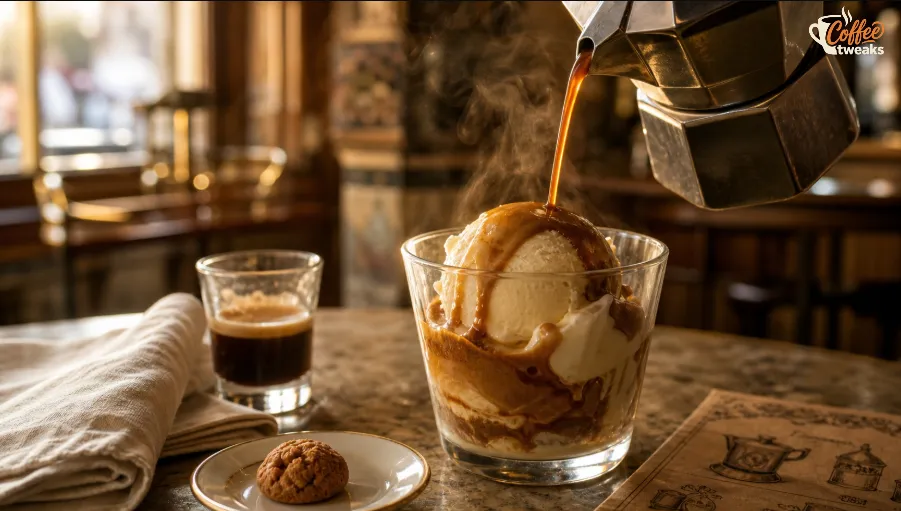
One scoop of cold, silky gelato. One hot shot of freshly pulled espresso. You pour the espresso over the gelato, watch the edges begin to surrender, and that is it. That is the whole dessert.
It sounds almost too simple. It is not.
The origins of affogato are genuinely a little mysterious, which I find charming. It became popular across Italy during the 1950s, a period when both espresso culture and commercially produced gelato were becoming part of everyday Italian life.
The two things met, and something beautiful happened. English language dictionaries did not document the word until the late 1980s, which means this dessert spent several quiet decades being perfect before the rest of us were even invited to the party.
In Italy, you find it listed on restaurant menus under dolc, desserts. But walk into a café in Milan or Naples and you will also find it on the drinks menu, sitting somewhere between an espresso and a digestivo. This is the thing about affogato: it refuses to be categorised, and nobody minds. It is coffee. It is dessert. It is the after-dinner drink. It is all three at once, and Italians are very sensible about this.
Traditionally, affogato was made with fior di latte gelato, a pure Italian gelato made from just milk, cream, and sugar. No eggs, no vanilla, no flavouring. Just clean, delicate dairy sweetness. If you ever come across it, try it. It has a restraint and elegance that makes the espresso the undisputed star.
Today, vanilla gelato has become the global standard for affogato, and it works beautifully, vanilla complements rather than competes with coffee, which is exactly what you want.
The Two Ingredients That Actually Matter
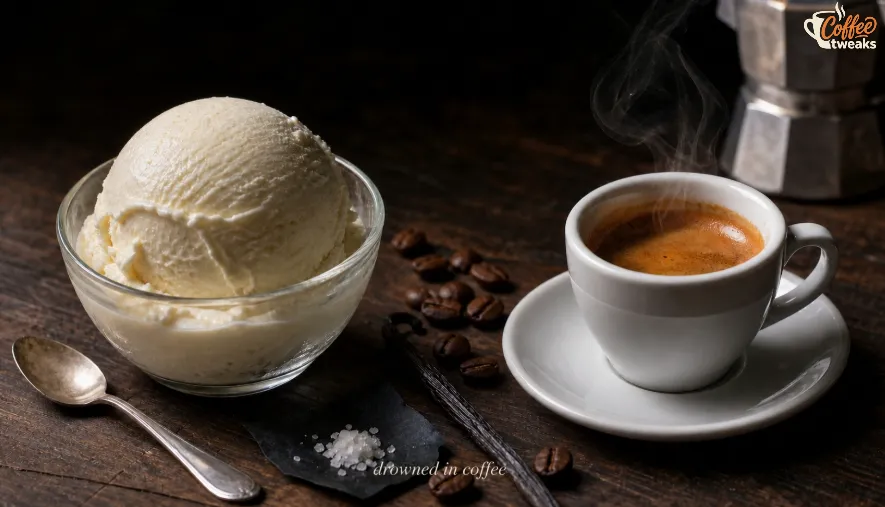
No exaggeration when I say that the quality of your affogato lives or dies entirely on the quality of two things. There is no sauce to hide behind. No complexity to mask a bad ingredient. The recipe is transparent in the most unforgiving and wonderful way.
The gelato
If you can find real Italian-style gelato, use it. Gelato is churned more slowly than American-style ice cream, which means it contains less air. It is denser, silkier, and more intensely flavoured. It melts into the espresso in a particular way, slow, graceful ribbons of cream swirling into dark coffee, that cheap, airy ice cream simply cannot replicate.
That said, a good quality vanilla ice cream is a completely respectable substitute. What matters most is the word good quality. This is not the occasion for the store-brand option. Find the creamiest, most richly flavoured vanilla you can, and your affogato will be better for it.
The espresso
This is the ingredient that carries the most flavour weight, and it is the one people underestimate most. A single shot is typically 1 ounce, about 30ml. A double shot is 2 ounces.
The espresso must be freshly brewed and genuinely hot. Not warm. Hot. The heat is what creates the melt, the drama of the pour, the interplay of temperatures that defines the whole experience. A lukewarm shot poured over ice cream is just cold soup in a glass.
Use a medium-dark to dark roast for the best results. Lighter roasts can bring a brightness and acidity that sometimes clashes against the sweetness and fat of the gelato rather than complementing it. You want a roast with chocolatey, caramel, or nutty notes, something that feels like a natural partner to vanilla cream. And please, use fresh beans. Coffee ground three months ago produces a flat, stale espresso that no amount of technique can rescue.
Optional extras– amaretto, Frangelico, chocolate shavings, crushed biscotti, toasted hazelnuts, a pinch of fleur de sel- are genuinely optional. The base recipe needs nothing else. Add things because they genuinely improve it, not because you feel the dessert needs dressing up.
What Equipment You Actually Need (And What You Can Use Instead)
An espresso machine is ideal but not mandatory. What matters is that your coffee is strong, concentrated, and hot.
A stovetop moka pot is arguably one of the most authentic ways to make affogato at home; the moka pot is as Italian as the dessert itself, and the coffee it produces is rich, bold, and deeply flavoured. It brews at lower pressure than a true espresso machine, so it is not technically espresso, but in the context of affogato, the difference is minimal, and the result is excellent.
A Nespresso or similar pod machine works fine for everyday affogatos. Use an espresso-intensity pod rather than a lungo capsule, and brew it at the smallest volume setting to keep the concentration high. It will not have the complexity of freshly ground beans, but it will taste good, and it will be hot, which is what matters.
An AeroPress with a fine grind and minimal water can produce a concentrated, espresso-style brew that is genuinely impressive. For someone without a dedicated espresso machine who wants something close to the real thing, it is worth experimenting with.
What you want to avoid is using a full cup of regular drip coffee. The problem is dilution; standard brewed coffee simply does not have the intensity to hold its own against the sweetness and creaminess of vanilla gelato. You end up with something that tastes vague and watery rather than bold and complex.
For the glass, a short rocks glass, a narrow tumbler, or a small stemless wine glass all work well. You want something slightly taller than it is wide; this allows the espresso to pool beautifully at the base and gives you enough depth to eat comfortably with a spoon.
Very wide, shallow bowls look elegant in photographs but are impractical in real life. The ice cream spreads out, melts within seconds, and you are left eating with an uncomfortable horizontal spoon.
How to Make Affogato: The Complete Method
The steps are genuinely simple. The details inside each step are where the difference between a good affogato and a great one lives.
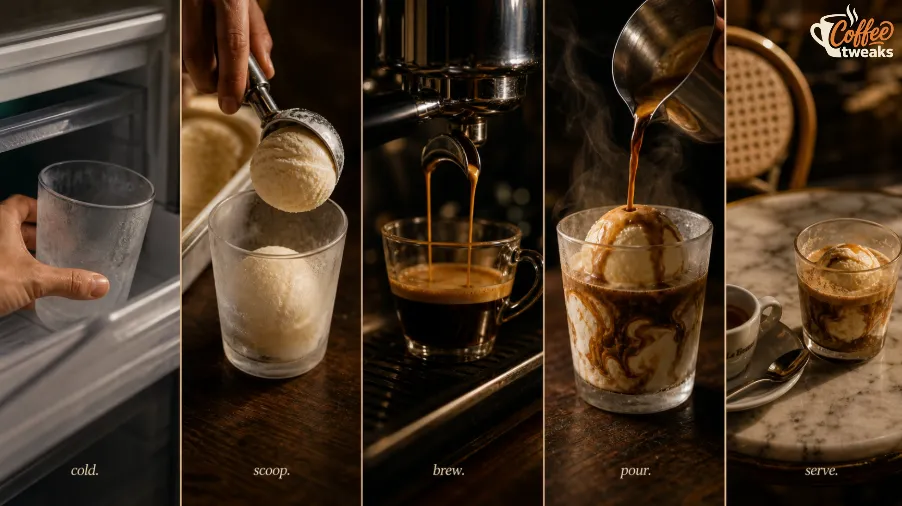
Start by chilling your glass
Put your serving glass in the freezer 5 to 10 minutes before you need it. A cold glass slows the melting just enough to give you time to enjoy the presentation, and it signals to your guest, or to yourself, that care was taken. This is the step that most people skip and then wonder why their ice cream collapses before they even sit down.
Scoop the gelato into the cold glass
One generous scoop, or two smaller ones, depending on how sweet you want the balance to be. The gelato should be firm — not rock-hard, but solidly frozen. If it came out of the freezer already soft and rounded at the edges, it has been sitting at the wrong temperature and will melt the moment the espresso touches it. Visual cue: the scoop should hold its shape cleanly in the glass with no immediate softening.
Brew your espresso last
This is the most important sequencing point in the whole recipe. Espresso begins losing its flavour and its beautiful golden crema within about 30 seconds of extraction. Do not brew the espresso first and then scoop the ice cream.
Scoop the ice cream first, have everything ready, and pull the shot last. The first thing that hot espresso touches after leaving the machine should be the gelato. Always.
Pour slowly and deliberately
Tip the espresso over the gelato in a steady, controlled stream. You will watch the ice cream begin to melt at the edges, releasing pale ribbons of cream into the dark coffee below. This is the moment the whole dessert announces itself.
A small pouring jug or the spout of your espresso cup gives you better control than a direct pour from a wide cup. If you are adding a liqueur, amaretto, Frangelico, Baileys, add it right after the espresso, before the ice cream has fully melted.
Serve it to the table immediately
Not in a moment. Not when you finish washing up the scoop. Immediately. The thermal contrast between hot espresso and cold gelato is the entire point of affogato, and it starts fading from the moment of the pour.
The eating experience has a natural arc: the first few spoonfuls while the gelato is still firm and cold, the middle minutes as it softens into the coffee, and the final act when you are drinking a warm, silky coffee-cream liquid from the bottom of the glass. Each phase is its own pleasure.
The Ice Cream Choices That Will Change How You Think About This Dessert
Vanilla gelato is the classic, and it remains the best starting point for a reason. But once you understand why it works- clean sweetness, dense texture, flavour that complements rather than competes- you can start exploring with genuine confidence.
The guiding principle is this: choose flavours with texture and depth rather than overly sweet, airy options. Denser, creamier gelatos melt more gracefully and balance the espresso more naturally. A very light, fluffy ice cream collapses too quickly and makes the whole thing taste sugary rather than balanced.
A Note on Coffee Roasts and Why Your Bean Choice Matters More Than You Think
I spent years making affogato with whatever espresso beans I happened to have open. Then I started paying attention to how differently the dessert tasted depending on the roast, and I could not un-notice it.
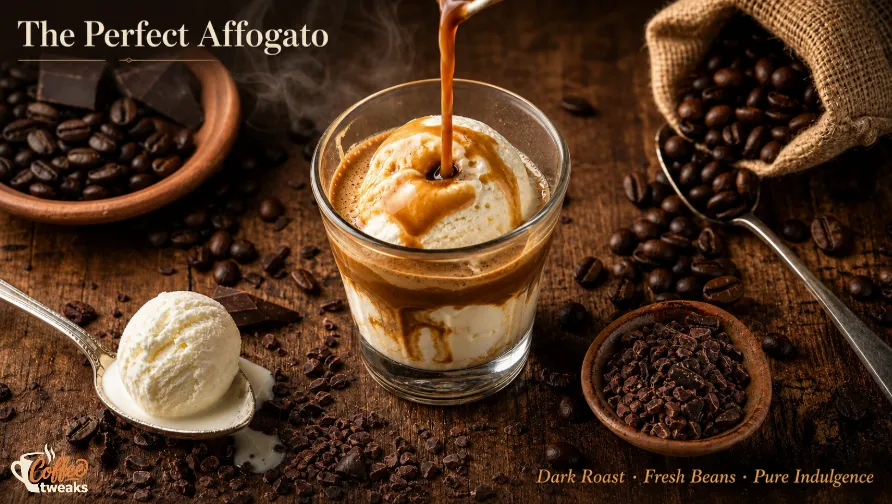
Medium-dark to dark roast beans produce espresso with chocolatey, caramel, and sometimes smoky notes that feel like a natural fit with sweet, creamy gelato. The bitterness is rounded rather than sharp, and it harmonises with the vanilla in a way that makes the whole dessert feel cohesive.
Light roasts are spectacular as black coffee: bright, fruity, complex, but that very brightness can work against you in affogato. High acidity and fruity forward notes sometimes clash against the sweetness and fat of the gelato instead of complementing it. Not always. But often enough that it is worth being aware of.
Fresh beans are not optional if you want a great result. Coffee begins losing its best characteristics within weeks of roasting. Look for a roast date on the bag, not just a best-before date, and use your beans within four to six weeks. The difference in the crema alone will be visible.
For what it is worth, a good Brazilian natural espresso or a chocolatey Colombian blend tends to produce outstanding affogatos. Single-origin beans with caramel, walnut, or dark chocolate tasting notes are worth seeking out specifically for this purpose.
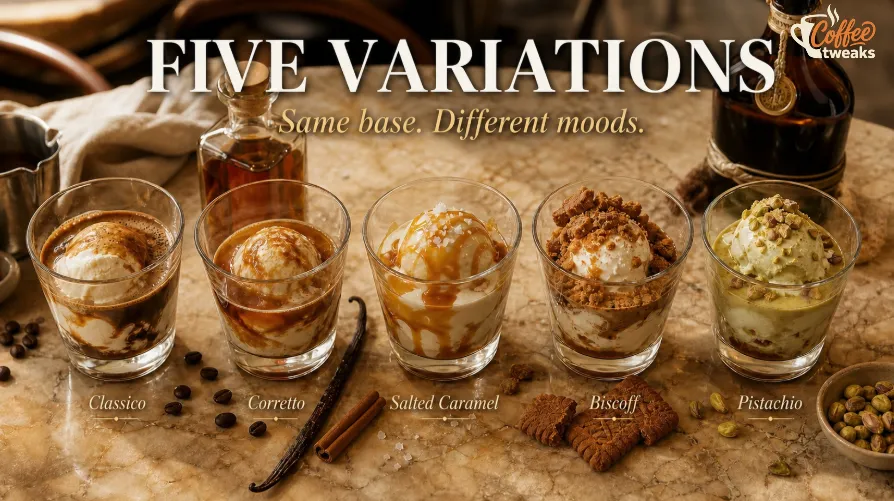
Every Variation Worth Making
Once you have the base recipe confident, the variations become genuinely fun rather than overwhelming.
How to Serve Affogato for a Dinner Party (The Method That Always Gets a Reaction)
The single best serving trick I know, and I learned it from watching how a small restaurant in Barcelona handled it, is to serve the espresso separately.
Bring the glass with the pre-scooped gelato to the table. Place the espresso in a small separate jug, or even the espresso cup itself, alongside it. Let the guest pour the espresso themselves. This does three things. It keeps the gelato firm until the actual moment of eating.
It allows each person to control their own coffee-to-cream ratio. And it creates a small, interactive, theatrical moment at the table that people genuinely remember. It is the simplest possible way to make a dessert feel considered.
For dinner parties where you are serving more than four people, pre-scoop all your gelato glasses and store them in the freezer covered with cling film up to a few hours in advance. When guests are finishing their main course, pull them out, line them up, pull the shots, and pour. You can serve twelve people a restaurant-quality dessert in under four minutes. And honestly? That’s the whole point.
Pair affogato with something crunchy if you want to round out the experience, biscotti is the classic Italian choice and it is classic for a reason. The contrast of a hard, slightly almond-scented biscuit dipped into warm coffee-cream liquid is one of those small food pleasures that disproportionately improves the whole meal.
A piece of dark chocolate on the side works beautifully too, especially with a high cacao percentage that echoes the bitterness of the espresso.
The Mistakes That Quietly Ruin an Affogato
| Mistake | Why It Happens | How to Fix It |
|---|---|---|
| Ice cream collapses immediately | Warm glass, or ice cream already too soft | Chill the glass for 5–10 minutes; scoop from a properly frozen container |
| Watery, weak flavour | Using diluted regular coffee instead of concentrated espresso | Use a moka pot, espresso machine, AeroPress, or Nespresso on espresso setting |
| Bitter, flat espresso | Shot brewed too early and left to sit | Always pull the shot last, right before pouring |
| Ice cream drowns before you can enjoy it | Too much espresso for the amount of gelato | Match roughly 1 oz espresso per generous scoop; add a second scoop if needed |
| Toppings overwhelm the dessert | Over-garnishing a naturally elegant dish | One or two toppings maximum; let the coffee and cream be the stars |
| Espresso poured from too high or too fast | Rushing the pour | Pour low and slow from a small jug for control and visual impact |
| Serving in the wrong glass | Using wide, shallow bowls | Use a narrow, short tumbler with a small base for proper layering |
Can You Make Affogato Ahead of Time?
Yes and no, and being honest about this will save you a ruined dessert.
The gelato absolutely can be prepared in advance. Scoop all your servings into their glasses, add any solid toppings you are using (chocolate shavings, crushed biscotti, chopped nuts), cover each glass tightly with cling film, and return them to the freezer. You can do this several hours before serving. This is the party preparation method I rely on almost every time.
The espresso cannot be made ahead. Full stop. Once brewed, espresso begins oxidising, loses its crema, and flattens out in flavour within a minute or two. There is no shortcut here and there is no workaround. Pull the shots immediately before serving, and pour them straight from the machine to the glass.
One practical note for those serving into delicate or thin glassware: if your espresso is extremely hot and your glass is very cold from the freezer, pour slowly to avoid thermal shock cracking the glass. A brief moment of letting the glass sit at room temperature after removing from the freezer, 60 seconds, not longer, is enough to prevent this.
Approximate Nutrition Per Serving
These figures are estimates based on a single serving with one generous scoop (approximately half a cup) of vanilla ice cream and one shot of espresso, with no toppings or liqueur. Values vary depending on the specific brand and quantity used.
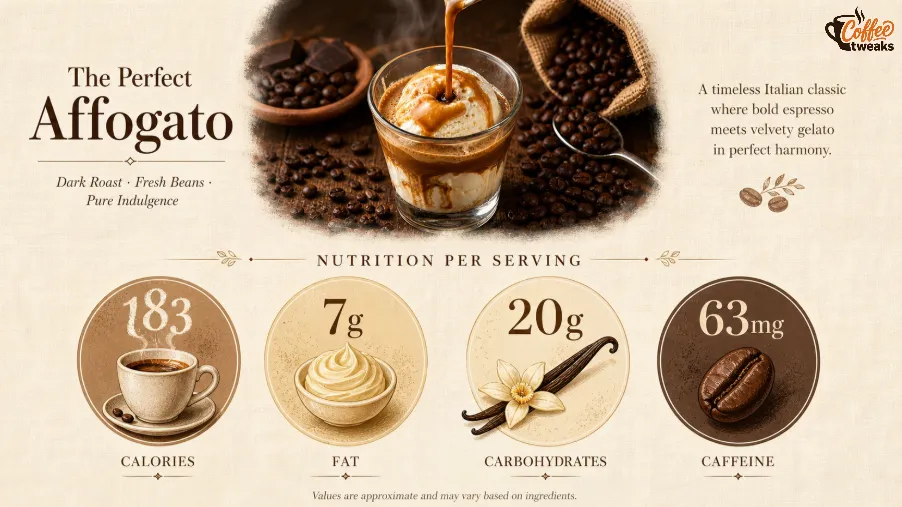
Adding a tablespoon of amaretto adds approximately 50–60 calories. A second scoop of ice cream roughly doubles the dairy contribution. Toppings, sauces, and liqueurs add accordingly
Every Question You Might Have, Answered Honestly
What does the word affogato mean?
It is the Italian word for “drowned.” The full traditional name — affogato al caffè — means “drowned in coffee,” which describes the preparation exactly. Hot espresso poured over cold gelato until it looks beautifully, gloriously submerged.
Can I make affogato without an espresso machine?
Yes. A stovetop moka pot is a wonderful alternative and arguably the most traditionally Italian method available to home cooks. An AeroPress with a fine grind and minimal water produces a very convincing concentrated brew. A Nespresso pod machine on its smallest espresso setting works well for everyday use. The one thing to avoid is regular drip coffee at full dilution — it simply will not be strong enough to hold its own against the sweetness of the gelato.
Is gelato really better than ice cream here?
Gelato has a denser texture and less air churned into it, which means it melts more gracefully and has a more intense flavour per spoonful. That said, a high-quality vanilla ice cream is a completely good substitute. Buy the best you can find and the result will be excellent.
Can children eat affogato?
The classic two-ingredient version is just ice cream and coffee. A single espresso shot contains around 63mg of caffeine, which is worth considering for young children. The decaf version is an easy solution — it tastes almost identical and removes the concern entirely.
Why did my ice cream melt so fast?
Three most likely causes: a warm glass, ice cream that was already too soft before the pour, or too much espresso relative to the gelato. Chill the glass, scoop directly from a well-frozen container, and keep the espresso to around 1 ounce per generous scoop.
Should the espresso be cooled before pouring?
No. The heat is fundamental. The contrast between hot coffee and cold gelato is the entire architecture of the dessert — it creates the melt, the drama, the interplay of temperatures that makes affogato what it is. Cool the espresso and you flatten the whole experience before it begins.
Can I make it vegan?
Easily. A high-quality coconut milk or oat milk vanilla ice cream is all you need. Coconut-based options tend to have the best texture — dense and creamy rather than icy — and the subtle tropical note pairs unexpectedly well with espresso. The espresso itself is already vegan.
What is the best liqueur to add?
Amaretto and Frangelico are the most Italian and the most natural fits. Amaretto brings almond warmth. Frangelico brings hazelnut sweetness. Baileys produces something closer to a dessert cocktail. Kahlúa doubles down on the coffee note. Sambuca is a classic in Italian restaurants. All of them work — choose based on your taste and what you have available.
Can I make affogato for a large group?
Absolutely, and it is one of the best desserts for a crowd precisely because it scales without any additional complexity. Pre-scoop all your gelato glasses, store them in the freezer, then pull shots in rapid succession at serving time. For a very casual or interactive setting, set up a small affogato station with different ice cream flavours and optional toppings and let guests pour their own espresso. It becomes a dessert bar, and people love it.
The Small Details That Separate a Good Affogato From a Great One
After making this dessert more times than I could count — for morning treats, afternoon pick-me-ups, dinner parties large and small, and more than a few evenings alone with a book — here is what I have genuinely learned.
No exaggeration when I say this little dessert has rescued more last-minute dinner parties than I can count. There have been evenings when I opened the fridge at 9pm with nothing planned and walked out with something that made my guests feel genuinely taken care of.
Two ingredients. Two minutes. A little attention to temperature and timing. And somehow, every single time, it feels special.
That is the whole point of affogato, really. It is the Italian lesson that the best things do not require complexity — they require quality, care, and the good sense to know when to stop. ☕🌿✨