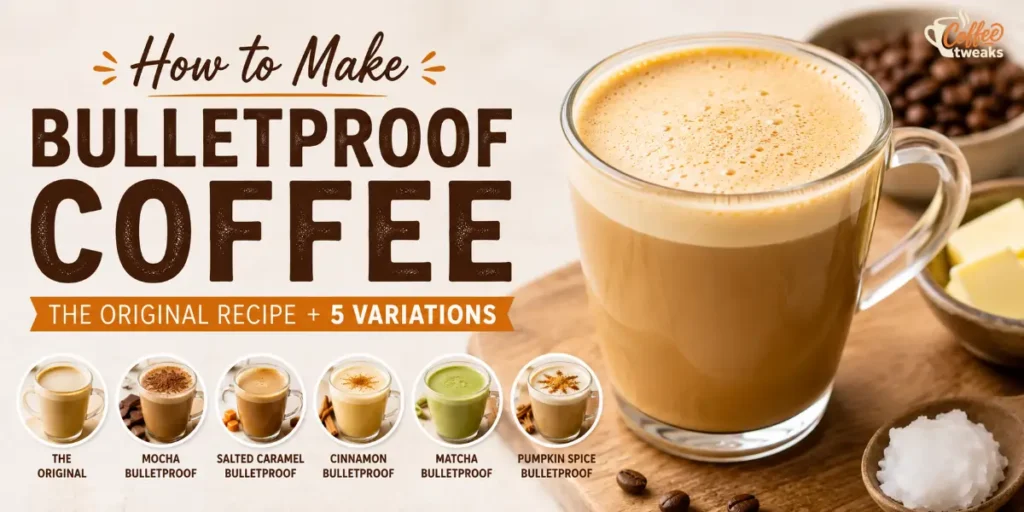
How to Make Bulletproof Coffee: Original Recipe + 5 Variations

Here's the thing nobody tells you about Bulletproof Coffee…
The recipe is three ingredients. Coffee, fat, fat. That's it.
The marketing around it sells you fourteen. Powders, peptides, mushroom blends, six SKUs of oil. Somewhere along the way a simple drink got turned into a shopping cart.
So let me strip it back. I'll give you the original recipe, the actual numbers, and the science of why blending matters… and then five variations that are genuinely worth your time. The rest you can skip.
What Bulletproof Coffee Actually Is
Bulletproof Coffee, also called butter coffee or keto coffee, is brewed coffee blended with MCT oil and grass-fed ghee or butter. No milk. No sugar. Just coffee and fat, emulsified until it looks like a latte.
The idea came from Dave Asprey, who tried yak butter tea at altitude in Tibet, felt unusually sharp afterward, and went home to reverse-engineer it with coffee. ☕
The pitch is sustained energy with no crash, plus a feeling of fullness that holds for hours. That part is real, and I'll explain the mechanism later without overselling it. It's basically a fat-based fuel source with caffeine attached.
The Original Bulletproof Coffee Recipe
This is the version that started everything. No add-ons.
Yield: 1 cup | Prep: 3 min | Blend: 20–30 sec | Total: ~5 min
Calories: ~250 | Fat: ~27 g | Carbs: ~0 g | Protein: ~0 g
Ingredients
Method
- Brew one cup of coffee, hot and fresh. French press or pour-over both work fine.
- Pour the coffee into a blender. Not your mug. The blender is the whole point.
- Add 1 tablespoon C8 MCT oil and 1 tablespoon grass-fed ghee.
- Blend on high for 20 to 30 seconds.
- Watch for the foam. When the top develops a pale, creamy crema like a latte, it's done.
- Pour and drink it hot. The texture falls apart as it cools.
Beginner MCT warning: start with 1 teaspoon, not 1 tablespoon. Build up over a week. I'll explain why in a minute, but trust me on this one. 📊
No blender? A handheld milk frother in a tall mug gets you about 80% of the way there. It's the workaround, not the goal.
The Blender Matters More Than the Coffee Beans
I measured this. Same coffee, same oil, same ghee. The only variable was the tool.
Stirred with a spoon: the fat floats. You get an oil slick on top and watery coffee underneath. It tastes greasy and thin at the same time, which is somehow worse than it sounds.
Blended for 25 seconds: the fat breaks into microscopic droplets and stays suspended through the whole cup. That's emulsification. ⚙️
Here's the chemistry in plain English. Oil and water don't mix because the droplets keep clumping back together. High-speed blending shears those droplets small enough that they stay spread out, the way milk fat is naturally spread through milk. That's literally why blended butter coffee tastes like a latte and stirred butter coffee tastes like sad melted butter.
The beans matter for flavor. The blender matters for whether the drink works at all.
Why Your Butter Coffee Tastes Oily Instead of Creamy
Three usual suspects. All fixable.
Technically speaking, but also taste-wise, the creamy mouthfeel comes from the size of the fat droplets and the foam structure on top. Get those right and “oily” disappears.
The MCT Oil Mistake Everyone Makes Exactly Once
You start with a full tablespoon on day one because the recipe said so.
By 10am you're sprinting to the bathroom. People affectionately call this “disaster pants.” It happens because MCTs digest fast and your gut hasn't adapted to that load yet.
So here's the protocol that actually works:
The numbers matter here. The difference between a great first week and swearing off butter coffee forever is about two teaspoons of oil.
Why C8 MCT Oil Became the Obsession
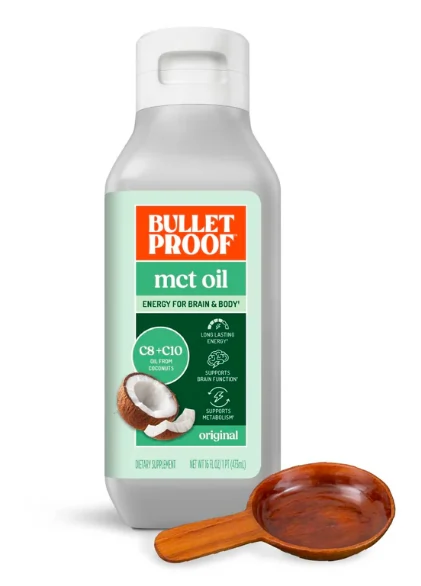
MCT oil comes from coconut oil, but not all MCTs are equal. They're sorted by chain length: C6, C8, C10, C12.
C8 (caprylic acid) converts to ketones the fastest and is the gentlest on your stomach. That's why the premium oils like Brain Octane are pure C8. Plain coconut oil is mostly C12 (lauric acid), which behaves more like a regular fat and barely produces ketones.
So if your goal is quick clean energy, C8 is worth the premium. If you just want fat in your coffee for fullness, coconut oil is fine and far cheaper. Both are valid. They're just not the same drink.
Butter vs Ghee: The Quick Answer
| Feature | Grass-fed butter | Grass-fed ghee |
|---|---|---|
| What it is | Cream, churned | Butter with milk solids removed |
| Milk solids / lactose | Yes, trace | None |
| Flavor | Lighter, fresher dairy note | Nuttier, toastier, richer |
| Best for | Lactose-tolerant, classic taste | Lactose-sensitive, deeper flavor |
Grass-fed matters because it carries more fat-soluble vitamins (A, K2), CLA, and omega-3s than grain-fed. Whether you taste the difference is debatable. The label difference is real.
5 Bulletproof Coffee Variations Genuinely Worth Trying
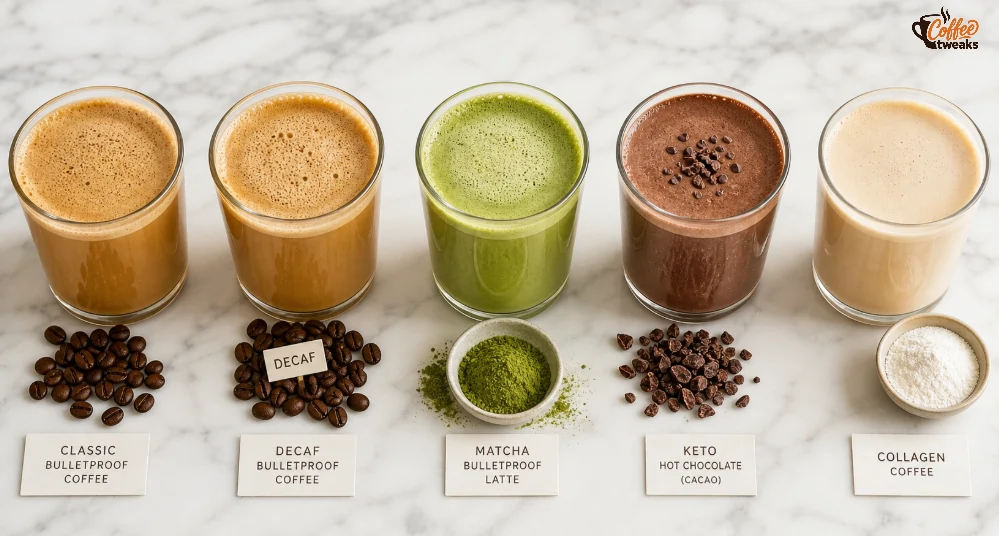
I skipped the filler recipes. These five each solve an actual problem.
1. Decaf Bulletproof Coffee
Who it's for: anyone who wants this in the afternoon or evening without wrecking their sleep.
Same recipe, swap in decaf. One rule: use Swiss Water Process decaf. It strips caffeine with water instead of chemical solvents, and it tastes noticeably cleaner.
Worth making? Yes. The fats still keep you full at 8pm without the caffeine keeping you up at 2am.
2. Vegan Bulletproof Coffee
Who it's for: plant-based folks who can't use ghee or butter.
Swap the ghee for something that adds creaminess and a little gut support, like a prebiotic creamer or a spoon of coconut cream. Keep the C8 MCT, since it's coconut-derived and already vegan.
Worth making? Yes, with one honest caveat. The texture is slightly thinner than the dairy version and the flavor leans more coconut. Still good. Just different.
3. Matcha Bulletproof Latte
Who it's for: people who want the fat-and-focus combo but with gentler, slower caffeine. ☕
Whisk 1 teaspoon matcha into a little hot water first to kill clumps. Then blend it with the MCT and ghee and hot water instead of coffee. Earthy, grassy, smooth.
Worth making? Genuinely yes. Matcha's caffeine releases slower than coffee's, so the energy curve is flatter. The fat softens matcha's bitterness beautifully.
4. Keto Hot Chocolate
Who it's for: the no-caffeine, cozy, “I want dessert that fits my macros” crowd.
Blend 1 tablespoon unsweetened cocoa, your MCT, ghee, a pinch of sweetener, and hot water or warm coconut milk.
Worth making? Yes in winter, honestly. It's not strictly butter coffee, but it scratches the chocolate craving for near-zero carbs. Wintertime staple.
5. Collagen Bulletproof Coffee
Who it's for: people who want their coffee to do a bit more, especially around skin, joints, or hair.
Add 1 to 2 scoops of unflavored collagen peptides to the standard recipe and blend. Bonus: collagen adds protein, which slightly improves how full you feel.
Worth making? Conditionally. If you'd take collagen anyway, putting it here is efficient. If you're chasing dramatic results, manage your expectations. The blending does help it dissolve clean with no grit.
This Is Basically a Latte for Keto People
That's the most honest framing I can give you.
A latte gives you creamy texture and staying power from milk fat and a little protein. Butter coffee gives you the same creamy texture and even more staying power from pure fat… minus the carbs in milk.
If you've been missing your morning latte on keto, this is the closest thing. Same comfort. Different fuel.
What Happens If You Just Stir It With a Spoon
Nothing good.
The MCT oil and melted ghee float to the top in a visible layer. Your first sip is straight oil. Your last sip is bitter black coffee. The fullness effect still partly works because the fat's still there, but the experience is unpleasant.
Stirring is fine for testing whether you like the flavor before you commit. For the actual daily drink, the blender is non-negotiable.
Can Bulletproof Coffee Replace Breakfast? Sometimes.
Sometimes. Not always. Let me be specific.
It works as breakfast when:
It does not work as breakfast when:
The fullness is real. The nutrition is narrow. Treat it as fuel, not a full meal.
The Science, Without the Hype
The fullness comes from fat. Fat is the slowest macronutrient to digest, which is why one cup can hold you for hours. That part is well established.
C8 MCTs convert to ketones quickly, which some people feel as steady mental energy. The caffeine gives the lift, the fat smooths the curve, so you get fewer of the jitters and the hard crash. That harshness-smoothing is partly real chemistry too: fat coats the tongue and rounds off coffee's bitter, acidic edges.
What I won't claim: that it burns fat for you, fixes your focus, or replaces a balanced diet. It's a useful tool inside a keto or fasting routine. It's not magic.
The Expensive Version vs The Actually Good Version
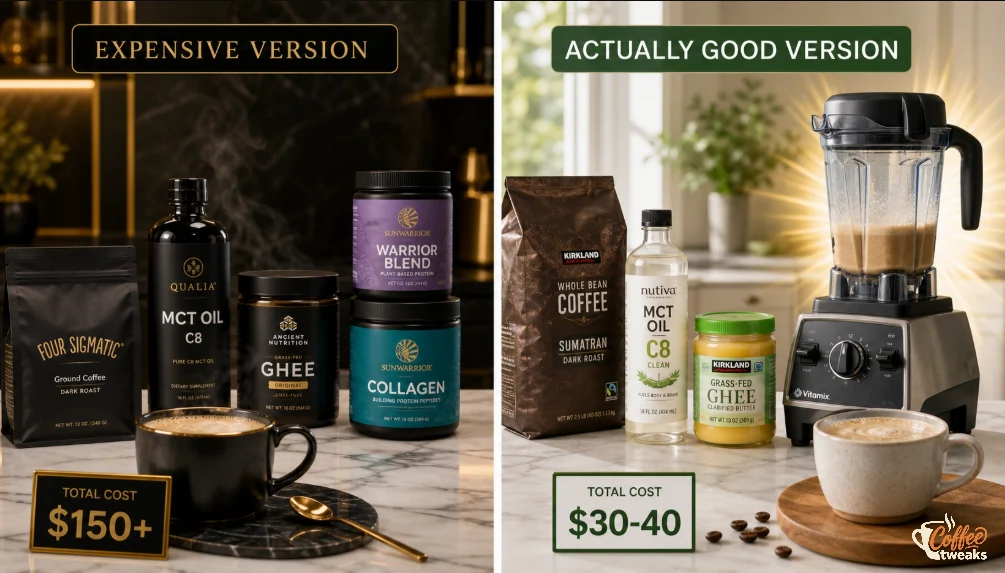
Worth the money? Let's actually do the math. 📊
The expensive version is branded coffee, branded C8 oil, branded ghee, plus three optional powders. That stack runs well over $150 to assemble, and the marketing nudges you toward replacing each one with their SKU.
The actually good version is any good quality coffee, a solid C8 MCT oil, and grass-fed ghee from the supermarket. The three things that genuinely matter are clean coffee, real C8, and the blender.
Where to actually spend:
The powders and peptides are optional add-ons. Useful for some people, irrelevant for most.
FAQ
How much MCT oil should I put in Bulletproof Coffee?
Start with 1 teaspoon and build up to 1 tablespoon over a week. Going straight to a tablespoon usually upsets your stomach.
Does Bulletproof Coffee break a fast?
It adds about 250 calories, so technically yes. But it doesn't spike insulin much, so many people use it during intermittent fasting without losing the appetite-suppressing effect.
Can I use regular butter instead of grass-fed?
You can, but grass-fed has more vitamin A, K2, CLA, and omega-3s. For flavor and nutrition, grass-fed ghee or butter is the better pick.
Why does my butter coffee taste oily?
You probably stirred it instead of blending it. Blend for 20 to 30 seconds so the fat emulsifies into the coffee.
Is C8 MCT oil better than coconut oil?
For quick energy and ketones, yes. C8 converts to ketones faster and is gentler on digestion than coconut oil, which is mostly slower C12.
Can Bulletproof Coffee replace breakfast?
Sometimes. It works if you're fasting or not hungry and you'll eat a proper lunch. It falls short if you need protein or real nutrients in the morning.
Is It Worth It? My Honest Verdict
Yes, if you're keto, low-carb, or fasting and you want something warm, creamy, and filling in the morning without carbs. The original three-ingredient recipe is the only version most people need.
No, if you're not in one of those camps, because then you're just adding fat calories to a normal diet for no clear payoff.
Make it with a blender. Start MCT low. Use real C8 and grass-fed ghee. Ignore the other eleven ingredients they tried to sell you. That's the whole thing.
If you liked the brewing-precision angle here, our pour-over and French press guides go deeper on the coffee base itself, since better beans make a better butter coffee. ⚙️