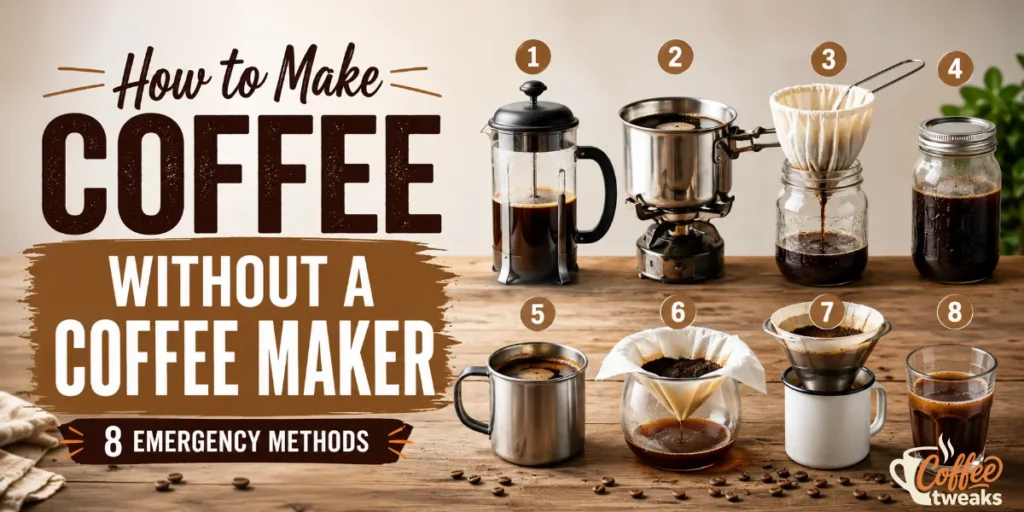
How to Make Coffee Without a Coffee Maker — 8 Tested Methods

The power went out at 6 a.m. last winter, and my coffee machine just… died with it. I stood in my kitchen, half-asleep, genuinely a little heartbroken. 🌿
Then I remembered: people made coffee for centuries before electricity existed. So I figured out how to make coffee without a coffee maker, right there in the dark, with a saucepan and a stubborn craving.
That morning kind of changed how I think about coffee. Turns out you don't need a machine. You need grounds, hot water, and one or two things already hiding in your kitchen.
Below are 8 emergency methods I've personally tested, through a power outage, a camping trip, a hotel stay, and one very sad week in a brand-new apartment with zero equipment. Let's get into it.
Quick Answer: Can You Make Coffee Without a Coffee Maker?
Yes. You can make great coffee without any machine by combining coffee grounds with hot water and separating the grounds afterwards, using a saucepan (cowboy coffee), a makeshift pour-over, a paper towel or cloth filter, or a simple cold steep. Most methods take 4–6 minutes and use things you already own.
That's the whole secret. Heat, grounds, and a way to keep the grit out of your cup.
What You Need (It's Already In Your Kitchen)
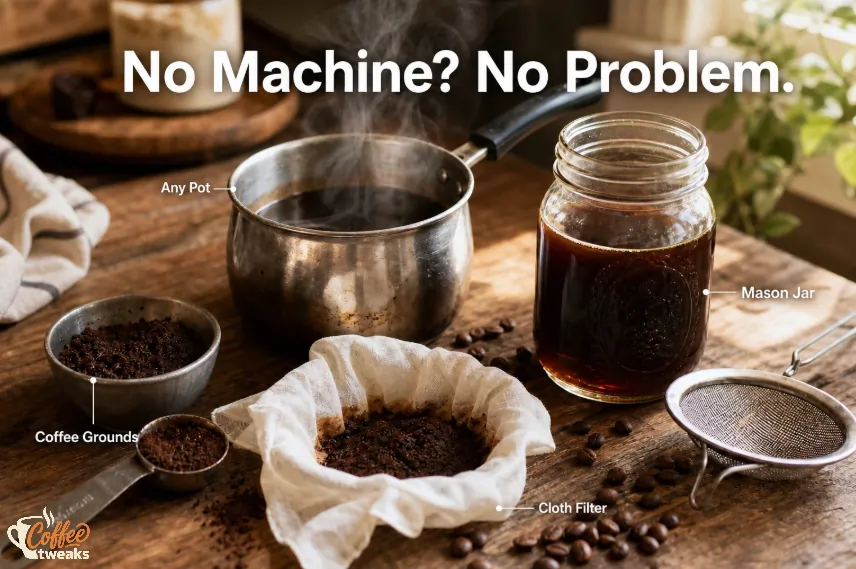
Okay but hear me out… you have more options than you think. Open one drawer and you'll probably find a filter substitute staring back at you.
Here's the basic kit for coffee without a machine:
The ratio that saves you: use about 2 tablespoons of coffee per 8 ounces of water, or roughly 1 gram of coffee to 15–17 grams of water. That's the number to remember when you're improvising. ☕
Grind matters more than people admit. Coarse grind (think sea salt) for anything you steep. Medium grind (think sand) for anything you pour through a filter. Fine grind only for Turkish-style, otherwise you get mud.
Make Coffee Without a Coffee Maker: The 8 Methods at a Glance
I tested every method below and rated them honestly. A 3 out of 5 is still useful coffee, it's just not a religious experience.
| # | Method | Difficulty | Taste | Sediment | Best for |
|---|---|---|---|---|---|
| 1 | Cowboy coffee (saucepan) | Easy | ★★★☆ bold, rustic | High | Camping, power outage |
| 2 | Makeshift pour-over | Medium | ★★★★ clean, bright | Very low | Specialty coffee, home |
| 3 | Paper towel filter | Easy | ★★★☆ clean-ish | Low | Out of filters, travel |
| 4 | Cloth / coffee sock | Medium | ★★★★ full + clean | Low | Reusable, eco, camping |
| 5 | DIY coffee bag | Easy | ★★★☆ mellow | Low | Office, hotel room |
| 6 | French press | Easy | ★★★★ rich body | Medium | If you own one |
| 7 | Strainer + cheesecloth | Medium | ★★★☆ decent | Medium | Batch brewing |
| 8 | Cold brew in a jar | Easy (slow) | ★★★★ smooth, low-acid | Low | Planning ahead, summer |
Method 1: Cowboy Coffee (The Saucepan Classic)
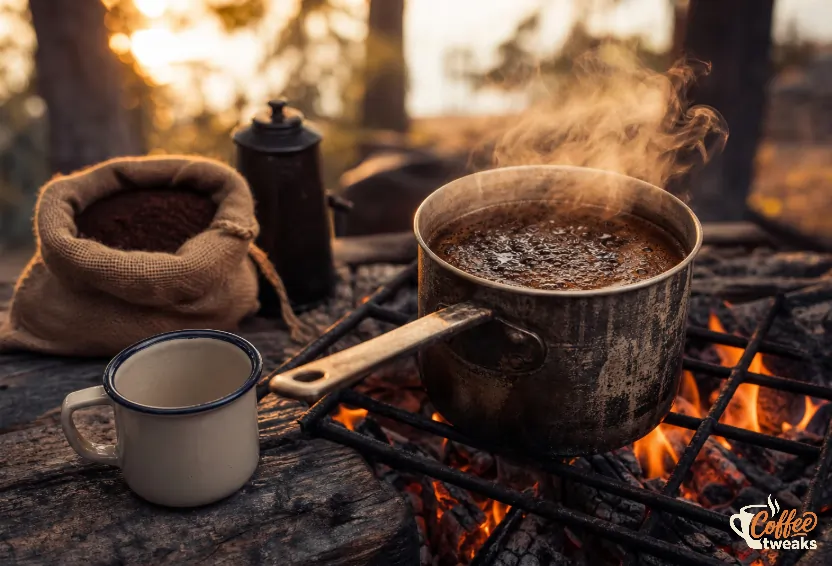
This is the one that saved me during the outage. No exaggeration when I say it felt like a tiny act of survival. 🌿
Steps:
- Add water to your saucepan; for each cup, pour in an extra half-cup so the grounds have room to settle.
- Heat until almost boiling (around 200°F), then take it off the heat for 30 seconds.
- Stir in 2 tablespoons of coarse grounds per 8 ounces of water.
- Cover and let it steep for 4 minutes. Don't keep boiling it.
- Pour a small splash of cold water down the side; this drops the grounds to the bottom fast.
- Pour slowly into your mug and stop before the sludge follows.
Sofia's verdict: This changed my whole morning during that outage. It's not the cleanest cup, but it's the most reliable one. The cold-water trick is non-negotiable; skip it, and you're chewing your coffee. ★★★½
Method 2: Makeshift Pour-Over
If you actually care about how your coffee tastes, this is the winner. It's the closest you'll get to a café cup with nothing but a filter and a mug.
Steps:
- Set a filter over your mug, a real cone filter, or a folded paper towel or cloth.
- Rinse it with a little hot water first, then toss that water (kills the papery taste).
- Add 1 tablespoon of medium grounds per cup.
- Wet the grounds and wait 30 seconds for the bloom.
- Pour the rest of the water slowly, in small circles.
- Let it drip through, lift the filter, drink.
✅ Pros: Cleanest, brightest cup. Almost no sediment. Great for single-origin beans.
❌ Cons: Needs a filter or substitute. A little slow and fussy.
Sofia's verdict: I didn't expect to love this with a paper towel propped over a mug, but… I did. This is the method I reach for when I've got nice beans and don't want to waste them. ★★★★
Method 3: Paper Towel or Napkin Filter
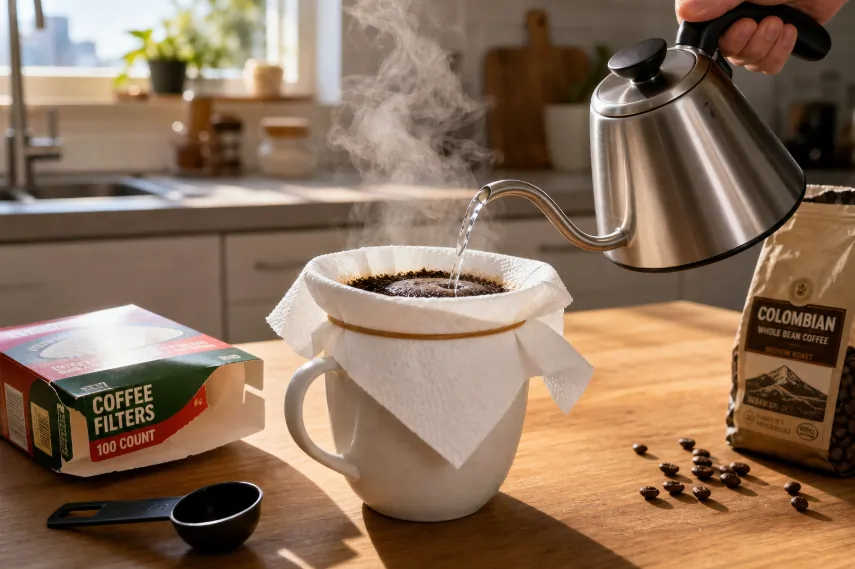
Out of filters but desperate? A paper towel genuinely works. It's the most common improvised coffee filter for a reason.
Steps:
- Fold an (ideally unbleached) paper towel into a cone, or drape it over a mug and secure with a rubber band.
- Rinse with hot water first to lose the papery taste.
- Add about 15g of medium-fine grounds.
- Bloom 30 seconds, then slowly pour hot water over in circles.
- Lift out the towel and drink.
✅ Pros: Everyone has paper towels. Filters out almost all grit.
❌ Cons: Towels can tear or collapse if soaked too fast. Slightly papery if you don't rinse.
Sofia's verdict: This is my “I forgot to buy filters again” hack. Rinse the towel first; that one step is the difference between coffee and sad cardboard water. ★★★
Method 4: Cloth or Coffee Sock Filter
A clean cloth napkin or a cotton coffee sock is the underrated hero here. Latin American households have brewed this way for generations; it's basically how my abuela made it. 🌿
Steps:
- Drape the cloth over your mug or bowl, secure with a rubber band.
- Add medium-coarse grounds into the pouch the cloth makes.
- Pour hot (not boiling) water slowly over the grounds.
- Let it filter all the way through.
- Wash the cloth right after so it doesn't stain.
✅ Pros: Reusable, eco-friendly, rich yet clean cup, no trash.
❌ Cons: You have to wash it immediately. Stains over time.
Sofia's verdict: A coffee sock is one of those tiny things that feels like a hug in the morning. Cleaner than cowboy, fuller than paper. If you camp a lot, get one. ★★★★
Method 5: DIY Coffee Bag (Tea-Bag Style)
This one saved me in a hotel room with nothing but a kettle. You make your own coffee tea bag.
Steps:
- Spoon 1–2 tablespoons of grounds into a coffee filter, small cloth square, or reusable tea bag.
- Tie it shut with string (leave a tail to pull it out).
- Drop it into your mug.
- Pour hot water over and steep 4–5 minutes.
- Lift the bag out and enjoy.
✅ Pros: No mess, no filtering step, perfect for hotels and offices.
❌ Cons: Slightly weaker unless you steep longer. A little fiddly to assemble.
Sofia's verdict: And honestly? That's the whole point of this list: coffee anywhere. I keep a few pre-made coffee bags in my travel pouch now. Game-changer when you're stuck in a hotel at 6 a.m. ★★★½
Method 6: French Press (If You've Got One)
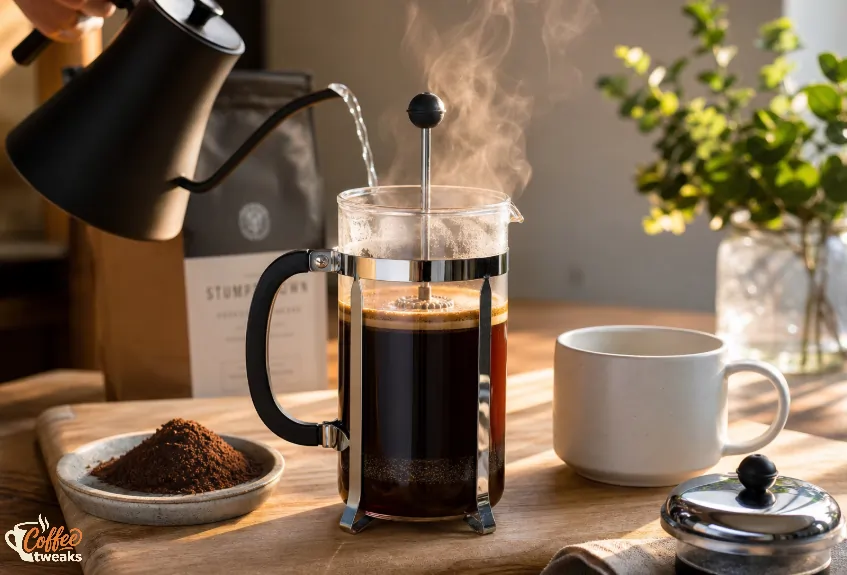
Not technically “no equipment,” but a French press is the most common machine-free brewer people already own and forget about.
Steps:
- Add coarse grounds, about 30g per 500ml of water.
- Pour water just off the boil (around 94°C).
- Stir gently and steep 4 minutes.
- Press the plunger down slowly.
- Serve right away so it doesn't over-extract.
✅ Pros: Rich body, easy, repeatable.
❌ Cons: Some sediment. Bitter if you let it sit on the grounds.
Sofia's verdict: If you own one, this is your easy button. Pour it out the second you plunge; leaving it sitting is the #1 mistake people make. ★★★★
Method 7: Strainer + Cheesecloth Steep
When you're brewing for more than one person and don't have filters, a fine-mesh sieve lined with cheesecloth handles a whole batch.
Steps:
- Steep coarse grounds in hot water in a pot for 4 minutes (like cowboy coffee).
- Line your sieve with a layer of cheesecloth.
- Pour the coffee through the sieve into a clean container.
- The cheesecloth catches the fines the sieve misses.
✅ Pros: Great for batches. Catches most sediment.
❌ Cons: Two-vessel cleanup. Sieve alone lets fines through, you need the cloth.
Sofia's verdict: This is my brunch-for-friends move when the machine's out. The cheesecloth is what makes it drinkable instead of gritty. ★★★½
Method 8: Cold Brew in a Mason Jar
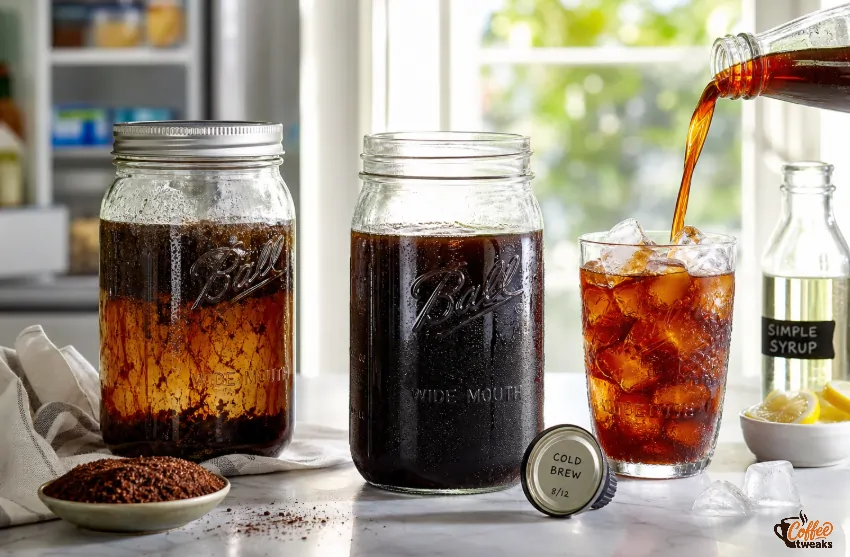
The only method that needs zero heat, perfect for a heatwave or when you want to plan ahead. Set it tonight, drink it tomorrow.
Steps:
- Mix coarse grounds with cold water at roughly 1:8 (about 125g coffee per litre).
- Stir, cover, and put it in the fridge.
- Steep 12–18 hours.
- Strain through a fine sieve or cloth filter.
- Serve over ice, dilute to taste.
✅ Pros: Incredibly smooth, gentle on the stomach, no machine or heat at all.
❌ Cons: You wait half a day. Needs planning.
Sofia's verdict: No exaggeration when I say cold brew is the most forgiving method on this list. It's the one I make on purpose, not just in emergencies. ✨ ★★★★
Which Method Tastes Best (And Which Makes the Least Sediment)
Here's the thing nobody else on the first page of Google will just tell you.
Best tasting overall: the makeshift pour-over and the cloth/coffee sock, both give clarity and body without grit. These are also the two I'd trust with expensive single-origin beans, because they let the flavor notes through instead of muddying them.
Cleanest cup (least sediment), ranked:
Boldest, most rustic: cowboy coffee, every time. It tastes like a campfire, in a good way.
If you bought specialty coffee, please don't boil it cowboy-style; you'll flatten everything that made it special. Use the pour-over or cloth.
Best Method for Each Emergency
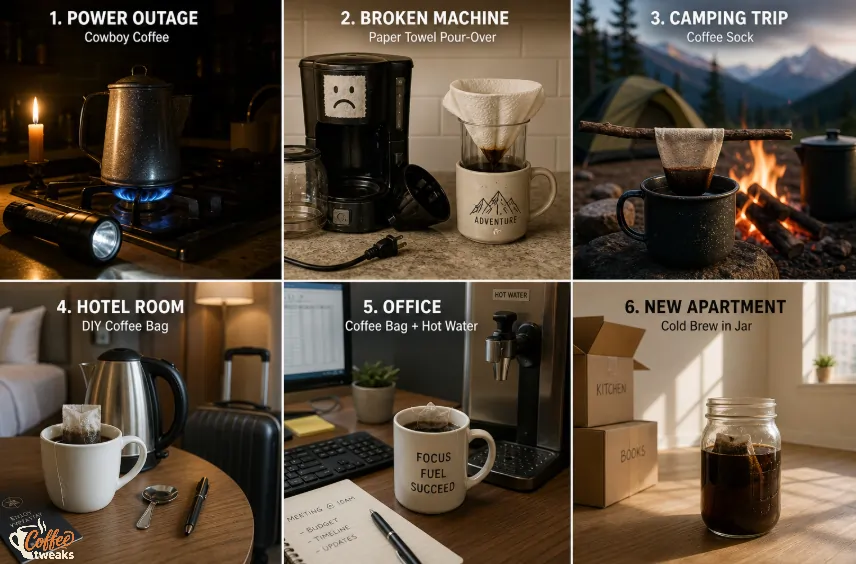
Different disasters call for different brews. Here's my cheat sheet, tested in the wild:
Brewing Mistakes That Ruin No-Maker Coffee
I made every one of these so you don't have to.
Pro Tips 🌿
Save This Part
You don't need a machine to make good coffee. For the cleanest cup, use a makeshift pour-over or cloth filter. For the most reliable emergency cup, make cowboy coffee with the cold-water settle trick. For zero heat, do cold brew in a jar overnight. Remember the ratio, 2 tablespoons per 8 ounces, go coarse, and never boil your grounds. That's it. That's the whole thing. ☕✨
Questions People Actually Ask
Can you make coffee without a coffee maker?
Yes. Combine coffee grounds with hot water, steep for about 4 minutes, then separate the grounds with a filter, cloth, or by letting them settle. Cowboy coffee and makeshift pour-over are the simplest methods.
How do you make coffee with just hot water?
Add 2 tablespoons of coarse grounds per 8 ounces of hot water in a mug or pot, steep 4 minutes, then strain or let the grounds settle and pour slowly.
Can you use a paper towel as a coffee filter?
Yes. Fold it into a cone or drape it over a mug, rinse it with hot water first to remove the papery taste, add medium grounds, and pour slowly. It filters out almost all the sediment.
How do you make cowboy coffee without it being bitter?
Don't boil the grounds. Heat the water, take it off the heat, then add coffee and steep 4 minutes. A splash of cold water at the end settles the grounds and softens the brew.
What can I use instead of a coffee filter?
A clean cloth napkin, dish towel, coffee sock, cheesecloth over a sieve, a reusable tea bag, or a paper towel all work as coffee filter alternatives.
Is it safe to boil coffee grounds?
It's safe, but it tastes bitter and burnt. Steeping off the boil gives a much better cup.
Which method makes the least sediment?
A makeshift pour-over with a paper or cloth filter produces the cleanest cup. Cowboy coffee produces the most sediment.
How do you make coffee while camping without gear?
Cowboy coffee in a pot over the fire, or grounds in a cloth/coffee sock steeped in your mug. Both need almost nothing.