Fabula Coffee Review: Low-Acid Coffee for GERD (2026)

Real talk… I gave up my morning espresso for three weeks because of heartburn.
Not by choice. My GERD flared up badly enough that every cup left me with that familiar burn crawling up my chest by 9am. I was popping antacids before lunch. My GI doctor's suggestion was predictable: “Have you considered cutting back on coffee?”
No. Absolutely not. That's not a solution.
So I went looking for one. The Fabula coffee review you're about to read is the result of two weeks of real testing, some pH research, and a lot of honest mornings tracking whether the burn came back or not.
This is a problem-solution review. The problem is specific: coffee triggers acid reflux, heartburn, and stomach pain in people with GERD and IBS. The question is simple: does Fabula actually fix it?
Does Fabula Coffee Solve the Sensitive Stomach Problem?
| Pain Point | Does Fabula Address It? | Effectiveness |
|---|---|---|
| Acid reflux and heartburn from coffee | Yes | 5/5 |
| Stomach burning after morning cup | Yes | 4.5/5 |
| Gut irritation from pesticide-laden beans | Yes | 4.5/5 |
| IBS flare-ups triggered by coffee acidity | Yes | 4/5 |
| Bitterness and harshness on stomach lining | Yes | 5/5 |
| Mycotoxin and mold exposure from coffee | Yes | 4.5/5 |
| Flavor loss when switching to “safe” coffee | Partially | 3.5/5 |
| Price accessibility for a daily driver | Partially | 3/5 |
Quick Answer: Fabula is a legitimate low-acid, USDA Organic, single-origin coffee that makes a real, measurable difference for people with acid reflux, IBS, or stomach sensitivity. The price is a stretch, but if coffee has been hurting you, this is worth trying.
The Problem: Why Regular Coffee Destroys Sensitive Stomachs
Let me be clear about what's actually happening when coffee hurts you. Most people think it's “just acid.” It's more specific than that.
Standard commercial coffee sits at a pH of 4 to 5. That's genuinely acidic. Close to vinegar on the lower end. But pH is actually the lesser issue for most GERD and IBS sufferers.
The bigger culprit is chlorogenic acid (CGA). Here's what it does: it stimulates your stomach to produce more gastric acid. A 2014 study published in Molecular Nutrition and Food Research confirmed this directly, market-blend coffee significantly elevated gastric acid secretion in test subjects. That triggered acid is what creeps back up your esophagus and produces heartburn.
So the burn you feel is not just from drinking something acidic. Your own stomach is responding to the CGA in coffee by overproducing acid. That distinction matters for understanding what a real fix needs to do.
On top of CGA, there are mycotoxins, mold-derived toxins like ochratoxin A that form during improper bean storage. Most commercial coffee brands don't test for these. For a gut that's already inflamed and reactive, low-level mycotoxin exposure doesn't help.
Here's what the full problem looks like for a sensitive stomach sufferer:
That is the exact problem Fabula is engineered to solve. Let's see if it actually does. ☕
How Fabula Is Engineered to Fix It
Fabula did not stumble into low-acid territory by accident. The entire sourcing and production model is built around reducing the specific compounds that cause digestive distress. Three mechanisms work together here.
Mechanism 1: Chlorogenic Acid Reduction Through Sourcing
Fabula sources exclusively from high-altitude, shade-grown farms in Peru, Colombia, and Mexico. Altitude matters here. Beans grown at elevation above 5,000 to 7,000 feet ripen more slowly, which reduces chlorogenic acid development in the final bean.
The processing is predominantly washed. Washed processing removes the fruit mucilage from the beans before drying, which limits fermentation-related acid buildup. Compare this to natural-processed coffees where the fruit ferments around the bean and adds both brightness and additional acidity.
They also use 100% Arabica beans exclusively. Arabica has roughly half the chlorogenic acid content of Robusta. If your previous coffee was a Robusta-blend supermarket brand, switching to high-altitude washed Arabica alone is a meaningful step down in gastric irritation potential.
Mechanism 2: The Lab Testing Layer
Every batch is independently tested for 350+ contaminants before shipping. That includes:
Most brands offer USDA Organic certification or third-party testing. Fabula does both simultaneously. USDA Organic eliminates synthetic pesticides at the farm level. The independent lab testing verifies the finished product. Two layers of protection for a gut that needs it.
Mechanism 3: Roast Profile and N-Methylpyridinium
This is the part most Fabula reviews miss.
Roasting coffee at higher temperatures converts trigonelline into a compound called N-methylpyridinium (N-MP). N-MP actively inhibits gastric acid secretion rather than stimulating it. The same 2014 study referenced above found that dark roast coffee reduced stomach acid stimulation significantly compared to medium and light roasts.
Fabula's dark roast takes direct advantage of this. It combines low-CGA sourcing with the N-MP benefit of extended roasting. For severe GERD sufferers, the dark roast is the most stomach-friendly option in the range.
pH Comparison: Fabula vs. Regular Coffee vs. Competitors
Numbers matter here. Here's where Fabula sits on the acid scale relative to everything else you might be drinking:
| Coffee Type | pH Range | Acid Level | Stomach Friendliness |
|---|---|---|---|
| Standard commercial coffee | 4.0 to 5.0 | High | Poor |
| Average specialty light roast | 4.5 to 5.0 | Medium-High | Poor to moderate |
| Fabula Medium Roast | ~6.0 | Low | Good |
| Fabula Dark Roast | ~6.0 to 6.2 | Low | Very Good |
| Lifeboost Coffee | 6.0+ | Low | Very Good |
| Cold brewed Fabula | ~6.3 | Very Low | Excellent |
| Black tea | ~6.0 | Low | Good |
| Water | 7.0 | Neutral | Perfect (obviously) |
A pH of 6 versus 4.5 might sound like a small gap. It is not. The pH scale is logarithmic. pH 6 is approximately 30 times less acidic than pH 4.5. That is the chemical difference between a cup that burns you and one that doesn't.
Low-acid coffee typically contains 40 to 60% less acid content than standard coffee. Cold brew extraction reduces acid further, up to 70% less than hot brewing methods.
My Two-Week Stomach Test: The Actual Results
I ran this test with the Peru Medium Roast for week one and the Peru Dark Roast for week two. I tracked five variables every single day:
Here's what the two weeks looked like broken down:
| Day | Heartburn | Post-Cup Bloating | Antacids Used | Roast |
|---|---|---|---|---|
| Day 1 to 2 | Mild (1/3) | Yes | 1 per day | Medium |
| Day 3 to 4 | None | No | 0 | Medium |
| Day 5 to 7 | None | No | 0 | Medium |
| Day 8 to 10 | None | No | 0 | Dark |
| Day 11 to 14 | None | No | 0 | Dark |
Day three was the turning point. I realized I hadn't reached for antacids that morning. Not because I was consciously avoiding them. I just didn't need them.
By day six, the pattern was locked in. The 9am chest burn that had become a permanent part of my morning routine was simply absent.
Week two on the dark roast: Even cleaner results. Zero antacid use for the entire seven days. Zero nighttime reflux disruption by day twelve.
What I tracked beyond the numbers:
I'm not claiming Fabula cured my GERD. That's not how it works. But it demonstrably reduced my symptom load. That's real-world data.
Taste Test: What Each Roast Actually Tastes Like
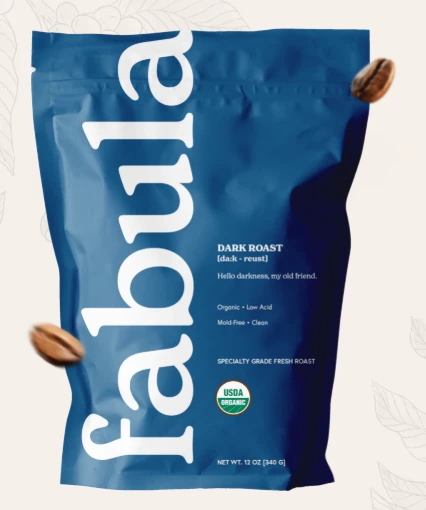
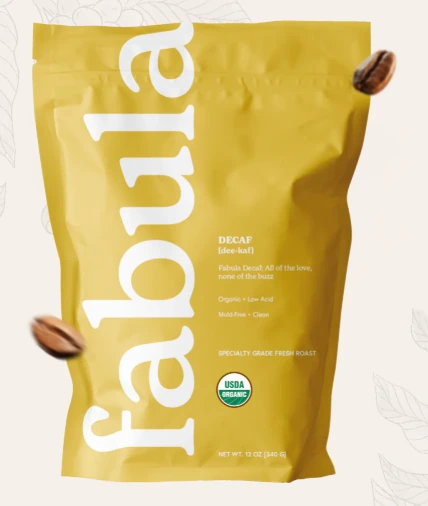
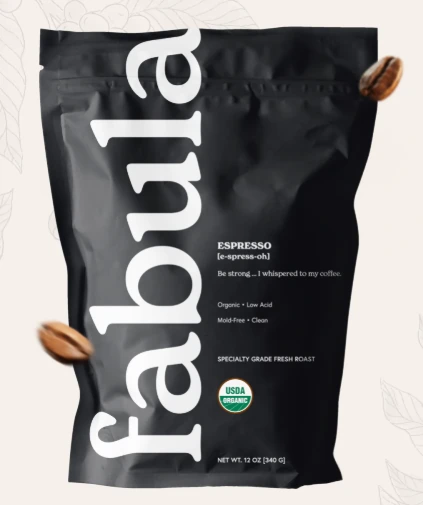
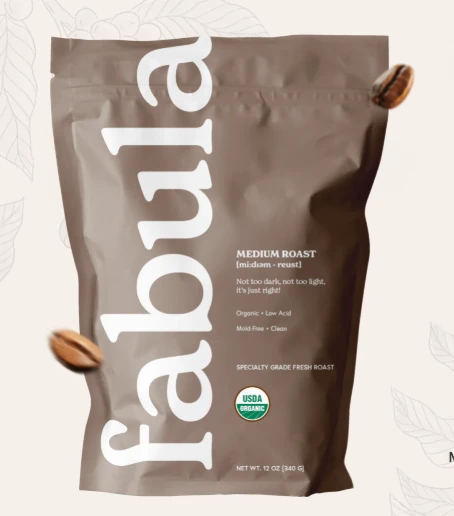
Low acid does not have to mean low flavor. Here's an honest breakdown of each roast:
| Roast | Origin | Flavor Notes | Body | Best Brew Method |
|---|---|---|---|---|
| Medium (Peru) | Andean highlands | Caramelized sugars, mild chocolate, nutty | Light-medium | French press, drip |
| Dark (Peru) | Andean highlands | Rich, bold, dark chocolate, slight earthiness | Medium-full | French press, drip, cold brew |
| Decaf (Mexico) | Oaxaca region | Mild chocolate, mellow sweetness | Light-medium | Drip, pour-over |
| Espresso (Colombia) | Colombian highlands | Dark fruit, plum, mild citrus, brown sugar | Full | Espresso machine, AeroPress |
| Cold Brew (Dark) | Peru | Smooth chocolate, caramel sweetness | Full, velvety | Cold brew immersion only |
The honest flavor verdict:
What you also won't find: the vibrant citrus brightness of an Ethiopian Yirgacheffe, the wild berry punch of a natural-process Colombian, or the deep earthiness of a Sumatran. The low-acid process shaves off some complexity by design. That is the honest trade-off.
Where Fabula Falls Short: The Real Cons
I'm not here to sell you a dream. Fabula has genuine weaknesses.
Price:
Flavor ceiling:
Origin variety:
Guarantee and subscription limitations:
Not a magic fix:
- Fabula reduces acid load but doesn't eliminate coffee's effect on the gut entirely
- Drinking on a completely empty stomach can still cause discomfort
- Results vary based on individual GERD severity and triggers
- For severe or chronic cases, always consult a GI specialist alongside dietary changes
Fabula vs. Lifeboost: Which One Actually Solves the Problem Better?
These two brands compete directly for the same customer. Both are worth considering. The differences are real.
| Factor | Fabula | Lifeboost |
|---|---|---|
| Price (12oz) | From $19.49 | From $24 to $35 |
| pH Level | ~6.0 | 6.0+ |
| Lab Testing | 350+ toxins, independent | Third-party tested |
| Organic Certification | USDA Organic | USDA Organic |
| Origin Variety | Mainly Latin America | Wider, includes Ethiopia |
| Roast Range | Medium, Dark, Decaf, Espresso, Flavored | Light, Medium, Dark, Decaf |
| Cold Brew Option | Yes | Yes |
| Subscription | Flexible, no lock-in | Yes |
| Best For | Budget-conscious acid reflux sufferers | Origin variety seekers |
Real talk: For the core problem, coffee hurts my stomach and I need it to stop, Fabula solves it at a lower cost per bag. If budget matters, Fabula wins. If you want Ethiopian single-origins or African variety, Lifeboost has the edge. For pure stomach-friendliness value, Fabula is the stronger choice.
If you want a deeper side-by-side on the flavor profiles, our full guide to the best low-acid coffees for sensitive stomachs covers both brands in detail.
Brewing Fabula for Maximum Stomach Comfort
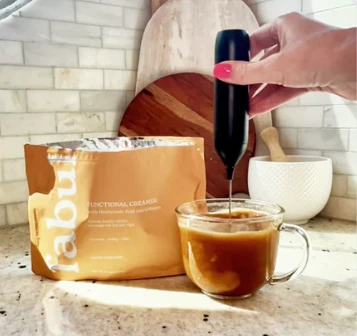
The beans do the heavy lifting. But brew method still matters. Here's the full breakdown:
| Brew Method | Acid Level | Brew Time | Stomach Friendliness | Notes |
|---|---|---|---|---|
| Cold Brew | Very Low | 12 to 24 hours | Excellent | Up to 70% less acid than hot methods |
| French Press | Low | 4 minutes | Very Good | Best for Fabula's flavor profile |
| AeroPress | Low | 1.5 to 2 minutes | Very Good | Fast and forgiving on acid |
| Pour Over | Medium-Low | 3 to 4 minutes | Good | Use 93 to 95°C water |
| Drip Machine | Medium-Low | 5 to 8 minutes | Good | Use filtered water |
| Espresso | Medium | 25 to 30 seconds | Moderate | Works with their Colombia roast |
Key brewing tips for sensitive stomachs:
Our guide on how to make cold brew at home covers the exact ratios and timing if you're new to the method.
Who This Coffee Is For and Who Should Skip It
Try Fabula if you:
Skip Fabula if you:
Fabula's Full Product Range: What's Worth Buying
| Product | Price | Best For | Rating |
|---|---|---|---|
| Peru Medium Roast 12oz | From $19.49 | Daily driver, first-time buyers | 4.5/5 |
| Peru Dark Roast 12oz | From $19.49 | Severe GERD, more body | 4.5/5 |
| Mexico Decaf 12oz | From $19.49 | Evening coffee, caffeine sensitivity | 4/5 |
| Colombia Espresso | From $19.49 | Espresso drinkers, AeroPress users | 3.5/5 |
| Dark Roast K-Cups (Peru) | From $38.39 | Keurig users, convenience priority | 3/5 |
| Cold Brew Grind | Varies | Severe acid sensitivity | 5/5 |
| Flavored Range (Vanilla, Hazelnut, Caramel) | Varies | Variety seekers, lighter coffee fans | 3.5/5 |
Starting point recommendation: Peru Medium Roast. Their best-seller for a reason. Smooth, accessible, and gives you a clean baseline to assess whether Fabula works for your stomach before committing to a subscription.
Pros and Cons at a Glance
What Fabula Gets Right:
What Fabula Gets Wrong:
FAQ: Fabula Coffee for GERD and Sensitive Stomachs
Does Fabula Coffee actually reduce acid reflux symptoms?
For most GERD and acid reflux sufferers, yes. Fabula uses high-altitude, washed Arabica beans that are naturally lower in chlorogenic acid, the primary compound that stimulates gastric acid overproduction. In my personal two-week test, symptoms dropped by day three and antacid use hit zero by week two.
What is the pH of Fabula Coffee?
Fabula brews at approximately pH 6.0, compared to standard coffee's 4.0 to 5.0. That gap is not small. The pH scale is logarithmic, making pH 6 roughly 30 times less acidic than pH 4.5. Cold brewed Fabula reaches close to 6.3, making it the most stomach-gentle preparation option they offer.
Is Fabula Coffee good for IBS?
It is one of the best-designed options for IBS sufferers. Lower chlorogenic acid, no synthetic pesticide residues, and independent testing for mycotoxins all reduce different pathways of gut irritation simultaneously. Results vary by individual, but the formula directly addresses the main gut irritants in conventional coffee.
How does Fabula low acid coffee compare to Lifeboost?
Both are USDA Organic, low-acid, and lab-tested. Fabula starts at $19.49 versus Lifeboost's $24 to $35. Lifeboost claims a slightly higher pH and offers broader origin variety including Ethiopian coffees. For stomach-friendliness per dollar, Fabula wins. For origin variety and specialty flavor range, Lifeboost has the edge.
Is Fabula Coffee organic and mold-free?
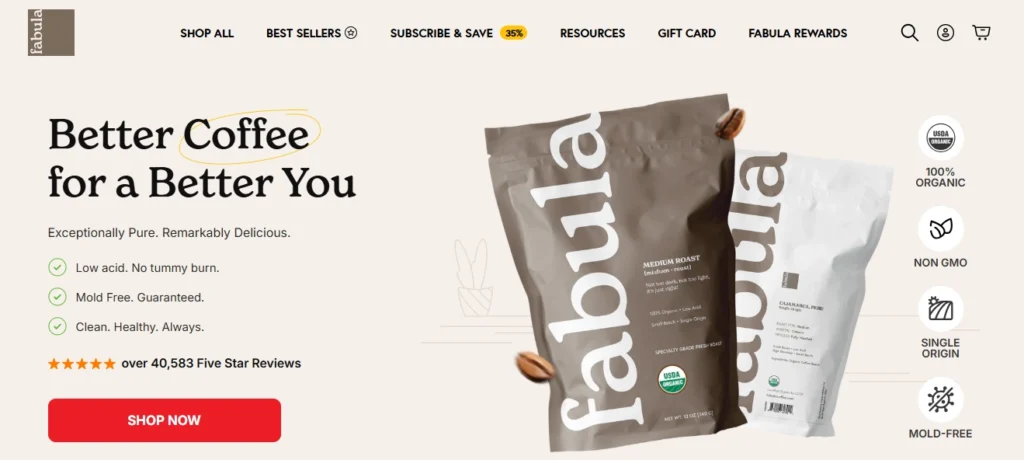
Yes. Every Fabula product carries USDA Certified Organic status. Every batch is independently tested for 350+ contaminants including mold, mycotoxins, and pesticide residues. Organic certification and independent lab testing together make this one of the most rigorously verified clean coffees on the market.
Which Fabula roast is best for acid reflux?
The Peru Dark Roast is the most stomach-friendly option for severe GERD. Darker roasting produces N-methylpyridinium, which actively inhibits gastric acid secretion. It combines this benefit with Fabula's already low-CGA sourcing. For moderate symptoms or first-time buyers, the Peru Medium Roast is the smoother, more approachable starting point.
Fabula Coffee Verdict
Fabula solves the specific problem it promises to solve. The low-acid formula is real. The organic certification is real. The mold-free testing is real. The stomach relief… also real.
My two-week test eliminated my antacid use. That is the whole point of this review. Not the branding, not the Instagram-friendly packaging, not the 40,000 five-star reviews. The fact that I stopped needing antacids by day three.
The trade-offs are real too. The price is premium. The flavor ceiling is lower than specialty coffee drinkers are used to. The origin variety is narrow. And the guarantee protection disappears after your first purchase.
But for anyone who has been suffering through the burning, bloating, and gut disruption that comes with conventional coffee every morning… “exciting flavor” is not the first requirement. “Doesn't hurt me” is.
Fabula delivers on that. Consistently. I've been wrong before. Not about this.