Volcanica Coffee Review: 150+ Coffees from One Company

By Maya Chen ☕ | Lead Coffee Writer & Espresso Expert
I've tested dozens of specialty coffee brands. Most promise the world and deliver grocery store mediocrity. Volcanica is different. And I'm not apologizing for that.
With 150+ active SKUs sourced from 40+ countries, roasted on demand in Atlanta, Georgia, and shipped with a roast date stamped on every bag, this company is doing things most online roasters won't bother with. Scale has limits though. So does patience. Let's get into it.
⚡ Volcanica Coffee Review — Quick Verdict
Before we go deep, here's the summary for those who need the answer now.
| Factor | Verdict | Notes |
|---|---|---|
| Overall Quality | ★★★★½ | Consistently high across most origins |
| Variety Depth | ★★★★★ | 150+ coffees, 40+ countries, multiple categories |
| Roast Freshness | ★★★★★ | Roasted on demand, roast date on every bag |
| Value for Money | ★★★★☆ | ~$0.53–$0.61/cup vs $5–$6/cup at a café |
| Ease of Choosing | ★★★☆☆ | No curation. Choice overload is a real issue |
| Best For | Coffee explorers, single-origin hobbyists | Wide appeal across skill levels |
| Biggest Drawback | No guided recommendations, thin light roast range | Self-navigation required |
| Final Rating | 8.4 / 10 | One of the best single-origin libraries online |
🌍When One Company Sells Coffee from 40+ Countries, Does It Actually Work?
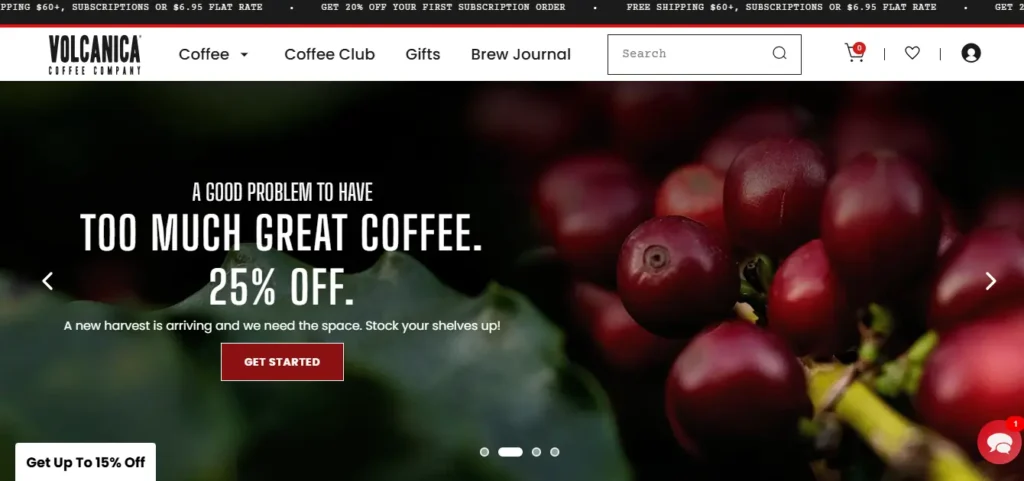
Most brands can't manage a 10-origin catalog without cutting corners. Volcanica runs 150+. Here's how that's even possible.
Real talk: when a coffee company lists 150+ products, my first instinct is skepticism. That many SKUs usually means freshness suffers, quality control breaks down, or you're paying for a marketing catalog, not actual coffee.
Volcanica is a family-run specialty roaster based in Atlanta. Their origin goes back to Costa Rica, where the founders grew up drinking volcanic-soil coffee. They couldn't find that flavor profile in the US, so they built the company around it.
Here's the thing. Most brands fail at this because they overpromise on quality while under-delivering on freshness. Volcanica's roast-on-demand model changes that equation. Every bag ships within days of roasting, with the roast date printed on the packaging. That level of transparency is rare.
Why large origin libraries matter:
Where most companies fail at this:
My initial expectation going in? Skeptical but curious. After testing? Convinced on most fronts, with a few caveats worth calling out.
Insight: Scale only works when freshness infrastructure matches catalog ambition. Volcanica's roast-on-demand model is the foundation that makes 150+ origins viable.
🌱 How Volcanica Builds Its Global Origin Library
Sourcing coffee from 40+ countries isn't just collecting stamps on a map. Here's what the sourcing model actually looks like.
Volcanica focuses on volcanic-region coffee, grown at elevations between 3,000 and 7,000 feet in Andisol soil, which is volcanic ash-based and exceptionally mineral-rich. This isn't branding fluff. The soil composition directly impacts bean density, sugar development, and flavor complexity.
Beans are hand-picked at peak ripeness, selecting only ripe red cherries. Commercial operations harvest indiscriminately. Volcanica's partner farms skip the underripe ones entirely. That single practice separates specialty from commercial.
Processing methods vary by origin: washed, natural, honey, and Sumatra-style wet-hulled. Each method creates measurably different flavor profiles from the same green bean.
☕ Coffee Origin Coverage by Region
| Region | Example Countries | Roast Options | Flavor Tendencies |
|---|---|---|---|
| Africa & Arabia | Ethiopia, Kenya, Tanzania, Yemen, Cameroon, Malawi | Light to Medium | Fruity, floral, wine-like, bright acidity |
| Americas | Costa Rica, Brazil, Colombia, Peru, Bolivia, Nicaragua, El Salvador, Panama | Medium to Dark | Chocolate, caramel, nutty, balanced |
| Caribbean | Jamaica, Dominican Republic, Puerto Rico, Guatemala | Medium | Smooth, mild, sweet, clean finish |
| Indonesia & Pacific | Sumatra, Sulawesi, Papua New Guinea, Bali, Nepal | Medium to Dark | Earthy, syrupy, low acid, full body |
| Hawaii | Kona | Medium | Buttery, smooth, mild, nutty sweetness |
Available certifications:
Insight: The origin coverage here isn't performative. Yemen, Malawi, Nepal, Bali — these aren't origins you find at your average roaster. Volcanica's library goes genuinely deep.
☕ The 3-Origin Taste Test: Real Results Across 3 Continents
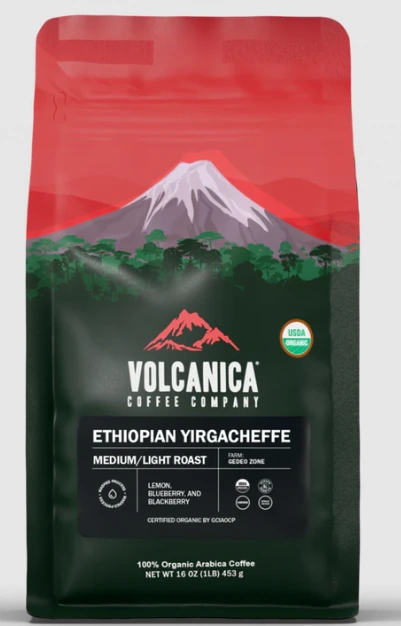
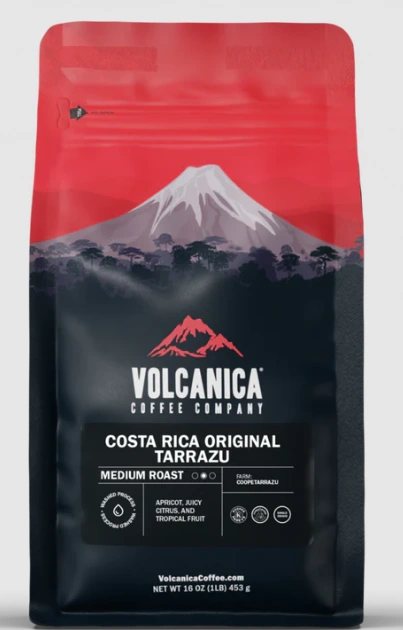
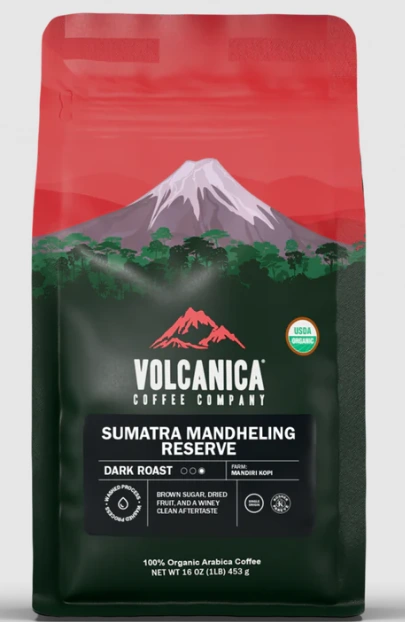
This is where paper stops and palate starts. I ran three origins through identical brewing parameters for a clean, controlled comparison.
Same brew method (V60 pour-over), same ratio (1:15), same water temperature (93°C), same medium-fine grind on a burr grinder. Zero variables except the origin.
The three coffees tested:
🎯 3-Origin Brewing Test Results
| Origin | Brew Method | Grind Size | Ratio | Taste Notes | Body | Acidity | Aftertaste |
|---|---|---|---|---|---|---|---|
| Ethiopian Yirgacheffe | V60 Pour-Over | Medium-Fine | 1:15 | Lemon, blueberry, jasmine, dark chocolate finish | Medium | Bright, vibrant | Floral, clean, long lingering sweetness |
| Sumatra Mandheling | V60 Pour-Over | Medium-Fine | 1:15 | Toffee, lemongrass, dried fruit, deep earthy base | Heavy, syrupy | Very low | Intense, smoky, long and earthy |
| Costa Rica Tarrazu | V60 Pour-Over | Medium-Fine | 1:15 | Apricot, citrus, tropical fruit, caramel undertone | Medium-Full | Balanced, moderate | Clean, sweet, fades quickly |
What the results actually mean:
Insight: These three coffees feel like they come from different planets. That's the point. This is what a well-sourced single-origin library actually delivers — not just variety on paper, but dramatic sensory diversity in the cup.
📦 Roast Freshness Test: Does Managing 150+ SKUs Break the Freshness Model?
The biggest risk of a 150-origin catalog is stale inventory. Let's check if Volcanica actually solves this.
Volcanica roasts to order in small weekly batches at their Atlanta facility using computer-automated roasting technology. Every bag ships with the roast date printed clearly on the packaging. That's a standard most specialty roasters still don't meet.
When fresh beans hit a V60, the bloom tells you everything. CO2 releasing vigorously during the 30-second bloom phase means beans were roasted within the last 2 to 3 weeks. Every Volcanica bag I tested bloomed immediately and fully.
Freshness Scorecard
Packaging grade: A minus. The foil bag with degassing valve is correct. The only missing element is a proper resealable closure.
Insight: Managing freshness at this catalog scale is operationally difficult. Volcanica's roast-on-demand model is the legitimate answer. It's also their strongest competitive advantage over larger brands that pre-roast and warehouse.
📊 Value Per Bag: Worth the Price or Just Paying for Variety?
Let's run the math properly before making any claims about value.
Volcanica sits at $19.99 to $22.99 for a 16oz bag. That's a full pound of coffee. Most boutique specialty brands sell 8oz to 12oz bags in the same price range, which immediately distorts the apparent cost.
The math: A 16oz bag at 12g per serving yields approximately 38 cups. At $22.99 that's $0.61 per cup. At a specialty café, the same pour-over costs $5 to $6. The value case writes itself.
Cost Value Breakdown
| Price Tier | Cost Per Cup | Comparable Brand (Price/oz) | Value Rating |
|---|---|---|---|
| $17.99–$19.99 (entry origins) | $0.47–$0.53 | Trade Coffee: $1.43/oz | ★★★★★ Excellent |
| $20.99–$22.99 (premium single-origins) | $0.55–$0.61 | Blue Bottle: $1.75/oz | ★★★★☆ Very Good |
| $24.99–$34.99 (rare estates, Kona) | $0.66–$0.92 | Jamaica Blue Mountain elsewhere: $3.00+/oz | ★★★★☆ Strong for rarity |
| Subscription (10% off + free shipping) | $0.42–$0.55 | Best cost-per-cup in the specialty category | ★★★★★ Best Overall |
Subscription math:
Insight: Volcanica delivers specialty-grade pricing that's significantly more cost-efficient than boutique roasters selling 8oz bags at the same price point. For daily drinkers, the subscription math is compelling.
⚔️ Volcanica vs Trade Coffee: Which One Actually Wins?
Two of the most popular online specialty coffee brands. Tested and compared without neutrality.
I've been wrong before. Not about this. These two brands serve different use cases, and picking the wrong one for your needs wastes money.
Head-to-Head Comparison
| Feature | Volcanica | Trade Coffee |
|---|---|---|
| Coffee Variety | 150+ SKUs | 450+ SKUs |
| Roaster Model | Single roaster (in-house, Atlanta) | Marketplace (50+ roasters) |
| Freshness Control | Roasted on demand, date on every bag | Varies by partner roaster |
| Personalization | None (self-navigate) | Yes (taste quiz + algorithm) |
| Price Per 16oz | $19.99–$22.99 | Typically $18–$26 for 11–12oz |
| Price Per Oz | $1.25–$1.44 | $1.43–$2.16 |
| Subscription Flexibility | Monthly or weekly | Weekly to 6-week intervals |
| Beginner Friendliness | Moderate (no guidance) | High (quiz, curation) |
| International Shipping | Yes, worldwide | US only |
| Light Roast Range | Limited | Extensive |
| Decaf Options | Yes (Swiss Water Process) | Yes |
| Curated Discovery | No | Yes |
The clear winner:
Choose Trade Coffee if you want guided discovery, personalization, and access to multiple roasting philosophies. It's better for beginners and those who want to be surprised.
Choose Volcanica if you want roast-date transparency, on-demand freshness, a deeper single-origin catalog from one trusted source, and worldwide shipping. Better for intentional explorers who already know their preferences.
For espresso hobbyists, serious single-origin collectors, and anyone outside the US, Volcanica wins outright.
Insight: Trade Coffee is wider. Volcanica is deeper. Pick based on whether you want a guided tour or a self-directed expedition.
👤 Who Should Actually Buy Volcanica Coffee?
Not a product for everyone. Here's an honest persona breakdown.
Volcanica rewards curious, self-directed coffee drinkers. If you need someone to hold your hand through a catalog of 150 coffees, you'll be overwhelmed before you ever buy a bag.
Best For:
Not Ideal For:
Insight: Volcanica is a destination for coffee travelers, not a starter kit. Know which one you are before you order.
🔬 Brewing Recommendations for Exploring Multiple Origins
Different origins need different treatment. Here's a practical guide to getting the best from Volcanica's catalog.
Brewing a Sumatra the same way as an Ethiopian is like cooking salmon and steak at the same temperature. Technically both are “cooking.” Results vary dramatically.
Key variables to adjust by origin type:
Brew Method Guide by Origin Type
| Brew Method | Best Origin Types | Grind Level | Ratio |
|---|---|---|---|
| V60 Pour-Over | Ethiopian, Kenyan, Yemeni | Medium-Fine | 1:15 |
| French Press | Sumatra, Sulawesi, Papua New Guinea | Coarse | 1:12 |
| AeroPress | Costa Rica, Colombia, Brazil | Medium | 1:13 |
| Chemex | Ethiopian Yirgacheffe, Kenya AA | Medium | 1:16 |
| Espresso Machine | Colombian, Brazilian, Espresso Blends | Fine | 1:2 (out/in) |
| Cold Brew | Sumatra, Brazil, Guatemala | Extra Coarse | 1:8 (steep 12–18 hrs) |
| Moka Pot | Costa Rica, Brazil, Peru | Fine-Medium | Fill basket level |
One practical tip: When switching between African and Indonesian origins on the same grinder, recalibrate your grind setting. The density difference between a dense Ethiopian and a heavier Sumatra is significant enough to shift extraction time by 30 to 60 seconds.
Insight: Volcanica's catalog is a brewing curriculum disguised as a product catalog. Work through origins systematically and you'll learn more in a month than most people learn in a year of drinking the same coffee.
💡Hidden Strengths Most Reviews Miss
Most reviews test the Ethiopian, mention freshness, and stop there. Here's what they're overlooking.
The surface-level review of Volcanica focuses on variety count and price. The deeper value is harder to articulate but significantly more meaningful for serious drinkers.
What most reviewers skip entirely:
The education angle is the most underrated benefit. Brewing a Kenya AA next to a Tanzanian Peaberry from East Africa teaches you more about terroir than any podcast or course. The differences are immediate, dramatic, and palate-changing.
Insight: Volcanica's catalog is a single-origin education platform that also happens to sell coffee. The learning value compounds every order.
⚠️ Real Downsides You Should Know First
No sugarcoating. These are legitimate problems you'll encounter.
I won't pretend this brand is flawless. Several real weaknesses exist and they deserve direct treatment.
Honest Cons:
Insight: The weaknesses here are structural, not quality-related. The coffee itself is excellent. The discovery experience is not designed for newcomers. Know that going in.
💰 Volcanica Coupon & Subscription Value: Worth Signing Up?
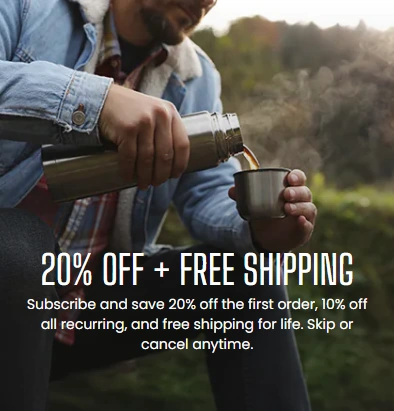
Let's do the math on whether the Coffee Club is actually worth it.
The subscription economics are genuinely compelling when you look at them properly. New subscribers get 20% off their first order. Every recurring order after that gets 10% off plus free shipping for life on subscriptions.
That permanently removes the $6.95 flat-rate shipping cost, which alone adds up to $83.40 in savings annually if you order monthly.
| Purchase Type | Discount Potential | Best Use Case |
|---|---|---|
| One-Time Purchase | No discount | Testing a single origin before committing |
| Orders Over $60 | Free shipping | Stocking up without subscribing |
| Standard Subscription | 10% off + free shipping forever | Repeat buyers on a favorite origin |
| First Subscription Order | 20% off | High-value entry point. Best time to stock up |
| Coffee Club (3 coffees/box) | 10% off + free shipping + oat milk | Explorers rotating origins monthly |
| Coffee Club (6 coffees/box) | 10% off + free shipping + oat milk | Heavy drinkers or multi-person households |
Coffee Club extras worth knowing:
The first-order math: 20% off a $22.99 bag = $18.39. Add free shipping on subscriptions and you're beating every comparable brand on cost per ounce at this quality tier.
Third-party coupon codes exist online, but Volcanica's own subscription discount is consistently the highest available. Don't waste time hunting promo codes when the built-in subscription value already wins.
Insight: If you're buying more than once per month, the subscription pays for itself in shipping savings alone. The 20% first-order discount is the strongest entry point in the specialty coffee subscription space.
❓Frequently Asked Questions
Is Volcanica Coffee good quality?
Yes. Beans are sourced from volcanic-region farms at 3,000–7,000 feet elevation, roasted on demand in Atlanta, and shipped with roast dates on every bag. Quality is consistently high across origins.
Is Volcanica single-origin coffee worth it?
Absolutely. Single-origin coffees from Volcanica let you experience distinct terroir across 40+ countries from one roaster. The Ethiopian, Sumatran, and Costa Rican profiles are dramatically different and genuinely educational side by side.
How does Volcanica compare to Trade Coffee?
Volcanica is a single in-house roaster with 150+ origins, on-demand freshness, and worldwide shipping. Trade Coffee is a marketplace across 50+ roasters with personalized curation but US-only delivery. Volcanica wins on sourcing transparency. Trade wins on guided discovery.
What is the best Volcanica coffee to try first?
Start with the Ethiopian Yirgacheffe at $22.99 per 16oz. It showcases what Volcanica does best: bright, complex, fruit-forward flavors. For beginners, the Costa Rica Tarrazu at $19.99 is more forgiving and equally impressive.
Does Volcanica ship internationally?
Yes. Volcanica ships worldwide, unlike Trade Coffee and several other US specialty subscription services that are domestic-only.
Are Volcanica Coffee Club subscriptions worth it?
Yes. New subscribers get 20% off the first order. Recurring orders get 10% off plus free shipping for life. On a $22.99 bag, that's a permanent saving of $2.30 per bag plus $6.95 shipping per order eliminated entirely.
Does Volcanica print roast dates on bags?
Yes, and this is rarer than it should be in the industry. Every bag ships with the roast date clearly printed, giving full transparency on freshness from day one.
Does Volcanica sell sample packs?
Yes. Sample packs include smaller portions across multiple origins and are the ideal entry point for new customers who want to test the catalog before committing to full 16oz bags.
🎯 Final Verdict: Is Volcanica Coffee Worth the Hype?
Strong opinion. Clear answer. No hedging.
Yes. With conditions.
Volcanica delivers on its core promise: fresh-roasted, single-origin specialty coffee from a genuinely global catalog, shipped with a roast date you can trust. The flavor diversity across its 150+ offerings is unmatched by any single-roaster brand I've tested at this price point.
The Ethiopian Yirgacheffe alone would justify a trial order. The Sumatra Mandheling is one of the cleanest, most complex Indonesian origins available online. The Costa Rica Tarrazu converts grocery store coffee drinkers in a single brew.
✅ Buy Volcanica If You Are:
❌ Skip Volcanica If You Are:
🏆 Final Rating Breakdown
| Category | Score |
|---|---|
| Origin Quality & Sourcing | 9.0 / 10 |
| Roast Freshness | 9.5 / 10 |
| Flavor Diversity | 9.5 / 10 |
| Value for Money | 8.5 / 10 |
| Website & Discovery Experience | 6.5 / 10 |
| Subscription Value | 9.0 / 10 |
| Overall | 8.4 / 10 |
The variety isn't hype. The freshness model is legitimate. The pricing holds up. The only thing holding Volcanica back from a 9+ is the absence of guided onboarding for newcomers and a thinner-than-expected light roast range.
Start with the Ethiopian Yirgacheffe. You'll understand everything else after that first cup.