Koa Coffee Review: Is This Really Forbes’ Best Coffee in America?

The claim is bold: Forbes called Koa Coffee “The Best Coffee in America.”
That kind of label does not age quietly. It sells bags, builds reputations, and sets expectations that become very expensive to disappoint.
So let's test it. Not with hype. With ratios, prices, brewing data, and honest tasting results.
Koa Coffee Review at a Glance: The Quick Verdict
Before diving into the full analysis, here is the bottom line for readers who want a fast answer first.
| Factor | Details |
|---|---|
| Claim Being Tested | Forbes named Koa Coffee “Best Coffee in America” |
| Coffee Type | 100% Kona Coffee, single-origin, Hawaiian grown |
| Price Tier | Premium ($48 to $225 per bag depending on variety) |
| Key Strength | Exceptionally smooth body, low acidity, award-winning consistency |
| Key Weakness | High price-per-cup, inconsistency across some SKUs, steep entry point |
| Best For | Serious coffee drinkers, gifting, special occasion brewing |
| Final Verdict | Legitimately premium coffee. The Forbes claim is old but earned. Worth it for the right buyer. |
Is Koa Coffee Really Forbes' Best Coffee in America?
The short answer is: the Forbes recognition is real, but it carries important context.
Koa Coffee was featured in Forbes' “50 of America's Best” as the “Best Coffee in America.” The brand was also listed in Forbes' “Top 10 Coffees of the World.” Those are two separate features, and the brand references both.
Wikipedia confirms Koa Coffee Plantation was named America's best coffee by Forbes in 2001. That is over two decades ago. The coffee world has evolved significantly since then.
Claim Testing Framework
| Claim | What Will Be Tested | How It Will Be Verified |
|---|---|---|
| “Forbes' Best Coffee in America” | Origin of recognition, year, and scope | Cross-referenced with Wikipedia, Forbes coverage, and brand history |
| Premium flavor quality | Tasting across roast levels and brew methods | Structured taste test with flavor attribute scoring |
| Worth the high price | Price-per-cup calculation vs alternatives | Cost math with bag weight and brew ratio data |
| Consistent quality | Flavor across SKUs | Customer review pattern analysis across verified sources |
The 2001 Forbes recognition is legitimate. However, labeling it as a current, active superlative requires scrutiny. This article will evaluate whether the coffee still earns that title in 2026.
Where Koa Coffee Comes From And Why It Matters
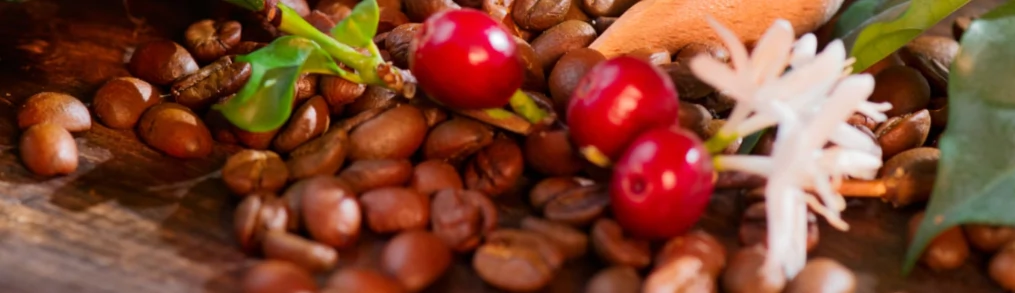
Location is not branding when it comes to Kona coffee. It is chemistry.
Koa Coffee grows in the Kona Coffee Belt on Hawaii's Big Island, a narrow strip of land on the western slope of Mauna Loa. This specific microclimate produces conditions that exist almost nowhere else on Earth.
The combination of volcanic soil, consistent cloud cover in the afternoon, and temperature ranges between 65°F and 75°F creates a slow-ripening environment that concentrates flavor compounds in the bean.
Origin Breakdown
| Factor | Description | Impact on Flavor |
|---|---|---|
| Region | Kona Coffee Belt, Big Island, Hawaii | Defines legal Kona designation |
| Soil Type | Rich volcanic basalt, porous and mineral-dense | Adds mineral complexity and low bitterness |
| Altitude | 800 to 2,500 feet above sea level | Slower ripening, denser beans, more complex flavor |
| Climate | Morning sun, afternoon clouds and rain, dry evenings | Ideal slow fermentation cycle |
| Harvest Method | 100% hand-picked, selective picking only | Only ripe cherries harvested, higher quality per pound |
| Processing | Wet-processed (washed) primarily, natural process available | Clean cup, bright clarity, low defect rate |
| Rarity | Less than 1% of global coffee production | Genuine scarcity, not manufactured rarity |
Koa Coffee also offers Ka'u Coffee (from the neighboring district) and 100% Waialua Coffee from Oahu's North Shore.
Each origin has a distinct flavor profile driven by different elevation and soil composition. This is not a single-product brand. It is a curated Hawaiian coffee portfolio.
⚙️ How Koa Coffee Performs Across Brewing Methods
Testing a premium coffee on a single brew method is incomplete analysis.
Kona coffee's natural characteristics, low acidity, medium body, and smooth sweetness, respond differently depending on extraction method. Here is how Koa performs across three standard methods using the Estate Medium Roast as the test variable.
Brewing Setup
| Method | Ratio (Coffee:Water) | Temperature | Grind Type | Brew Time |
|---|---|---|---|---|
| Pour Over | 1:16 (18g:290ml) | 93°C / 200°F | Medium-fine | 3:00 to 3:30 min |
| French Press | 1:15 (20g:300ml) | 94°C / 201°F | Coarse | 4:00 min steep |
| Espresso | 1:2.5 (18g in:45g out) | 92°C / 197°F | Fine | 28 to 32 seconds |
Brewing Results
| Method | Strength | Body | Clarity | Ease of Dialing In |
|---|---|---|---|---|
| Pour Over | Medium-high | Light to medium | Excellent | Easy |
| French Press | Medium | Full, slightly thick | Lower (expected) | Very easy |
| Espresso | High | Full, concentrated | N/A | Moderate difficulty |
Pour over is the recommended method for Koa's Estate and Peaberry lines.
It highlights the delicate floral and honey notes that espresso can mask with intensity.
French press is the better choice for the Grande Domaine Vienna Roast, where the heavier body and roast depth benefit from full immersion extraction.
Key note for espresso: Kona coffee's natural sweetness and low bitterness can make espresso taste underdeveloped to drinkers who expect bold Italian-style shots. Dial grind finer and aim for a 30-second extraction for best results.
☕ Koa Coffee Taste Test — Full Flavor Breakdown
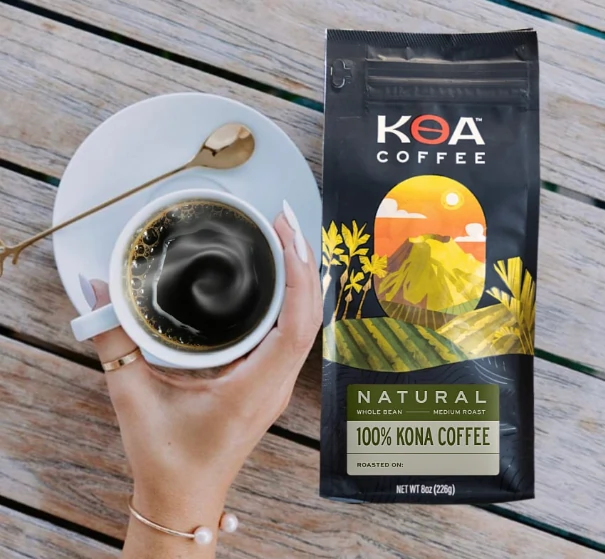
Kona coffee from Koa has a profile that is immediately recognisable to anyone who has brewed it before.
The first thing you notice is the aroma. It is not aggressive. It is soft, sweet, and slightly floral with a warm brown sugar undertone that builds as the brew cools.
Flavor Profile
| Attribute | Observation |
|---|---|
| Aroma | Brown sugar, honey, mild floral, light nuttiness |
| Body | Medium, smooth, clean mouthfeel |
| Acidity | Low to very low, rounded and non-sharp |
| Sweetness | Naturally present, honey and caramel range |
| Bitterness | Minimal in medium roasts, slightly more in Vienna and dark variants |
| Aftertaste | Clean, long, mild toffee finish |
| Complexity | Above average, noticeable shift in flavor as the cup cools |
The Peaberry delivers more concentrated sweetness and a noticeably fuller body compared to the Estate.
This is not accidental. Peaberry beans form when a single oval bean develops instead of two flat beans in the cherry. The result is a denser structure that roasts more evenly and delivers a more uniform flavor extraction.
The Ka'u Private Reserve shows a nuttier profile with less brightness, leaning more toward roasted hazelnut and dark honey.
One honest note: Some Yelp reviewers noted that the Kona Natural runs darker than its “medium roast” label suggests. Expectations set by the label do not always match the roast result in that particular SKU. This is a real inconsistency worth flagging.
📊 Koa Coffee Price Per Cup — Worth It or Not?
Let's run the actual numbers instead of saying “it's premium so it costs more.”
Koa lists three flagship products with these price points. Using a standard 10g per cup brewing dose:
Cost Per Cup Breakdown
| Product | Bag Price | Estimated Bag Size | Est. Cups Per Bag | Cost Per Cup |
|---|---|---|---|---|
| Estate Medium Roast | $90 | 16 oz / 454g | ~45 cups | ~$2.00 |
| Peaberry Medium Roast | $60 | 7 oz / 198g | ~20 cups | ~$3.00 |
| Grande Domaine Vienna Roast | $48 | 7 oz / 198g | ~20 cups | ~$2.40 |
| Ka'u Private Reserve | $78 | 7 oz / 198g | ~20 cups | ~$3.90 |
| Peaberry Dark Roast | $225 | 7 oz / 198g | ~20 cups | ~$11.25 |
The $2.00 to $3.90 range is the realistic daily cost for most buyers.
That is competitive with specialty cafe pricing. At $3.00 per cup brewed at home, you are paying less than most independent coffee shops charge for a single origin pour over.
The $225 Peaberry Dark Roast is a collector-tier item. That $11.25 per cup cost places it in a different category entirely.
Home vs Cafe Comparison
| Option | Average Cost Per Cup |
|---|---|
| Koa Coffee (brewed at home) | $2.00 to $3.90 |
| Independent specialty cafe | $4.50 to $7.00 |
| Chain coffee (Starbucks single origin) | $3.50 to $5.00 |
| Grocery store premium beans | $0.50 to $1.00 |
| Other 100% Kona brands (online) | $1.80 to $4.00 |
The value argument for Koa holds when you compare it to what you would pay for equivalent quality at a specialty cafe.
It does not hold when compared to grocery store beans, which is exactly the wrong comparison to make for a product in this category.
📊 Koa vs Royal Kona — Which One Is Actually Better?
This is one of the most searched comparisons in the best Hawaiian coffee category, and for good reason.
Royal Kona is a well-known name in the Kona coffee space. It has broad retail distribution and aggressive pricing. But not all Royal Kona products are 100% Kona. Many are labeled “Kona Blend,” which legally only requires 10% Kona content.
Koa is exclusively 100% Kona across its entire product line. This is a structural difference that changes the entire quality comparison.
Koa vs Royal Kona Side-by-Side
| Feature | Koa Coffee | Royal Kona |
|---|---|---|
| Kona Content | 100% Kona on all products | Varies; blends can be as low as 10% Kona |
| Price Range | $48 to $225 per bag | $12 to $45 per bag |
| Flavor Profile | Smooth, sweet, low acid, complex | Mild, accessible, less complex in blends |
| Awards | Forbes Best in America, Gevalia Cup, PCCA Winner | Brand recognition, wide retail presence |
| Availability | Online direct only | Retail stores, Amazon, direct |
| Roast Variety | Medium, Vienna, Dark across multiple origins | Medium and dark in multiple blend ratios |
| Transparency | Full origin sourcing listed | Blend ratios often unclear on packaging |
| Best Value Pick | Estate Medium Roast at ~$2.00/cup | 100% Kona line at ~$2.50/cup where available |
If you are comparing Koa to Royal Kona's blend products, Koa wins on every quality metric.
If you are comparing Koa to Royal Kona's 100% Kona line, the difference narrows. Koa still leads on awards and sourcing transparency. Royal Kona has the edge on accessibility.
For anyone specifically seeking the best Hawaiian coffee with verified provenance, Koa is the stronger choice.
Who Should Buy Koa Coffee (And Who Should Skip It)

Not every coffee buyer is the right match for a $60 to $90 bag of Hawaiian coffee.
This product targets a specific type of buyer. Understanding that target helps set honest expectations.
User Fit Guide
| User Type | Fit Level | Reason |
|---|---|---|
| Specialty coffee enthusiast | Excellent | Appreciates origin, process, and nuance |
| Black coffee drinker | Excellent | Low acidity and natural sweetness shine without additives |
| Gift buyer for coffee lovers | Excellent | Award history and brand story make it a meaningful gift |
| Occasional coffee drinker | Moderate | Price-per-cup math is harder to justify on low consumption |
| Espresso-only drinker | Moderate | Kona's profile is better suited to pour over and French press |
| Budget-conscious buyer | Poor | $2.00 to $3.90 per cup is not a daily budget for most people |
| Grocery store coffee buyer | Poor | Flavor gap is real, but so is the price gap |
| Cold brew or iced coffee fan | Moderate | Works but hot brew showcases the flavor profile better |
Pros and Cons
Product Pros
Product Cons
Final Verdict — Is Koa Coffee Worth the Price?
The Forbes claim is legitimate but dated.
Koa Coffee earned genuine external recognition from Forbes in 2001, won the Gevalia Cupping Competition in 2002, and took the PCCA Coffee of the Year award in 2004. That track record is not invented. It happened.
What this coffee delivers in 2026 is a premium, 100% Kona product with a clean, sweet, low-acid profile that stands clearly above mass-market alternatives.
The value case holds for buyers who brew at home and compare the cost against specialty cafe pricing. It does not hold for buyers who measure it against grocery store options.
Final Rating
| Category | Rating (Out of 10) |
| Taste | 8.5 / 10 |
| Value for Money | 7.0 / 10 |
| Consistency | 7.5 / 10 |
| Price | 6.5 / 10 |
| Origin Transparency | 9.0 / 10 |
| Brewing Versatility | 7.5 / 10 |
| Overall | 7.7 / 10 |
Logical Verdict
If you are a serious coffee drinker who brews at home, values single-origin provenance, and drinks black coffee regularly, Koa Coffee at the Estate or Peaberry tier is a strong purchase backed by real awards and a genuinely distinctive growing region.
If you are a casual drinker, an espresso-only household, or are price-sensitive, the math does not work in your favor and you will likely not taste enough of the nuance to justify the premium.
The Forbes title belongs to a specific era. But the coffee has continued earning its reputation independently since 2001. That matters more than the award itself.
Recommended entry point: Estate Medium Roast at ~$2.00 per cup. Start there. If the flavor converts you, the Peaberry is the next logical step.