VitaCup Coffee Review 2026: Vitamins in Your Cup or Just Hype?

Okay but hear me out…
I spent three weeks drinking VitaCup coffee every single morning. Same mug. Same time. Same sleepy face. 🌿
I wanted to know one thing. Does vitamin-infused coffee actually do anything, or is it just clever marketing wearing a lab coat?
This VitaCup coffee review is my honest take after 21 mornings, five flavors, and a lot of squinting at ingredient labels. No hype. No sponsorship. Just results.
Quick Answer: Is VitaCup Worth It?
VitaCup is worth it if you already drink coffee daily and want a small wellness boost without changing your routine. It won't replace a real vitamin regimen, but it's one of the easier habit stacks I've tried.
VitaCup Coffee Review: The Real-Talk Summary
| What You Need to Know | The Verdict |
|---|---|
| Best for | Busy people who drink K-Cups anyway |
| Not for | Specialty coffee purists or people needing clinical vitamin doses |
| Taste | Surprisingly drinkable, lightly sweet on some flavors |
| Price per pod | Around $0.90 to $1.20 |
| Vitamin claims | B1, B5, B6, B9, B12, D3 plus superfoods |
| Bioavailability | Partial. Heat and brew time reduce some vitamin content |
| My rating | 4 out of 5 🌿 |
What Is VitaCup Coffee, Exactly?
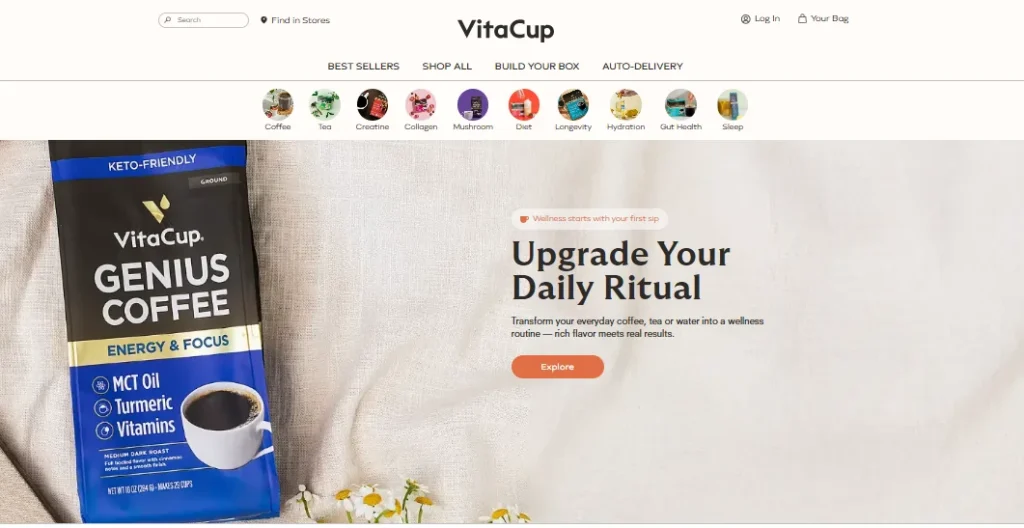
VitaCup is a coffee brand that infuses its pods, grounds, and instant sticks with vitamins, superfoods, and adaptogens. Think B vitamins, vitamin D3, turmeric, MCT oil, lion's mane, moringa, and garcinia.
The VitaCup pods are designed for Keurig machines. They also sell ground coffee bags and tea versions if pods aren't your thing.
The brand pitches itself as wellness in a cup. Not a supplement. Not a medicine. Just your normal coffee, upgraded.
Which Vitamins Are Actually in VitaCup?
Most VitaCup blends contain the same core vitamin lineup with small variations. Here's what shows up on the label across the main SKUs.
Some blends also add turmeric, cinnamon, MCT oil, lion's mane mushroom, or moringa depending on the flavor line. The Slim blend leans into garcinia. The Focus blend leans into lion's mane. The Genius blend adds MCT and turmeric.
No exaggeration when I say… the ingredient deck is actually more serious than I expected going in.
The Bioavailability Question Nobody Asks
Here's the part most VitaCup reviews skip. Brewing coffee involves hot water, pressure, and a paper or mesh filter. That matters.
B vitamins are mostly water-soluble, which means they transfer into your cup reasonably well. Vitamin D3 is fat-soluble, which means without fat in your brew, absorption is lower. Same story for turmeric, which needs fat and black pepper to really work.
So does VitaCup work? Partially. You're getting a real dose of B vitamins and a smaller functional hit from the fat-soluble stuff. If you add whole milk, oat milk with fat, or a splash of MCT creamer, the D3 and turmeric absorb better.
This is the honest version. VitaCup won't replace a proper multivitamin. It can absolutely top you up alongside one.
Taste Test: All Five Flavors I Tried
I rotated five VitaCup flavors across three weeks. Same Keurig. Same water filter. Same 8oz pour. Here's how they actually tasted.
Genius Blend (Medium Roast with MCT and Turmeric)
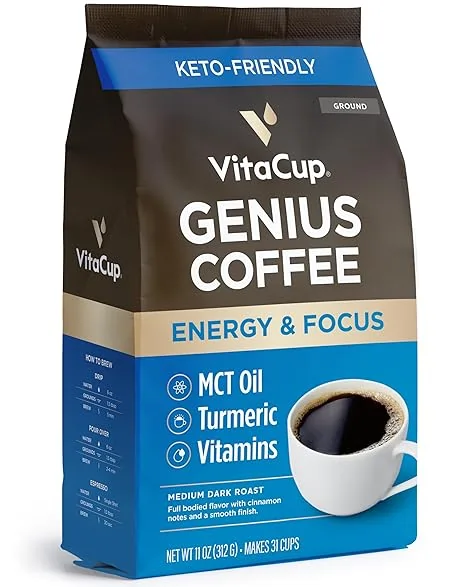
Smooth. Earthy. A little sweet on the finish from the turmeric. Not chalky like I feared.
This is the one I reached for most often. It tastes like… coffee with a subtle warmth. If turmeric lattes are your thing, you'll love this.
Focus Blend (Medium Roast with Lion's Mane)
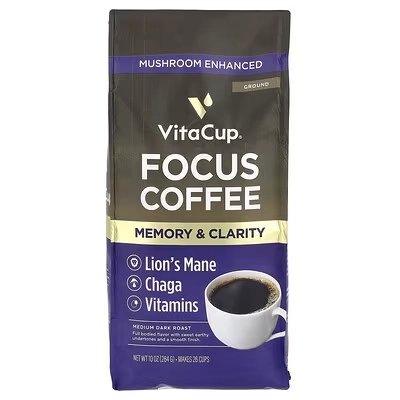
Balanced and clean. You don't taste the mushroom at all, which is a win in my book.
The first week I genuinely felt a little sharper by 10am. Placebo? Maybe. But I noticed it consistently enough to mention.
Slim Blend (Medium Roast with Garcinia and Ginseng)
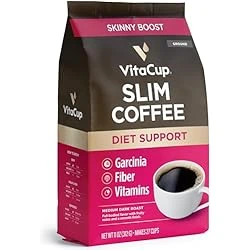
The weakest flavor of the five. Slightly bitter aftertaste. Not offensive, just not as rounded as Genius or Focus.
I don't buy the weight loss angle, and you shouldn't either. Coffee itself is the metabolism nudge. Garcinia's research is mixed at best.
Perform Blend (Dark Roast with Vitamin B12 and B6)
Bold. Proper dark roast character. This tastes the most like a normal cup of coffee.
If you're skeptical about functional coffee tasting weird, start here. It's the gateway.
Beauty Blend (Medium Roast with Biotin and Collagen-Supporting Nutrients)
Lightly sweet, almost floral. I didn't expect to love this but I kept going back to it.
Does it change your skin? I can't tell you that in three weeks. What I can tell you is it drinks well.
VitaCup Pods vs Regular K-Cups: The Real Comparison
This is the question I get asked most. Let's lay it out honestly.
| Factor | VitaCup Pods | Regular K-Cups |
|---|---|---|
| Price per pod | ~$0.90 to $1.20 | ~$0.40 to $0.70 |
| Vitamins/superfoods | Yes, 6+ nutrients | None |
| Taste | Good, slightly sweet | Varies widely |
| Caffeine | Standard 8oz serving | Standard 8oz serving |
| Recyclability | Recyclable pod | Often not |
| Keurig compatibility | Full | Full |
VitaCup costs roughly double a standard K-Cup. Whether that's worth it depends on whether you'd otherwise be taking a separate B-complex. If yes, VitaCup actually saves you money and a step.
VitaCup Coffee Price Breakdown
Pricing varies by blend and pack size, but here's the typical range I found.
The subscription is genuinely the move if you're going to commit. You can pause, skip, or cancel whenever. No wellness-brand games.
Does VitaCup Work? My Honest 21-Day Take
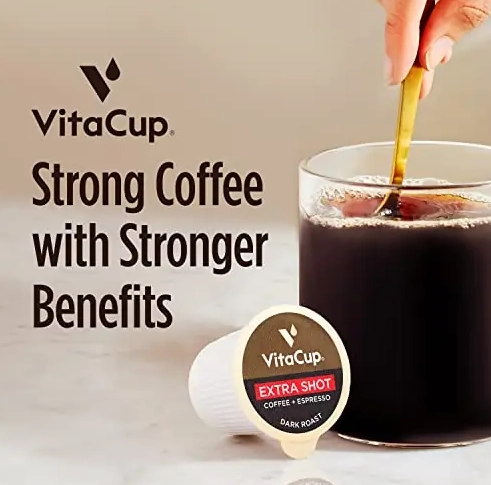
This changed my whole morning in one specific way. Not energy. Not focus. Consistency.
Because I was brewing VitaCup daily, I stopped forgetting my B-complex pill. That's it. That's the mechanism. Habit stacking with something I already do.
By week three I noticed I wasn't hitting the 3pm wall as hard. Could be the B vitamins. Could be better sleep. Could be that I stopped skipping breakfast because I was more intentional about mornings. Honestly? Probably all of the above.
The Wellness Angle for Busy Mornings
If you're a morning routine optimizer, VitaCup slots in beautifully. You're already making coffee. You're already standing at the machine. Adding vitamins without adding a single new step is the whole appeal.
I pair mine with a glass of water, a protein-forward breakfast, and ten minutes of sunlight. The coffee becomes the anchor. Everything else stacks onto it.
For people with anxiety around caffeine, start with the lighter blends. The Focus blend felt the cleanest to me. If CBD coffee is more your lane, our guide on CBD coffee for anxiety might be a better fit for you.
What VitaCup Gets Right
Where VitaCup Falls Short
This is where I have to be honest with you. No product is perfect, and VitaCup has real limitations.
And honestly? That's the whole point of an honest review. These aren't dealbreakers for me, but they might be for you.
Who VitaCup Is Genuinely For:
Who Should Skip VitaCup:
How to Brew VitaCup for Maximum Benefit
A few small tweaks meaningfully change how much nutrition your body actually absorbs.
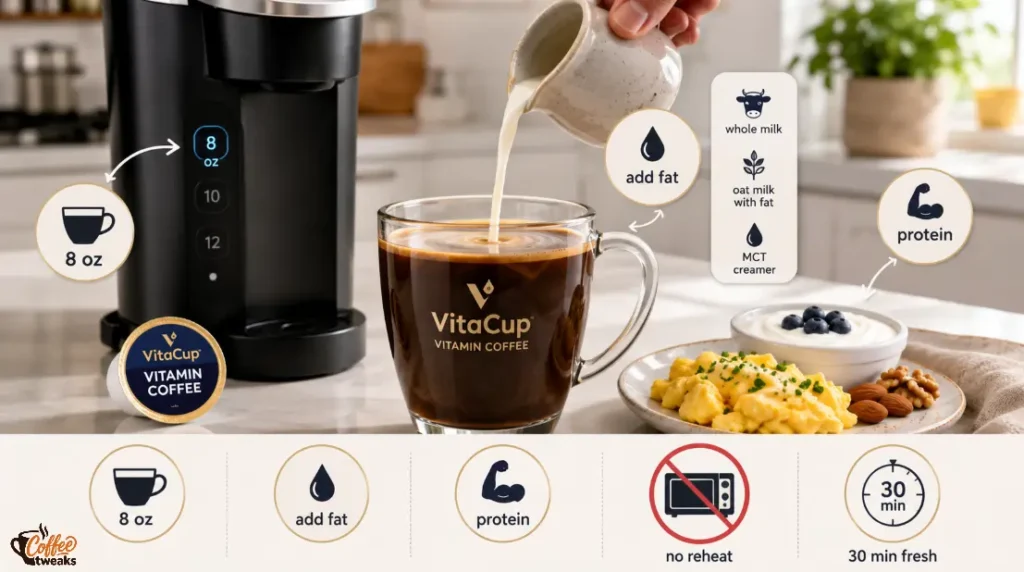
- Brew at the standard 8oz setting, not larger, to keep nutrient concentration up
- Add a splash of whole milk, oat milk with fat, or MCT creamer to unlock fat-soluble vitamins
- Pair with a small protein breakfast so B vitamins have company during absorption
- Don't microwave reheated VitaCup repeatedly, which degrades B-complex content
- Drink it within 30 minutes of brewing for best flavor and nutrient retention
VitaCup vs Other Functional Coffees
The functional coffee space is getting crowded. Four Sigmatic leans mushroom-heavy. Bulletproof leans fat and MCT. Javita leans weight management. VitaCup sits in the vitamin-first lane.
If you care most about adaptogens, Four Sigmatic is sharper. If you care most about ketogenic support, Bulletproof wins. If you want a multivitamin baked into your morning cup, VitaCup is the cleanest execution I've tried.
Frequently Asked Questions
Does VitaCup coffee actually give you vitamins?
Yes, VitaCup delivers real doses of water-soluble B vitamins in every cup. Fat-soluble nutrients like D3 and turmeric absorb less efficiently unless you add milk, cream, or MCT to your brew.
Are VitaCup pods better than regular K-Cups?
VitaCup pods offer added vitamins and superfoods that regular K-Cups don't. They cost roughly double, but if you'd otherwise take a separate B-complex supplement, VitaCup can replace that step.
Does VitaCup work for weight loss?
Not really. The Slim blend contains garcinia and ginseng, but the evidence for garcinia-based weight loss is weak. Coffee itself is the main metabolism nudge, not the added ingredients.
Is VitaCup safe to drink every day?
Yes, for most healthy adults. The vitamin doses per cup are modest and below tolerable upper limits. Check with your doctor if you're pregnant, on medication, or already taking a multivitamin.
How much does VitaCup cost per pod?
VitaCup pods cost roughly $0.90 to $1.20 each depending on blend and pack size. Subscribing through auto-delivery drops the price by up to 30% with free shipping on orders over $39.
Does VitaCup coffee taste like regular coffee?
Mostly yes. Four of the five flavors I tried tasted like normal coffee with subtle warmth or sweetness. Only the Slim blend had a slightly bitter aftertaste that stood out.
Can I use VitaCup pods in any Keurig machine?
Yes, VitaCup pods work in all standard Keurig single-serve brewers. They're designed to be fully compatible with the same 8oz brew settings you already use.

My Final VitaCup Verdict
VitaCup isn't magic. It's not going to replace your doctor, your multivitamin, or your sleep. What it will do is turn a habit you already have into one that quietly adds something good to your day.
The taste holds up. The ingredient list is clean. The subscription is fair. The marketing occasionally overreaches, which is why I knocked a point off.
For a wellness-minded morning routine optimizer, this is one of the easier upgrades you can make. Low effort. Real payoff. That's rare in the wellness space.