Breville Barista Express Review 2026: Café at Home?

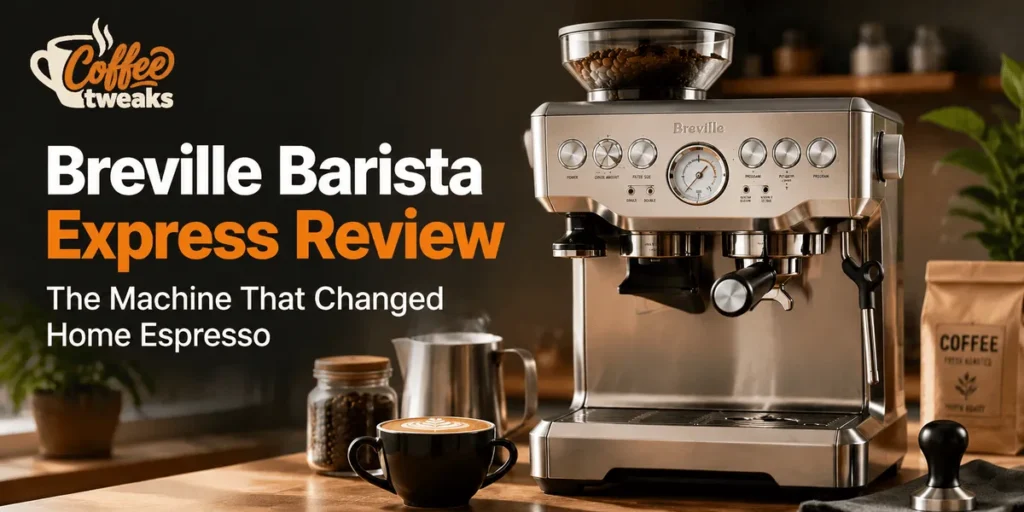
The Breville Barista Express (BES870XL) is worth it for first-time home espresso buyers in 2026. After months of daily use, it delivers genuine café-quality shots thanks to PID temperature control, low-pressure pre-infusion, and a built-in conical burr grinder, all for $699.95.
A grinder, machine, and steam wand in one box makes it the most complete first espresso machine at this price.
Okay but hear me out.
The first espresso machine I ever bought terrified me. Buttons, a pressure gauge, grind settings, a manual thick enough to count as a short novel.
Then I bought the Breville Barista Express. And suddenly home espresso felt possible.
I have made two shots a morning on this thing for months. Sometimes three. I have over-extracted, under-extracted, wiped coffee grit off my counter more times than I want to admit, and slowly fallen for the whole ritual of it. 🌿
So this is not me copying specs off Amazon. This is me telling you what it is actually like to live with one. Including the bits nobody mentions.
If you keep seeing this machine on every “best espresso” list and you are wondering whether it is real or just affiliate noise, stay with me.
So What Is the Barista Express?
It is an all-in-one. Grinder built in, machine built in, steam wand built in. One box.
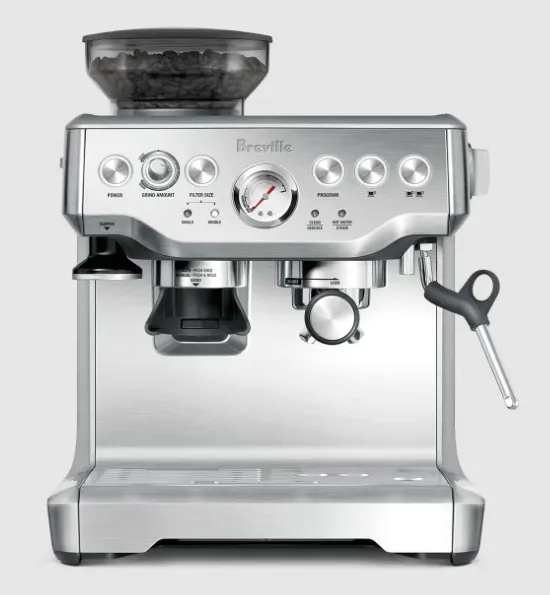
You pour whole beans into the hopper, press a button, and it grinds straight into your portafilter before you pull the shot. Fresh grounds, every single time, no separate grinder cluttering your counter.
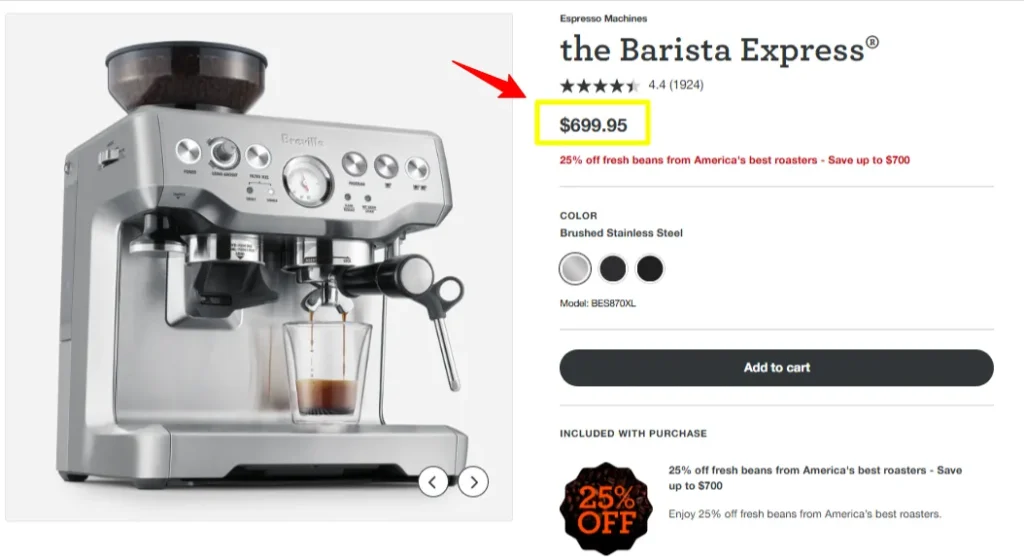
It costs $699.95 and comes in brushed stainless steel. It is the BES870XL, if you want the model number to quote at people.
Here is the short version of the spec sheet: 54mm portafilter, 9-bar extraction from a 15-bar Italian pump, PID temperature control holding 200°F, a manual steam wand, and 16 grind settings.
Good list for the money. But specs are just words until you live with something.
Unboxing: First Five Minutes
The box is heavy. Clear your counter and use two hands.
Inside there is a proper pile of kit: the 54mm portafilter, single and dual wall baskets, a stainless milk jug, a tamper that clicks onto the machine magnetically, a dosing funnel, the Razor trimming tool, and a full set of cleaning bits.
The machine itself looks the part without trying too hard. The brushed steel hides fingerprints better than glossy machines, and the pressure gauge on the front gives it that café energy without scaring you off.
Setup took me about half an hour. Breville links to a 3D app called BILT that walks you through it, which honestly beats the booklet.
I pulled my first shot 45 minutes after opening the box. It was not perfect. But it was real espresso. Crema and all. That first shot matters more than people give it credit for.
Your First Shots: Set Your Expectations
No exaggeration when I say, the first week is a lesson, not a coffee holiday.
This machine does not do the work for you. It is not a pod machine. It asks you to show up. Grind size, dose, tamp, timing. They all talk to each other, and it takes a few days for them to agree.
The thing that saves you is the pressure gauge. While the shot pulls, you want the needle sitting in the espresso zone.
Too low? Your grind is too coarse or your dose too light. Too high? Grind finer or tamp a touch harder. That little dial is basically your coach.
Breville gives you forgiving dual wall baskets for the early days, then single wall baskets for when you are ready to get fussy. Start with the dual wall ones. Save yourself the stress.
My first week went from sour to bitter and back again. Week two, I started hitting shots that tasted like a proper café. Week three, mornings had a whole new rhythm.
The Grinder: The Part Everyone Argues About
This is where most reviews either oversell it or hide the truth. Let me just be straight with you.
It is a conical burr grinder, 16 settings, and for this machine at this price it does the job well. In testing it lands extractions right in the 18 to 22 percent sweet spot, which is exactly where you want balanced espresso. It is also pleasantly quiet at 6am, which my flatmate appreciates.
Here is the catch. The settings are stepped, not stepless. You pick from 16 fixed stops. You cannot nudge between them.
For making lattes and flat whites at home? Totally fine. You find your sweet spot, leave it there, and forget about it.
Where it starts to pinch is if you fall deep into the espresso rabbit hole and start chasing light roasts and single origins. Those want finer, more precise control, and the stepped settings feel tight.
I will be honest. A fair few long-term owners eventually buy a separate grinder and keep the Express just as the machine. There are also some reports of grinder wear after the 18 to 24 month mark.
So, for a first-timer who wants lovely coffee? The grinder is more than enough. For someone who already knows they want to obsess? It will frustrate you eventually.
The Brewing System: Where I Stopped Doubting
This changed my whole morning.
The PID temperature control holds water at exactly 200°F all the way through the shot. That sounds like small print, but temperature is one of the biggest reasons espresso tastes off, and plenty of machines at this price get it wrong.
You can taste the steadiness in the cup.
The pre-infusion is doing quiet work too. It gently wets the puck at low pressure before the full 9 bars kick in.
That means less channelling, rounder flavour, less bitterness. Shots come out balanced instead of harsh.
In testing it pulled 19 grams in, 30 grams out, in 29 seconds. Textbook. The crema sits thick and caramel-coloured once your grind is dialled.
And honestly? That is the whole point of buying a machine like this.
The Steam Wand: My Honest Take
The steam wand is fully manual. No froth button. You hold the jug, you angle the wand, you texture the milk yourself.
I love it. It pushed me to learn a real skill, and the microfoam it makes once you get it is genuinely lovely. Smooth, silky, pourable, good enough for a little latte art if you fancy it.
The learning curve is real though. Your first tries will be either bubbly froth or flat scalded milk.
You want a gentle whirlpool in the jug, the tip just under the surface, and you stop when the jug feels warm against your palm. Practice gets you there fast.
One thing to know. The wand clogs if you ignore it. Purge and wipe it after every single use and it stays perfect. Leave milk to dry in there and it becomes a chore.
The Learning Curve: Real Talk
This machine sits in a funny middle spot, and I think that is its whole charm.
It is friendly enough that a total beginner can pull a decent shot in a week. But it asks enough of you that you have to actually want to learn.
If you want great coffee with zero effort, this is not your machine. If you want to understand what you are making and get better month by month, it pays you back.
Most people hit a wobbly first fortnight. Dialling in the grind takes trial and error. Tamping evenly is a skill. None of it is hard. All of it needs attention.
The pressure gauge carries you through. By month one you stop thinking about it. By month three a good shot is muscle memory. By month six your mates start asking why your coffee beats the café down the road.
My 6-Month Update
I didn't expect to love this but, six months in, I genuinely do. Here is the honest update.
Still impresses me: The temperature has not drifted. Same beans, same settings, same shot as day one. It heats up in 30 to 45 seconds, so I am not stood there half asleep waiting.
The build still feels solid. Steel looks new, the portafilter still seals clean, nothing rattles.
Started to annoy me: Grind retention. Old grounds sit in the chute between sessions, so I do a quick purge grind first, which wastes a few beans.
Dose consistency on the auto setting wobbles a little day to day. If you are precise about your 18 grams, you will reach for the Razor tool or a scale fairly often.
The water tank warns you early, before it is actually empty, so you sometimes get a refill nudge mid-session. Tiny thing, but worth knowing.
Build Quality and Longevity
With regular cleaning, this machine lasts a good long while. Plenty of owners get three to five years and beyond out of it.
That said, I am not going to pretend it is bulletproof. Some units develop grinder, seal, or pressure issues after the warranty runs out, and Breville's support gets mixed reviews from owners.
Which brings me to the one real gripe. The warranty is only one year. On a $699 machine that feels light.
If you buy one, look at a retailer that offers an extended warranty. And treat the cleaning schedule like a ritual, not a chore. This machine rewards people who look after it.
So, Is the Barista Express Worth It in 2026?
At $699.95 it is real money. So here is where I land after months of daily use.
I love it. Not because it is flawless, it is not. The grinder has limits, the warranty is short, and the first two weeks test your patience.
But for a first-time buyer who wants to actually learn espresso instead of pressing a pod button, it is still one of the most complete starting points out there.
You get a grinder, real PID temperature control, a proper portafilter, and a steam wand in one box for under $700. Buying all of that separately at the same quality would cost you a lot more.
It is not the last machine a coffee obsessive will ever own. But as a first machine, it teaches you more about espresso than almost anything else at this price. And honestly? That is exactly what you want from your first one. ☕
Who Should Buy It (And Who Should Skip It)
Who It Is For:
Who Should Skip It:
Barista Express vs Barista Pro
| Feature | Barista Express BES870XL | Barista Pro BES878 |
|---|---|---|
| Price | $699.95 | ~$849.95 |
| Display | Buttons + pressure gauge | LCD digital |
| Grinder | Stepped (16 settings) | Stepless adjust |
| Heat System | Thermocoil PID | ThermoJet |
| Heat-Up | ~30-45 seconds | ~3 seconds |
| Best For | Beginners wanting value | Intermediate users wanting control |
If you already know you will go deep, the Pro is worth the extra. If this is your first machine and you want to find out whether you love home espresso, the Express is the smarter spend.
Specifications
| Spec | Detail |
|---|---|
| Model | BES870XL |
| Price | $699.95 |
| Grinder | Conical burr, 16 steps |
| Portafilter | 54mm stainless steel |
| Pump | 15-bar Italian |
| Extraction Pressure | 9 bar |
| Heating | Thermocoil with PID |
| Temperature | 200°F |
| Power | 1600W |
| Water Tank | 67 oz |
| Bean Hopper | 0.5 lb |
| Weight | 22.09 lbs |
| Dimensions | 12.5″ x 13.8″ x 15.9″ |
| Warranty | 1 year limited |
Breville Barista Express Review: Pros and Cons
Pros:
Cons:
FAQ
Does it come with a grinder?
Yes. The grinder is built in, with 16 settings and dose control that grinds straight into the portafilter.
Can I use pre-ground coffee?
Yes. There is a bypass doser for pre-ground coffee, handy for decaf or a specific blend.
What grind setting should I start with?
Start around setting 5 for a medium roast. Go finer if the shot runs too fast, coarser if it runs too slow. Let the pressure gauge guide you.
How often does it need cleaning?
Rinse the portafilter and baskets after every use, clean weekly, backflush monthly, and descale every two to three months depending on your water.
Is it good for beginners?
Yes. The pressure gauge, the forgiving dual wall baskets, and the built-in grinder make it one of the friendlier machines to learn on.
How long does it last?
With regular care, up to ten years or more. Some owners report grinder or seal issues at the three to five year mark depending on use and maintenance.
Express or Pro?
The Pro has a stepless grinder, near-instant ThermoJet heating, and an LCD, for about $150 more. The Express is the better value for beginners; the Pro suits intermediate users who want more control.
Does it make good lattes?
Yes. The manual steam wand makes proper microfoam once you learn the technique, which takes a week or two. The milk comes out smooth and silky.