Waka Coffee Review: 100% Arabica Instant, Worth It?

Real talk… I was an instant coffee hater for roughly a decade. Burnt, sour, ashy, the kind of brown liquid that tastes like regret and freeze-dried sadness. Then someone handed me a Waka sachet in a hotel room in Denver and I had to rewrite my opinion in real time.
This Waka Coffee review is the result of three months of drinking it at home, dragging it through airports, and doing a blind taste test against a proper drip pot. If you are searching for the best instant coffee 2026 has to offer, or you are sick of carrying a pour-over kit onto a plane, Waka is the disruptor actually worth paying attention to.
Their freeze-dried 100% Arabica approach, direct-to-consumer pricing, and refusal to play the big-grocery-brand game makes the waka vs nescafe conversation… not really a conversation anymore.
Let me explain why. ☕
Quick Answer: Is Waka Coffee Worth It?
👉Who it's for: Commuters, travelers, office workers, campers, and specialty coffee drinkers who need a fast cup without tasting the usual instant coffee crimes.
✅Is it worth it? Yes. Solid 4.3/5. It is not a flat white from a Melbourne café, but it is the best instant coffee I have had in the American market, and the price-per-cup genuinely makes sense.
Waka Coffee Review: Quick Facts Before You Buy
| Factor | Verdict |
|---|---|
| Taste vs regular instant | Noticeably cleaner, less ashy, real Arabica character |
| Taste vs fresh drip | Close. Not identical. About 80–85% of the way there |
| Process | 100% Arabica, freeze-dried (not spray-dried like Nescafe Classic) |
| Price per cup | Around $0.55–$0.80 per serving, depending on size |
| Best use case | Travel, office, camping, hotel rooms, lazy mornings |
| Weakness | Not a replacement for a real espresso shot or pour-over ritual |
| Rating | 4.3/5 |
Why I Finally Tried Waka (After Judging Instant for Years)

Here's the thing… I have pulled an estimated 10,000 espresso shots. My kitchen has a dialed-in grinder and a scale that measures to 0.1g. Instant coffee was never on the menu.
But life happens. You end up on a 6am flight with no airport café open. You end up in an Airbnb with a broken Keurig. You end up in a meeting room where the “coffee” is a pod machine that has not been cleaned since 2019.
Waka solves that gap without making me feel like I have betrayed my morning. And I am not apologizing for that.
How Waka's Freeze-Dry Process Actually Works
The waka freeze dried process is the whole reason this stuff tastes like coffee instead of burnt cardboard.
Most supermarket instant coffee is spray-dried. That means brewed coffee gets blasted with hot air at high temperatures, which kills most of the aromatics. You lose the volatile compounds that make coffee taste like… coffee.
Freeze-drying does the opposite:
This is why Waka actually tastes like a cup of coffee and not a cup of memory of coffee.
It is the same process premium brands like Mount Hagen and Starbucks Via use. The difference is Waka sources 100% Arabica from Colombia, Ethiopia, and India, and they keep the pricing reasonable by selling direct.
Waka vs Nescafe: The Blind Taste Test
I did a blind test. Four cups. Waka Colombian medium roast, Nescafe Classic, Nescafe Gold, and a fresh V60 pour-over made from a local Colombian single origin as the control.
Here is what happened.
The Results
| Coffee | Aroma | Body | Aftertaste | Score /10 |
|---|---|---|---|---|
| Fresh V60 pour-over | Bright, fruity | Medium, clean | Long, sweet | 9.2 |
| Waka Colombian | Nutty, caramel | Medium | Clean, mild cocoa | 7.8 |
| Nescafe Gold | Roasty, faint | Thin | Slightly bitter | 5.5 |
| Nescafe Classic | Burnt rubber energy | Watery | Ashy, lingering | 3.9 |
The waka vs nescafe gap was bigger than I expected. Nescafe Classic tasted like it had been roasted in a tire fire. Nescafe Gold was better but still thin. Waka genuinely drank like a medium-strength brewed coffee.
It did not beat the V60. Nothing instant will. But it closed the gap in a way I did not think was possible for something that dissolves in 10 seconds.
Waka vs Drip Coffee: The Harder Comparison
Against a standard drip machine using grocery-store pre-ground coffee? Waka wins. Easily.
Against freshly ground specialty beans in a quality pour-over? Waka loses. Obviously.
The honest middle ground: Waka is better than about 70% of the coffee most Americans drink at home on autopilot. It is worse than a carefully made pour-over from freshly roasted beans.
That is a useful truth. Most reviews will not tell you that.
Best Use Cases: When Waka Actually Makes Sense
This is where Waka goes from “nice instant coffee” to “genuinely the right tool.”

Waka Travel Coffee for Flights and Hotels
Waka travel coffee is the category where it completely dominates. Single-serve sachets weigh nothing. They fit in a passport sleeve. You ask for hot water on the plane and you have a real cup of coffee while everyone around you is drinking the airline's brown water.
I have brought it to:
Every single time, it was the right call.
Office Coffee Without the Office Coffee
If your office coffee situation is a sad pot that someone made at 7am and has been sitting on a burner since, Waka is a mercy. Boil water. Stir. Done.
Iced Coffee on Demand
Stir into cold water. Add ice. It dissolves cleanly, which is something cheap instant cannot do without clumping.
Camping and Backpacking
No grinder. No filter. No spent grounds to pack out. A single sachet and a camp stove is the whole kit.
Where Waka Falls Short (The Honest Negatives)
I said I would be honest. Here is where Waka is not perfect.
It Is Not an Espresso Replacement
If you want crema, pressure extraction, and the texture of a real shot, freeze-dried coffee physically cannot give you that. No instant can. Anyone claiming otherwise is selling you something.
The Roast Profile Is Safe
Waka leans medium roast, caramel, nutty, a bit of cocoa. If you are into funky natural-processed Ethiopian light roasts with strawberry and bergamot notes, Waka will taste one-dimensional. It is designed to please the widest possible palate, which means the ceiling is capped.
Price Per Cup Is Higher Than Bulk Instant
At roughly $0.55 to $0.80 per serving, Waka costs more than a tub of Folgers Instant. You are paying for freeze-drying, 100% Arabica, and sourcing. Worth it, but not the cheapest option on the shelf.
Single-Serve Packaging Creates Waste
The sachets are convenient. They are also more packaging per cup than a jar. Waka uses recycled and recyclable materials, but it is still more material than buying in bulk.
Availability Outside the US
International shipping exists but adds cost. If you are outside North America, the price-per-cup math gets less friendly.
Waka Price Per Cup: Let's Do the Math
| Product | Count | Approx. Price | Per Cup |
|---|---|---|---|
| Waka 8ct single-serve box | 8 sachets | ~$7.99 | ~$1.00 |
| Waka 50ct bulk box | 50 sachets | ~$34.99 | ~$0.70 |
| Waka 3.5oz pouch | ~35 cups | ~$19.99 | ~$0.57 |
| Starbucks Via | 8 sachets | ~$9.99 | ~$1.25 |
| Nescafe Gold jar | ~60 cups | ~$12 | ~$0.20 |
| Starbucks at the airport | 1 cup | ~$4.50 | $4.50 |
Verdict on value: Waka is more expensive than grocery-store instant. It is cheaper than Starbucks Via. And it is dramatically cheaper than the $4.50 airport cup you would have bought instead. For travelers, the math is not close.
Waka Flavor Lineup: What to Actually Buy
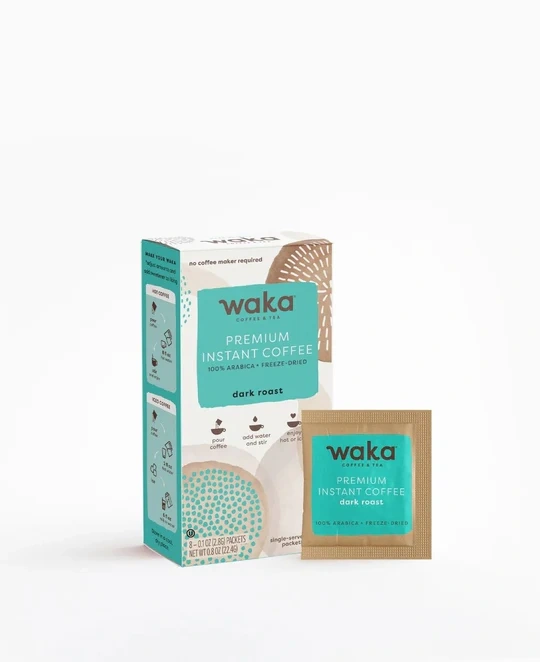
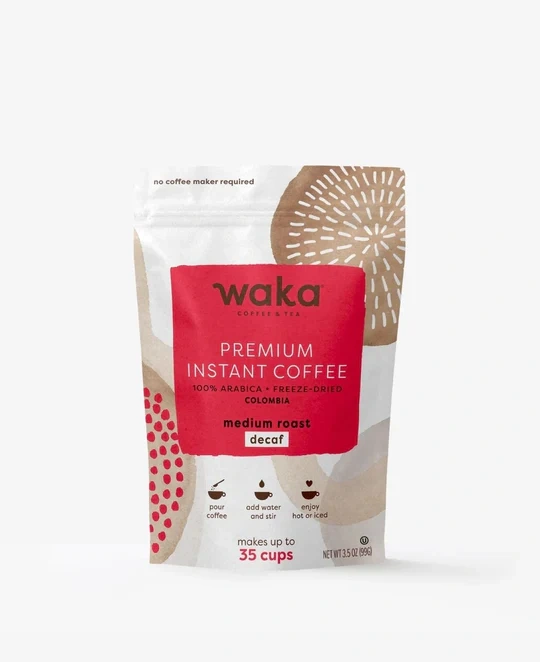
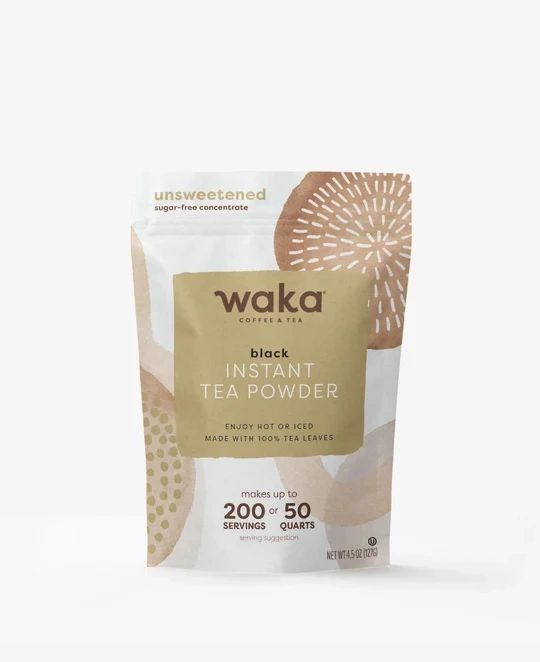
Waka has expanded well beyond basic medium roast. A quick rundown of what is worth ordering.
Colombian Medium Roast
The flagship. Caramel, mild cocoa, balanced body. This is the one to start with. It is also the one most people mean when they talk about Waka.
Ethiopian Light Roast
Brighter, slightly floral, more acidity. If you like pour-over style coffees, start here instead of the Colombian.
Indian Dark Roast
Heavier, earthy, a bit of smoke. Good for people who add milk.
Decaf
The decaf is genuinely decent. Most instant decaf is punishment. This one is drinkable.
Dirty Chai and Flavored Options
The new unsweetened instant dirty chai is weirdly good if you add milk and a touch of sweetener. Low-key obsessed with it on cold mornings.
How Waka Is Disrupting the Instant Coffee Market
Here's the thing nobody talks about… the instant coffee category was frozen in time for forty years.
Nestle and a few other giants owned the shelves. They kept using cheap Robusta, spray-drying, and decades-old formulas because nobody was pushing back. The assumption was that instant drinkers did not care about quality.
Waka flipped three things at once:
That last one matters. Waka is not trying to be a cheaper Nescafe. It is trying to make instant coffee something a specialty coffee drinker can order without flinching. Different market. Different price point. Different expectations.
It is the classic disruptor playbook, and it is working. Grocery brands are losing instant coffee shelf share to direct-to-consumer challengers year over year.
Who Should Actually Buy Waka
Buy Waka if you are:
Skip Waka if you are:
Waka vs the Competition at a Glance
| Brand | Process | Origin | Per Cup | Taste Rank |
|---|---|---|---|---|
| Waka | Freeze-dried | 100% Arabica, named origins | ~$0.70 | 1st |
| Starbucks Via | Microground + instant | Arabica blend | ~$1.25 | 2nd |
| Mount Hagen | Freeze-dried organic | Arabica | ~$0.85 | 3rd |
| Nescafe Gold | Freeze-dried | Arabica/Robusta blend | ~$0.35 | 4th |
| Nescafe Classic | Spray-dried | Mostly Robusta | ~$0.15 | Last |
Waka is not the cheapest. It is the best value once you factor in what it actually tastes like.
Frequently Asked Questions
Is Waka Coffee actually good, or is it just marketing?
Waka is actually good. It uses 100% Arabica and a freeze-dry process that preserves far more flavor than spray-dried instant. In a blind test against Nescafe Classic and Nescafe Gold, it outperformed both clearly and tasted closer to fresh drip coffee than any instant I have tried.
How does Waka compare to Nescafe?
Waka uses 100% Arabica beans and freeze-drying. Nescafe Classic uses mostly Robusta and spray-drying. The result is Waka tastes cleaner, less bitter, and more like brewed coffee. Nescafe Gold is closer to Waka in process but still falls short on flavor depth.
Is Waka freeze dried or spray dried?
Waka is freeze-dried. The coffee is brewed, frozen, and dehydrated under vacuum, which preserves aromatic compounds that spray-drying destroys. This is the main reason Waka tastes noticeably better than most supermarket instant coffee.
Is Waka good for travel?
Yes. Waka travel coffee is one of the best uses for the product. Single-serve sachets weigh almost nothing, fit anywhere, and only need hot water. It is ideal for flights, hotels, camping, and RV trips.
How much does Waka cost per cup?
Waka costs roughly $0.55 to $1.00 per cup depending on which size you buy. Bulk pouches are cheapest at around $0.57 per cup. Single-serve 8-count boxes run about $1.00 per cup.
Is Waka instant coffee worth the price?
For travelers, office workers, and specialty coffee drinkers who need a quality backup, yes. It is more expensive than bulk supermarket instant but delivers dramatically better taste. For anyone who already brews fresh specialty coffee at home every day, it is a supplement rather than a replacement
My Verdict
Waka is the instant coffee that refuses to taste like instant, and it mostly pulls it off.
It is not a replacement for fresh-ground, properly brewed specialty coffee. Nothing instant is. But it is the first instant I have kept in my cupboard on purpose. I pack it for every flight. I give it to friends. I stopped buying airport coffee because of it.
For commuters, travelers, office workers, and specialty drinkers who need a quality backup, this is the one. Low-key obsessed with it, and I'm not apologizing for that. 🎯