How to Make Coffee Less Bitter: 7 Tested Techniques


Okay but hear me out… I spent about six years thinking bitter coffee was just coffee. 🌿
That's how it tastes. That's the deal. You add sugar, you wince a little, you move on.
Then one rainy morning in Barcelona, a tiny café handed me a cup that needed nothing. No sugar. No milk. Just smooth, sweet, alive. That moment made me obsessed with figuring out how to make coffee less bitter — because bitter isn't the baseline. It's a signal something's off.
So let's fix it. ☕
Why Is My Coffee Bitter? (Read This First)
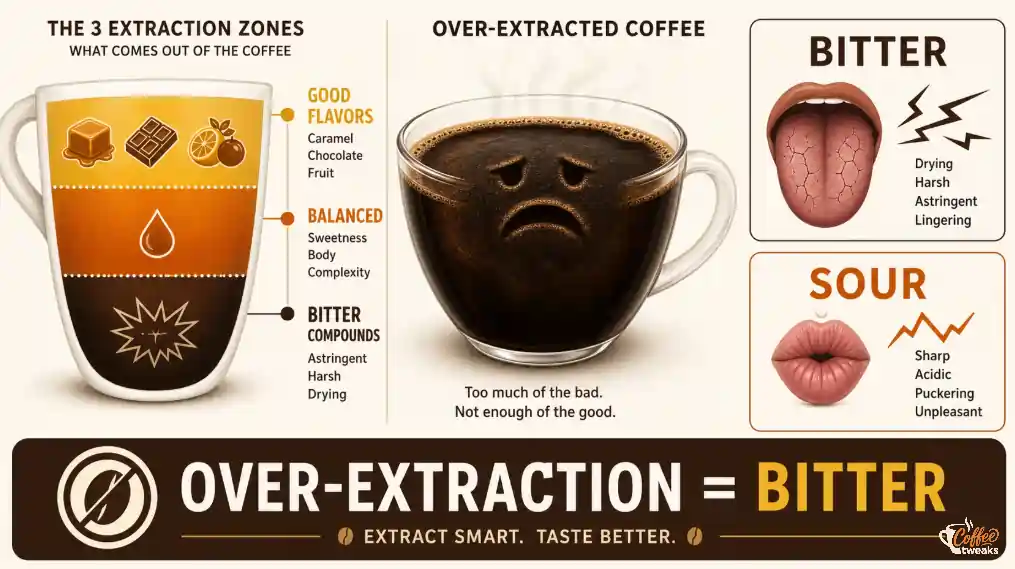
Here's the one thing that unlocks everything: bitter coffee is almost always over-extracted coffee.
That means the water pulled too much out of your grounds. The good flavors come out first. The harsh, dry, ashy stuff comes out last. Over-extract, and you drink the harsh stuff too.
So every fix below does one job. Extract a little less.
Bitter vs Sour vs Strong vs Bold
This trips up almost everyone. I confused these for years.
Why this matters… if your coffee is actually sour and you “fix” it like it's bitter, you make it worse. Taste first. Then act.
The 30-Second Bitter Coffee Diagnosis
No exaggeration when I say this little checklist saved my mornings. Run through it before you change anything:
- Did you pour boiling water straight onto the grounds? → Too hot.
- Is your grind powdery-fine for a drip or press? → Too fine.
- Did the brew sit or drip way longer than usual? → Too long.
- Are the beans dark, oily, or weeks old? → It's the beans.
- Has your machine not been cleaned in… a while? → It's the gear.
Whatever you answered “yes” to first, start there. One change at a time.
Technique 1: Cool Your Water Down
This is the fastest win, and it changed my whole morning the first time I tried it.
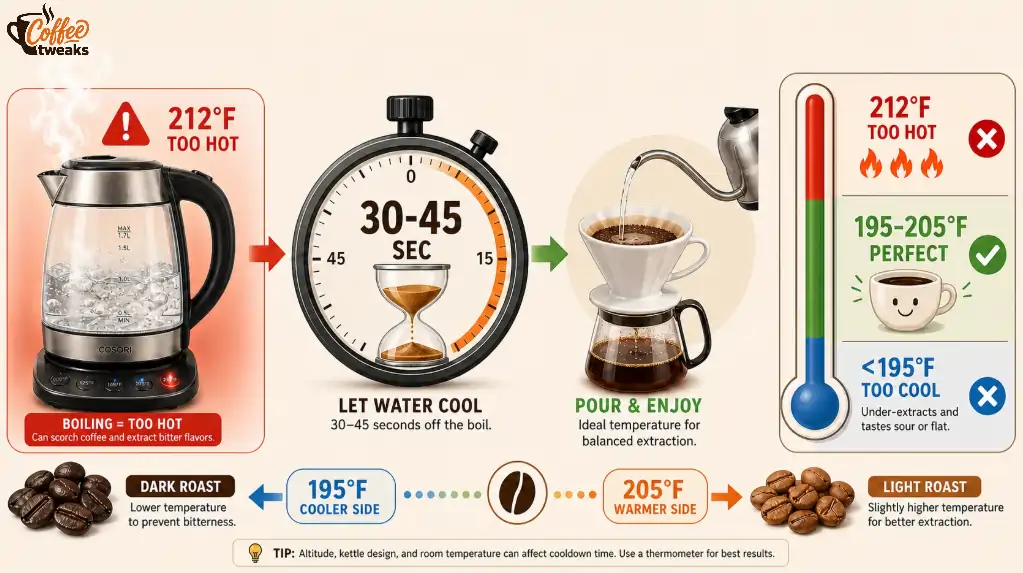
Boiling water is 212°F (100°C). That's too hot. It scorches the grounds and drags out bitterness. The sweet spot is 195–205°F (90–96°C).
You don't need a fancy kettle. Just boil, then wait 30 to 45 seconds before you pour. That's it. That tiny pause is the difference between harsh and smooth.
Dark roasts? Lean cooler, around 195°F. Light roasts need a bit more heat to open up.
Technique 2: Grind Coarser
Fine grounds have way more surface area, so water rips through them and over-extracts. Coarser grounds slow that down.
Match the grind to your method:
I didn't expect grind to matter this much, but it's probably the single biggest lever after temperature. A cheap grind-by-weight setup or a decent burr grinder pays for itself fast.
Technique 3: Shorten Your Brew Time
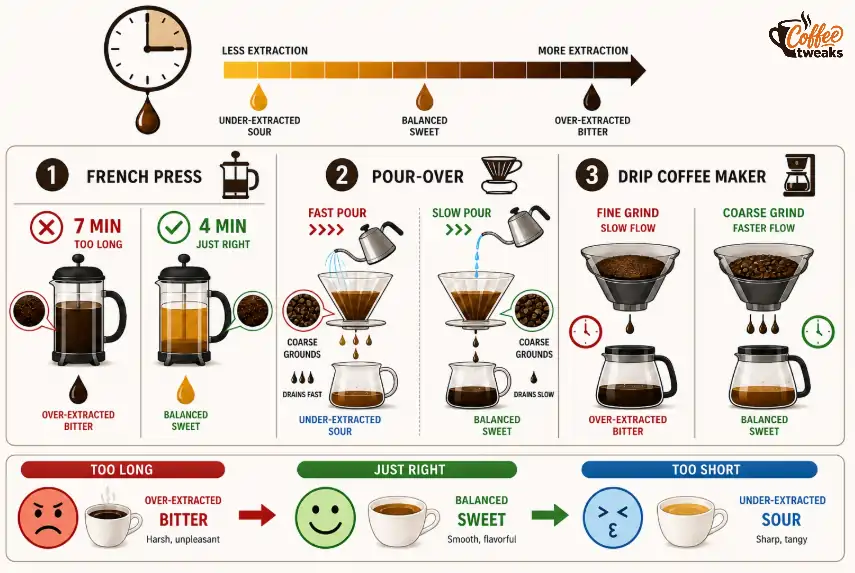
The longer water touches coffee, the more it pulls. Past a point, that's all bitterness.
Easy ways to cut contact time:
Small tweaks. Big difference. Don't swing too far or you'll land in sour territory.
Technique 4: Loosen Your Ratio
If your cup is bitter and too intense, you might just be using too much coffee.
The classic “golden ratio” is 1:16 — one gram of coffee to sixteen grams of water. Bump it to 1:17 or 1:18 and bitterness softens immediately.
Weigh it if you can. A $15 kitchen scale beats eyeballing scoops every time, because beans vary in density.
Technique 5: Look at Your Beans
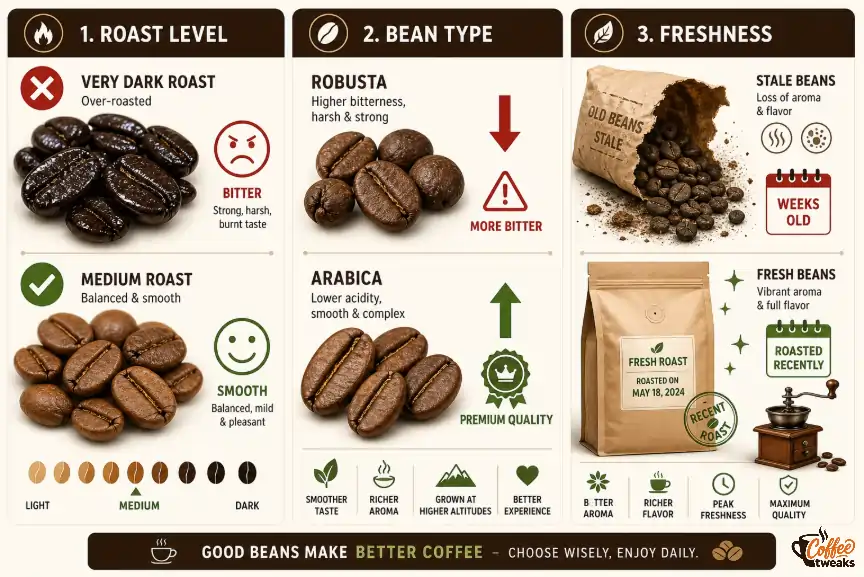
Sometimes it's not your technique. It's the bag.
This changed my whole morning more than any gadget did. Better beans, less fighting.
Technique 6: Clean Your Gear + Fix Your Water
Two sneaky culprits hide here.
Dirty equipment: old coffee oils go rancid and bitter. They coat your machine, your press, your basket. Clean weekly, descale monthly.
Water quality: coffee is 98% water. Heavily chlorinated or hard tap water tastes… off. Run it through a basic carbon filter pitcher and re-brew. If it tastes noticeably better, that was your problem all along.
Technique 7: The Salt Trick (The Emergency Rescue)
Okay, this one sounds wrong, but I promise it works. 🌿
A tiny pinch of salt — or better, a single drop of saline solution — added to your grounds or cup doesn't make coffee salty. It chemically dampens how your tongue reads bitterness.
It won't fix bad brewing. But when you're stuck with a harsh cup and no time to re-brew, it genuinely rescues the morning. Use less than you think. A few grains. Trust me.
How to Fix Bitter Coffee by Brewing Method
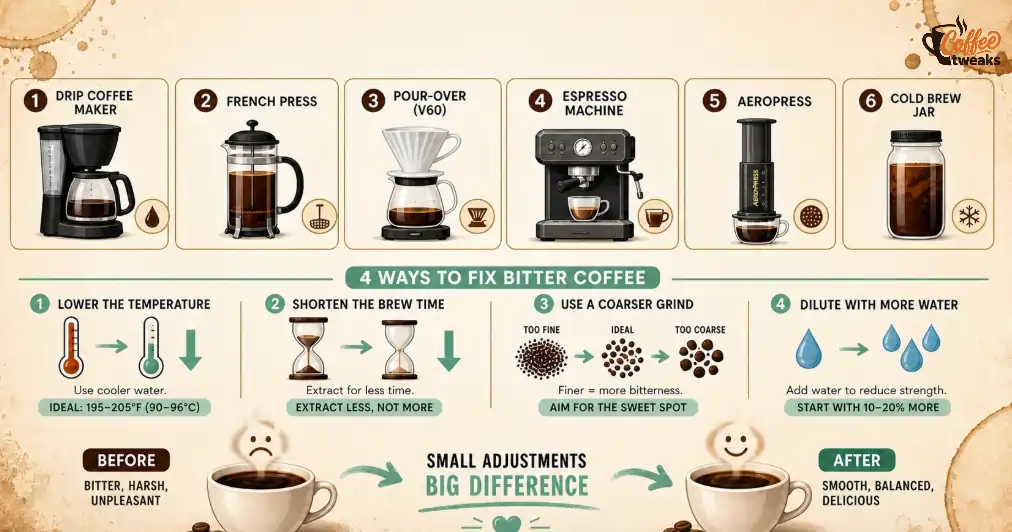
Most guides stop at general tips. But your fix depends on how you brew. Here's the method-specific version nobody gives you.
| Method | Most likely bitter cause | The fix |
|---|---|---|
| Drip | Water too hot, grind too fine, scorching on the hot plate | Coarsen grind, pour into a thermos instead of leaving it on the warmer |
| French press | Steeping too long, grind too fine | Coarse grind, press at 4 min, pour immediately |
| Pour-over | Slow pour, fine grind, over-saturating | Faster pour, medium grind, bloom 30 sec then steady circles |
| Espresso | Over-extraction, too-fine grind, dirty group head | Aim for 1:2 in 27–30 sec, coarsen slightly, clean the machine |
| AeroPress | Long steep, water too hot | Cooler water (~185°F), 1–2 min steep, press gently |
| Cold brew | Steeped too long, too fine | Coarse grind, steep 12–18 hrs not 24+, dilute to taste |
Drip
Your enemy is the hot plate. It keeps “cooking” the coffee until it's bitter and flat. Brew into an insulated carafe and never reheat.
French Press
The big one: don't let it sit after pressing. Grounds keep extracting even after you push the plunger. Pour it all out.
Pour-Over
Control is everything. A gooseneck kettle, a clean bloom, and a steady medium pour keep extraction even and bitterness away.
Espresso
Bitter espresso usually means the shot ran too long or the grind's too fine. Dial toward 18g in, 36g out, in about 27–30 seconds. And clean that group head.
AeroPress
Forgiving little thing. Use cooler water and a shorter steep, and it almost can't go bitter.
Cold Brew
Naturally the smoothest, lowest-bitterness method there is. If it's still harsh, you over-steeped or ground too fine. Coarse grind, shorter soak, done.
Already Brewed a Bitter Cup? Emergency Fixes
You don't have to dump it. Try these, in order:
These are rescues, not solutions. Fix the brew tomorrow.
Real-Life Mistakes That Make Coffee Bitter
The stuff I personally got wrong for years:
If any of these are you… no judgment. They were all me too.
Quick Answers Before Your Next Brew
Why is my coffee suddenly bitter when it wasn't before?
Something changed — usually a new (darker) bag of beans, a finer grind, or a machine that needs cleaning. Check those three first.
Does salt really make coffee less bitter?
Yes. A tiny pinch or a drop of saline suppresses how your tongue perceives bitterness without making the coffee taste salty.
What's the ideal water temperature for coffee?
195–205°F (90–96°C). Boiling water at 212°F over-extracts and tastes harsh.
Is bitter coffee the same as strong coffee?
No. Strong means concentrated; bitter means over-extracted and harsh. You can have strong coffee that's perfectly smooth.
How do I make coffee less bitter without sugar?
Fix the brew: cooler water, coarser grind, shorter time, wider ratio. For an instant fix, a pinch of salt or a splash of milk.
Why does dark roast taste so bitter?
Darker roasting develops more bitter compounds and breaks down sugars. Try a medium roast for a naturally smoother, sweeter cup.
Can you remove bitterness from coffee completely?
Not entirely — a little is natural and balanced. But over-extraction bitterness? That you can almost eliminate with the fixes above. And honestly? That's the whole point. ✨
Your Less-Bitter Brewing Cheat Sheet
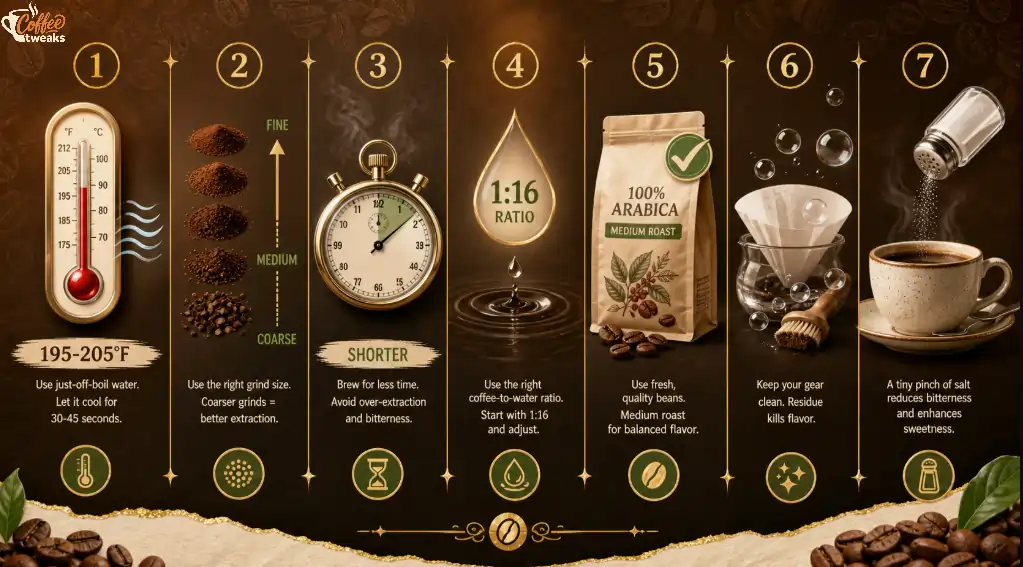
Change one thing at a time. That's how you actually learn your coffee.