Purity Coffee Review: 60 Days With Mold-Free Beans

Real talk… I've been burned by “healthy coffee” marketing more times than I can count. Mushroom blends that taste like dirt. Low-acid coffees that taste like warm water. “Mold-free” brands charging $40 a bag for beans I could get at Trader Joe's.
So when Purity Coffee kept showing up in my feed claiming to be the healthiest coffee on the planet… I was skeptical. Really skeptical.
Then I remembered my stomach hates me. I've had acid reflux issues for about three years now. Espresso mornings often end in regret. So I figured… if any coffee brand deserves a proper 60-day test from someone with actual acid sensitivity, it's this one.
Here's my honest Purity Coffee Review after drinking it daily for two months. No fluff. No affiliate-glazed nonsense. Just results. ☕
Quick Answer: Is Purity Coffee Worth It?
Purity Coffee is worth it if you have acid sensitivity, mold concerns, or care about antioxidant content and are okay paying premium prices. If you just want a good morning cup and your stomach is fine, you'll feel the price more than the benefits.
| Factor | Verdict |
|---|---|
| Health claims (mold-free, antioxidants) | Legit. Third-party tested, CGA levels published. |
| Acid reflux impact (my test) | Significant improvement after ~3 weeks. |
| Taste vs specialty roasters | Good. Not mind-blowing. Smooth, clean, low bitterness. |
| Price | $26–$35/bag. Painful. |
| Best for | Acid-sensitive drinkers, biohackers, wellness-focused buyers. |
| Skip if | You just want cheap daily coffee with no stomach issues. |
| Maya's Rating | 4.2 / 5 |
What Actually Makes a Coffee “Healthy”?
Here's the thing… most coffee marketing is vibes. “Clean coffee.” “Pure coffee.” “Toxin-free.” These terms mean nothing on their own.
A genuinely healthy coffee needs to tick four boxes:
That last one is where regenerative farming comes in… and where most “healthy coffee” brands quietly skip.
The Mold Problem Nobody Wants to Talk About
Coffee is an agricultural product. Agricultural products stored in humid conditions grow mold. That's not a conspiracy… it's just biology.
Studies have found mycotoxin contamination in a meaningful percentage of commercial coffee samples. It's real. The question is whether your brand actually tests for it or just says “we test for it” on the website.
Purity Coffee publishes its test results. That's the difference.
Chlorogenic Acids: The Actual Health Compound
CGAs are the antioxidants that give coffee most of its health benefits… cardiovascular, metabolic, cognitive. The catch? Dark roasting destroys them.
Most mainstream coffee is roasted dark to hide defects and produce consistent flavour. Purity roasts lighter and at a controlled curve specifically to preserve CGAs. They lab test each batch for CGA and trigonelline content.
That's… not normal for coffee companies. And honestly? It should be.
Purity Coffee's Lab Testing: Is It Legit?
Short answer… yes. And I looked.
Purity uses third-party labs to test every batch for:
They publish the results. The beans are USDA organic, specialty-grade, Smithsonian Bird Friendly certified, and regeneratively farmed. That's a stack of certifications most coffee brands don't come close to.
Purity Coffee Mold Free Claim: Does It Hold Up?
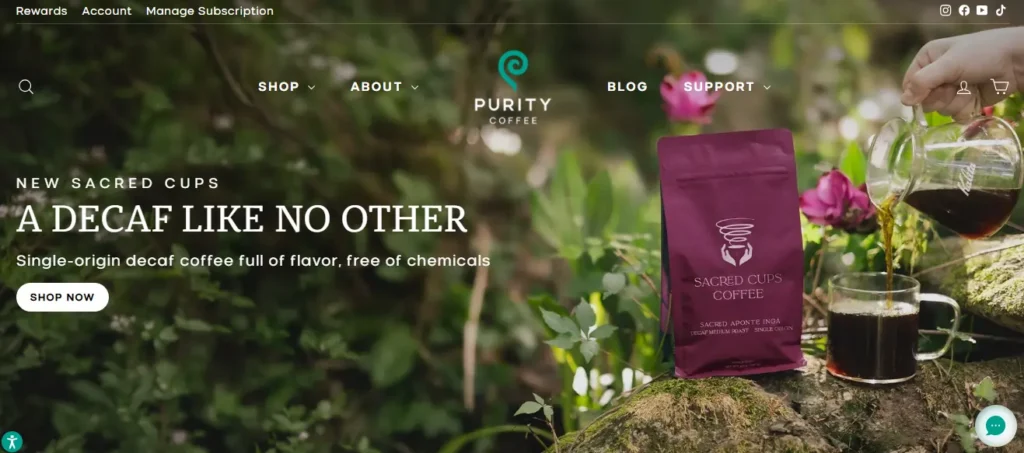
This is the single biggest reason most people find Purity Coffee. The mold-free positioning.
I can't re-test their beans myself… I don't have a lab in my kitchen. But their published reports show consistent non-detect results for ochratoxin A across batches. Their sourcing (high-altitude, wet-processed, properly dried) is the exact profile that minimises mold risk at origin.
If you've been burned by cheap supermarket coffee making you feel weird and wired-anxious in the morning… the mold angle is worth taking seriously. I'm not saying every bag of Folgers is toxic. I'm saying if you're sensitive, the difference is real.
My 60-Day Acid Reflux Test
Okay, here's where the review gets personal.
I've had acid reflux for three years. Espresso is a trigger. Certain single origins (looking at you, Kenyan AAs) are nuclear. I take famotidine on the bad weeks. It's annoying and it limits what I can enjoy as a coffee person.
I went all-in on Purity for 60 days. Nothing else. No café cheats. Same brew method, same water, same time of day.
Week 1–2: Adjusting
Honestly? I didn't feel a huge difference the first week. Reflux was still there. I was annoyed.
Taste-wise though… I noticed immediately that it didn't have that sharp acidic bite I associate with specialty coffee. Clean cup. Low bitterness. Medium body.
Week 3–4: The Shift
By week three, something changed. Morning reflux… gone. Not reduced. Gone.
I tested it. I went back to my usual specialty roaster for two days. Reflux came back by day two. Switched back to Purity. Cleared up in 48 hours.
That's not placebo. That's a repeatable result in a sample size of one… which is the only sample size that matters for you personally.
Week 5–8: Sustained
Zero famotidine for the back half of the test. Zero flare-ups in the morning. I could drink two cups without the chest-burn I usually get after cup two of anything else.
The acid sensitivity difference was the single most noticeable benefit of the entire 60 days.
Purity Low Acid: What's Actually Happening
Purity isn't a “low acid coffee” in the Trucup or Puroast sense… they're not steam-stripping acids out. The coffee still has acidity as a flavour descriptor.
What's different is the type of acid and how it's preserved. The light-medium roast profile seems to keep the mellower chlorogenic acids intact while minimising the harsh quinic acid that forms in darker roasts. Quinic acid is what actually triggers most people's reflux.
That's the real mechanism. It's not marketing.
How Does Purity Taste vs Actual Specialty Coffee?
Let me be honest here, because this is where the Purity Coffee review gets less glowing.
Purity Coffee tastes good. It doesn't taste mind-blowing.
I've had coffee from Heart, Onyx, Sey, George Howell. Those are specialty roasters who dial in every single origin for maximum flavour expression. The cups they produce are genuinely extraordinary… transparent, expressive, complex.
Purity is smoother, cleaner, and more drinkable than probably 95% of coffee on the market. But it's roasted for health optimisation first, flavour expression second. There's a ceiling to how expressive a coffee can be when the roast curve is dictated by antioxidant retention.
Taste Notes by Blend
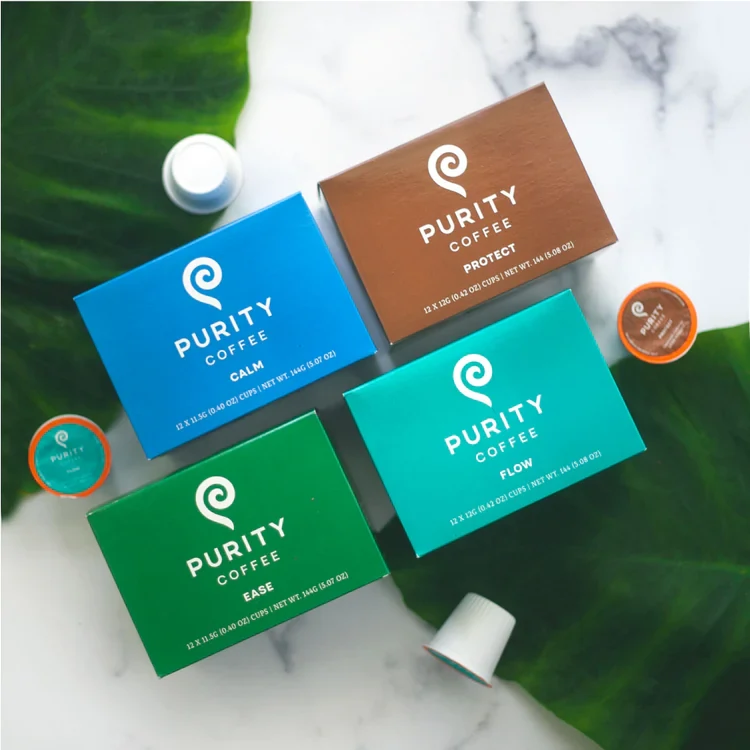
I tested three of their blends:
Espresso vs Pour-Over Performance
On my Gaggia Classic Pro pulling 1:2 ratio, 27-second shots… Ease held up well. Clean extraction. Not as syrupy as a dedicated espresso blend, but very drinkable. No harsh finish.
On V60 pour-over, Flow at a 1:16 ratio was the sweet spot. Clean, sweet, easy.
It's not going to win you a brewing competition. It's going to give you a clean, consistent daily cup that doesn't wreck your stomach. Trade-offs.
Purity vs Lifeboost: Which Healthy Coffee Actually Wins?
This is the comparison I get asked about constantly.
| Factor | Purity Coffee | Lifeboost |
|---|---|---|
| Mold/mycotoxin testing | Published batch results | Claims testing, less transparency |
| Roasting for CGA retention | Yes, specific protocol | Not the core focus |
| Regenerative farming | Yes, prioritised | Shade-grown, not regenerative |
| Taste (my opinion) | Cleaner, smoother | More conventional coffee flavour |
| Price per bag | ~$26–$35 | ~$30–$40 |
| Certifications | USDA Organic, Bird Friendly, Specialty | USDA Organic, non-GMO |
My honest take? Purity edges it on scientific transparency and CGA optimisation. Lifeboost has a wider product range and slightly more traditional coffee flavour. Both are legitimate. Neither is a scam.
If your priority is maximum health optimisation with published data, Purity wins. If you want “clean coffee” with a more familiar taste, Lifeboost is fine.
The Price Problem
Okay… this is the hard part.
Purity Coffee runs about $26–$35 per 12-oz bag, depending on blend and subscription. That's roughly $2.20–$2.90 per cup at home.
For comparison:
So… still cheaper than café coffee. But 2–3x what you'd pay for normal specialty coffee at home.
Is it worth the premium? Depends entirely on whether you're getting something specific out of it. For me, with the reflux issue… yes. If I didn't have acid sensitivity? I'd probably rotate Purity with a cheaper specialty roaster instead of drinking it daily.
Purity Coffee Subscription vs One-Time
Subscribe and save cuts the price by about 15%. If you're going to commit, subscribe. One-time purchases at full price is where the sticker shock really hurts.
Who Should Actually Buy Purity Coffee?
Buy Purity if you are:
Skip Purity if you are:
What I Didn't Love About Purity Coffee
Fair is fair. Here's where it falls short.
These aren't dealbreakers. They're trade-offs. You're paying for health-optimised coffee, not specialty cuppings.
Frequently Asked Questions
Is Purity Coffee really mold free?
Purity Coffee publishes third-party lab results showing non-detect levels for ochratoxin A and other mycotoxins across batches. It's one of the few brands that shows actual testing data rather than just claiming to test.
Does Purity Coffee help with acid reflux?
In my 60-day test, yes. The light-medium roast profile preserves milder chlorogenic acids while minimising the quinic acid that triggers most reflux. Results will vary, but for acid-sensitive drinkers, it's genuinely worth trying.
Is Purity Coffee better than Lifeboost?
Purity has more published scientific testing and optimises roasting for antioxidant retention. Lifeboost has a wider range and a more traditional coffee flavour. Both are legitimate healthy coffee brands, but Purity edges it on transparency.
Why is Purity Coffee so expensive?
Regenerative farming, specialty-grade beans, third-party lab testing, Smithsonian Bird Friendly certification, and custom roasting protocols all add cost. You're paying for a coffee engineered for health outcomes, not just caffeine delivery.
Is Purity Coffee low acid?
It's not low acid in the stripped-acid sense like Trucup or Puroast. The roast profile minimises harsh quinic acid (the reflux trigger) while keeping the healthier chlorogenic acids intact. For most acid-sensitive drinkers, that's the better outcome anyway.
Can you drink Purity Coffee on a keto or intermittent fasting routine?
Yes. It's black coffee with no additives. The high CGA content may actually support metabolic health and insulin sensitivity, which fits well with both keto and fasting protocols.
Maya's Final Verdict
Low-key obsessed with this one… and I'm not apologising for that.
Purity Coffee delivered on the two things I actually tested it for: the mold-free/mycotoxin-free claim (verifiable through their published testing) and the acid sensitivity angle (verifiable through my own body for 60 days straight).
It's not the most flavourful coffee I've had. It is genuinely the most drinkable coffee I've had for someone with reflux issues. For me, that matters more.
If you've been looking for the healthiest coffee and you've narrowed it down to Purity vs Lifeboost or similar brands… Purity is the one with the most scientific transparency and the one my stomach preferred by a wide margin.
See Latest Price on Purity Coffee 🎯
If you're also rethinking your home setup, our guide to low-acid coffee brewing methods pairs well with this one, and our breakdown of the best burr grinders under $200 is worth reading if you're grinding Purity at home.