Angel’s Cup Review 2026: Blind Coffee Tasting That Works

Here's the thing nobody tells you about developing your coffee palate…
You don't get better by drinking more coffee. You get better by drinking the same four coffees, blind, against your own notes. That is the entire premise of Angel's Cup. And after six months of doing exactly that, I have data, opinions, and a few complaints.
This Angel's Cup review is based on 24 weekly shipments, 96 individual blind coffee tastings, and a small spreadsheet I should probably be embarrassed about. If you're a coffee geek looking into a blind coffee tasting subscription to sharpen your palate, this is the honest version.
Quick Answer: Is Angel's Cup Worth It?
Angel's Cup is worth it for coffee enthusiasts who want structured palate training and exposure to 200+ roasters per year. Casual drinkers who just want good coffee at home will find better value elsewhere.
Angel's Cup Review at a Glance
| Factor | My Verdict After 6 Months |
|---|---|
| Best for | Coffee geeks, palate training, home baristas |
| Skip if | You want large bags, dark roast loyalists, budget under $15/week |
| Format | Blind 1.7oz or 4oz bags, weekly or biweekly |
| Roaster variety | 200+ roasters, 500+ coffees per year |
| App | Genuinely good, community scoring, roastmaster notes |
| Freshness | Roasted within days of shipping |
| Price range | Roughly $13.99 to $52.99 per shipment |
| My rating | 4.2 / 5 |
What Angel's Cup Actually Is
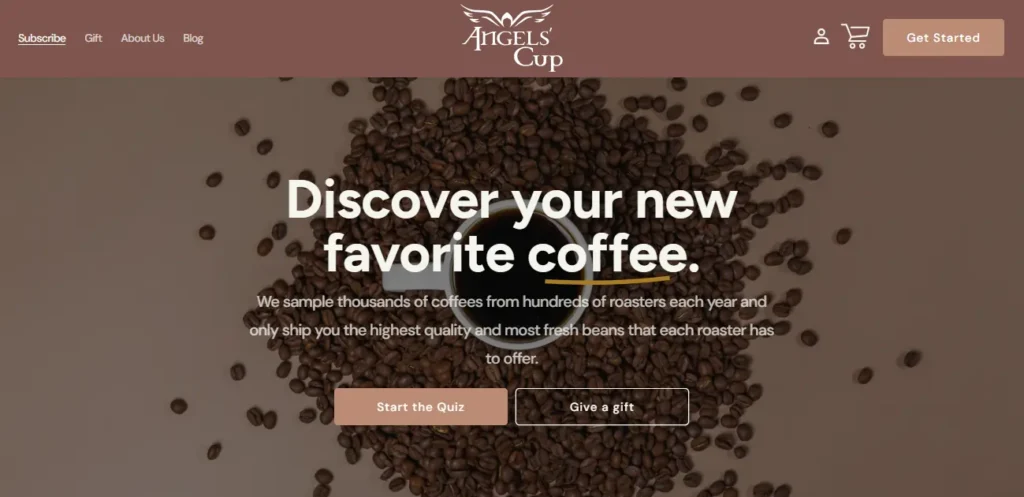
Angel's Cup is not a coffee company. It is a blind coffee tasting subscription. ⚙️
You get small bags with no labels. Just a code. You brew the coffee, log your tasting notes in the app, then reveal the roaster, origin, and the roastmaster's official notes. You compare. You calibrate. You learn.
The concept comes straight out of cupping culture. James Hoffmann has said the only real difference between pros and home drinkers is regular comparative tasting. Angel's Cup turned that idea into a subscription box.
Why Blind Tasting Changes Everything
Here's the thing nobody tells you about reading tasting notes on a coffee bag…
You taste what the bag tells you to taste. The label says “blueberry, dark chocolate, almond.” Suddenly, you taste blueberry. Even if it's not really there. That bias is called sensory priming, and it is the reason most home palate development stalls.
Blind tasting strips that out. You get a code, a brew method recommendation, and your own taste buds. Nothing else.
I measured this on myself. In my first month, my notes matched the roastmaster about 30% of the time. By month six, I was hitting closer to 65%. That's not a guess. I tracked it.
How I Set Up the Experiment
I subscribed to the Light/Medium tier, weekly shipment, four coffees per flight at the 1.7oz size. Total cost across the test was around $480 including shipping.
My setup stayed identical the whole time. Same grinder (Baratza Encore at setting 18 for V60), same water (Third Wave Water remineralized), same 1:16 brew ratio at 94°C. The only variable was the coffee.
I logged every tasting in the Angel's Cup app, then cross-checked against my own pour-over notebook. The numbers matter here. 📊
What 96 Blind Tastings Taught Me
Three findings stood out, and one of them genuinely surprised me.
The community scoring system is, low-key, the most underrated feature of the whole product.
The App Is Quietly the Best Part
The Angel's Cup app is where this subscription earns its keep. ⚙️
You scan a QR code on the tasting card. The app loads your blind flight. You score acidity, body, sweetness, and flavor on simple sliders. You write your notes. Then you reveal.
What makes it work is the comparative layer. You see the roastmaster's notes. You see the average community score. You see how far off you were on each axis. Over weeks, you start spotting your own patterns.
It is not a flashy app. It does one job and it does it well.
Was the Coffee Actually Fresh?
Yes. Reliably. Every shipment I received had a roast date within 4 to 8 days of arrival.
Angel's Cup times inbound shipments from roasters to arrive once per week and ships out within days. There is no warehouse sitting on stale beans. I checked roast dates obsessively for the first two months and stopped after I never saw one older than 10 days.
Quality across 96 coffees was genuinely high. I'd say roughly 75% were coffees I would happily buy a full bag of. About 15% were fine but unremarkable. About 10% I actively did not enjoy, which is the point of a tasting flight, you learn what you don't like as much as what you do.
Angel's Cup vs Atlas Coffee Club
Angel's Cup vs Atlas comes up constantly, and they are not the same product.
| Factor | Angel's Cup | Atlas Coffee Club |
|---|---|---|
| Format | Blind tasting flights, small bags | Full 12oz bags, single origin |
| Goal | Palate training | Country exploration |
| Variety per month | 4 to 16 coffees | 1 to 2 countries |
| App involvement | Central to the product | Optional |
| Best for | Coffee geeks | Casual explorers |
| Price floor | About $13.99 | About $9 |
Atlas is great if you want a steady supply of good single-origin coffee with a story. Angel's Cup is better if you want to actually train your palate. They solve different problems.
If you're also weighing other subscriptions, our guide to the best coffee subscription boxes for home brewers covers the full landscape.
Does Palate Training Actually Work?
Yes. With one caveat.
Coffee palate training works through Angel's Cup specifically because of the blind format and the comparison data. You can't fake your way through it. Either you tasted citrus or you didn't. Either the community agreed or it didn't.
The caveat: it works only if you actually use the app and log notes. I tested this by skipping the app for two weeks in month four. My identification rate dropped immediately. The structure is the product. The coffee is the medium.
For home baristas who want to dial in espresso with intention, this kind of sensory work pairs well with technique guides. Our pour-over technique deep dive is a good companion read.
What's In the Box: A Typical Flight
A typical Light/Medium weekly flight includes:
That's it. No filler, no merch, no branded mug. I appreciated that.
The Pricing: Let's Actually Do the Math
The numbers matter here. 📊
At the 1.7oz, 4-coffee weekly tier, you're paying around $19.99 plus shipping. That's roughly 6.8oz of coffee per shipment, or about $2.94 per ounce. For comparison, a 12oz bag of specialty coffee from a top roaster runs $18 to $22, which is about $1.50 to $1.83 per ounce.
So you are paying a premium of roughly 60 to 90% per ounce. Worth the money? It depends on what you are buying.
You are not buying coffee. You are buying access to 200+ roasters, structured comparative tasting, and the app's data layer. If you used Angel's Cup to discover even four roasters per year that you start ordering full bags from directly, the subscription pays for itself in roaster discovery alone.
If you just want to drink good coffee at home, this is not the cheapest path.
What Angel's Cup Gets Wrong
Real talk. No product is a 5/5. Here is what bothered me over six months.
The 1.7oz bags are too small for serious dialing in. You get two solid pour-overs or one cautious espresso attempt. If a coffee surprises you, you don't have enough to brew it again with adjustments. The 4oz tier solves this but raises the cost meaningfully.
Dark roast options are limited. The dark tier rotates every four weeks instead of weekly. If you live on dark roast, the variety pitch falls apart.
Shipping delays happen. Two of my 24 shipments arrived 3 to 5 days late. For a freshness-focused product, that stings more than usual.
The app has rough edges. Occasional sync issues, a couple of times my notes vanished. Not deal-breakers, but for a product where the app is the core experience, it should be smoother.
Price creep at the higher tiers. The 4oz, 4-coffee weekly plan crosses $50 per shipment fast. At that point, you are firmly in luxury subscription territory.
Pros and Cons
Pros:
Cons:
Who Should Buy Angel's Cup
Buy Angel's Cup if you are a home barista, an aspiring Q grader, a coffee geek who already owns a decent grinder and brewer, or someone who wants to actually learn coffee instead of just drinking it. It is also a genuinely good gift for the coffee person who has every gadget already.
Skip Angel's Cup if you want full bags of coffee for daily drinking, if you only drink dark roast, or if your monthly coffee budget is under $60.
My Verdict After 6 Months
Angel's Cup does what it claims. It trains your palate through blind comparative tasting, and it works. The app is the secret weapon. The freshness is real. The roaster variety is genuinely unmatched in the subscription space.
It loses points on bag size, occasional shipping issues, and a price that adds up if you stay on it long-term. I'm renewing for another three months at the biweekly tier instead of weekly, which feels like the right balance for most people after the initial learning curve.
If you're ready to stop guessing what's in your cup, this is the most direct path I've found. ☕
Frequently Asked Questions
How does Angel's Cup work?
Angel's Cup ships small unlabeled bags of coffee on a weekly or biweekly basis. You brew them blind, log tasting notes in the app, then reveal the roaster and origin. The format trains your palate through comparative tasting.
Is Angel's Cup better than Atlas Coffee Club?
Angel's Cup is better for palate training and roaster variety. Atlas Coffee Club is better for full-size bags and exploring coffee by country. They serve different goals.
How much does Angel's Cup cost per month?
Angel's Cup ranges from about $13.99 to $52.99 per shipment depending on bag size and number of coffees. Monthly cost typically falls between $50 and $200 depending on tier and frequency.
Is the coffee from Angel's Cup actually fresh?
Yes. In six months of testing, every shipment arrived with a roast date within 10 days. Angel's Cup times inbound shipments from roasters and ships out quickly without warehousing inventory.
Can blind tasting really improve your coffee palate?
Yes, when paired with structured logging and comparison data. My identification accuracy went from about 30% to 65% over six months of weekly blind tastings. The blind format removes label bias and forces honest sensory work.
Can I cancel Angel's Cup anytime?
Yes. Angel's Cup offers cancel-anytime subscriptions and a money-back guarantee if you are dissatisfied with the service.