CBD Coffee for Anxiety: Does It Really Take the Edge Off?

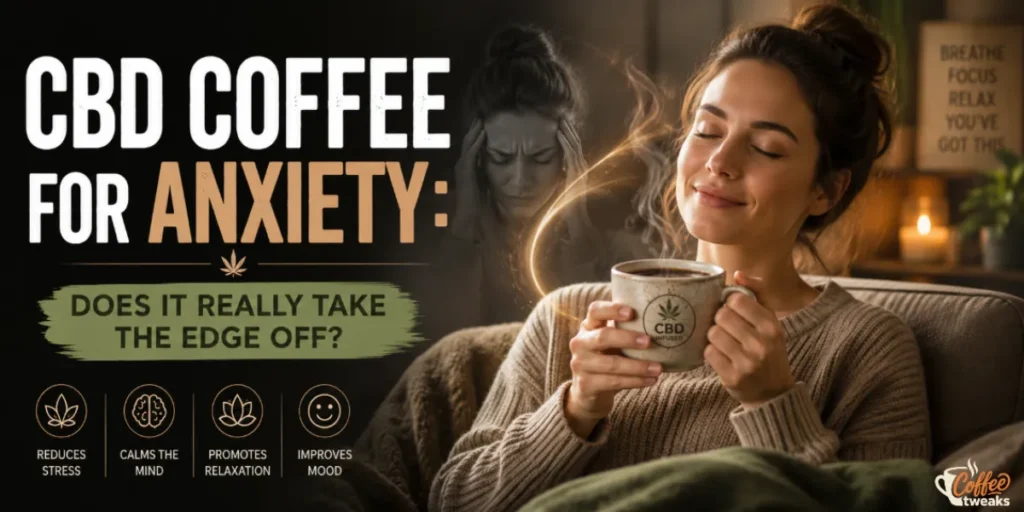
There was a Tuesday morning not long ago when I sat at my desk with my third cup of coffee, heart racing, hands slightly shaky, unable to focus on a single thing. Sound familiar? It wasn't a panic attack — it was just regular, run-of-the-mill coffee anxiety. The kind that sneaks up on you and turns your productivity ritual into a stress spiral.
That's when I started hearing about CBD coffee. And okay, I'll be honest — my first thought was “another wellness trend.” But then I actually dug into the research, tried a few products, and talked to people who've made it part of their morning. Here's what I found.
Does CBD Coffee Help With Anxiety? Quick Answer
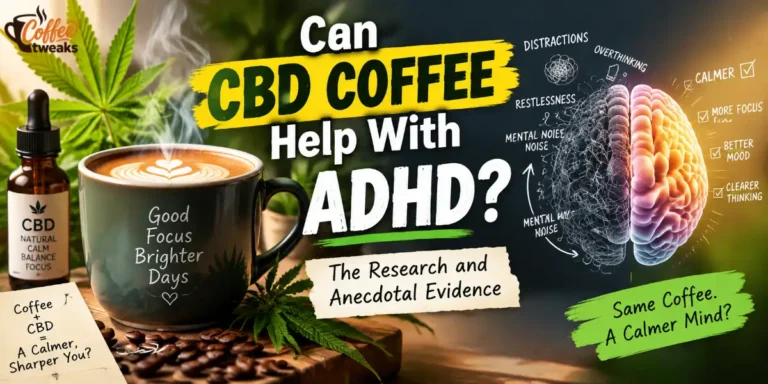
CBD coffee blends cannabidiol (CBD) with regular coffee in an attempt to reduce the anxiety and jitteriness some people experience from caffeine. Current research shows CBD has measurable anxiolytic (anxiety-reducing) properties in controlled studies, and some people report calmer, more focused mornings with CBD coffee.
However, direct scientific evidence for CBD coffee specifically is limited, CBD is not an FDA-approved anxiety treatment, and results vary significantly between individuals. It may help some people — but it isn't a guaranteed fix.
What Is CBD Coffee?
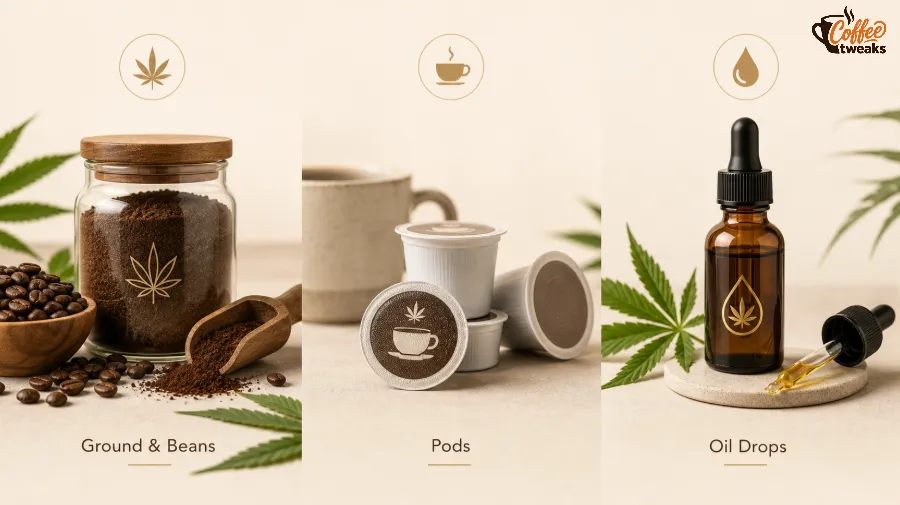
CBD coffee is exactly what it sounds like: coffee that contains cannabidiol (CBD), a non-psychoactive compound derived from the Cannabis sativa plant. It's typically sold as:
CBD 101: Breaking It Down
CBD is one of over 100 cannabinoids found in hemp plants. Unlike THC (tetrahydrocannabinol), CBD does not produce a “high.” Hemp-derived CBD products containing 0.3% or less THC are federally legal in the United States under the 2018 Farm Bill, though regulations vary by state and country.
There are three main types of CBD used in products:
| Type | What It Contains | Key Notes |
|---|---|---|
| Full-spectrum | CBD + trace THC + other cannabinoids + terpenes | May offer “entourage effect”; contains trace THC |
| Broad-spectrum | CBD + other cannabinoids, no THC | Middle ground option |
| CBD isolate | Pure CBD only | No other cannabinoids; easier to dose |
Most CBD coffee products use either full-spectrum or broad-spectrum hemp extract. The CBD content per serving typically ranges from 10mg to 25mg, though this varies widely between brands and is not always clearly labeled.
Why Coffee Can Make Some People Feel Anxious
Before we talk about the “fix,” it helps to understand the problem.
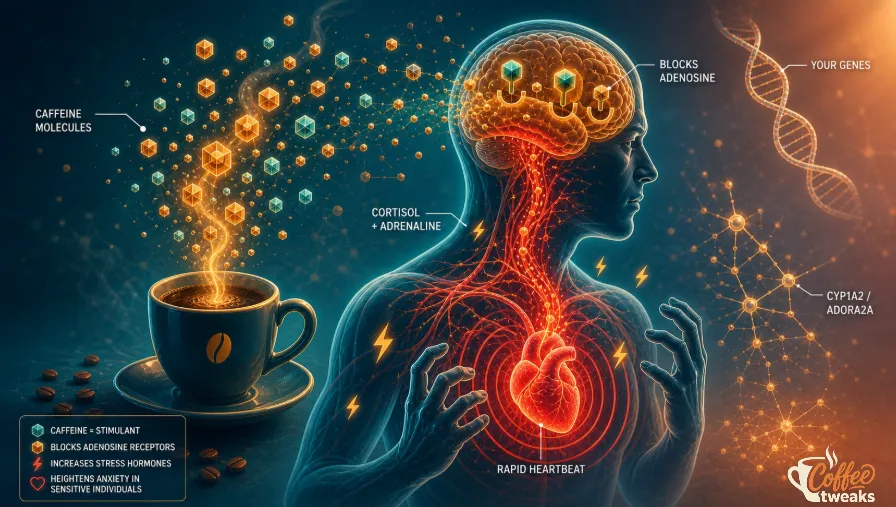
Coffee works by blocking adenosine receptors in the brain. Adenosine is a chemical that builds up throughout the day and makes you feel sleepy — caffeine essentially puts a stopper in that process, keeping you alert. But caffeine also stimulates the adrenal glands to release cortisol and adrenaline (epinephrine), the same hormones that fire up your body's stress response.
For some people, this is energizing. For others, it tips into anxiety territory. Here's why:
The bottom line: Coffee anxiety is real, it's physiological, and it's partially genetic. It's not weakness — it's biology.
Does CBD Reduce Coffee Anxiety?
The Short Answer
There's no large-scale clinical trial specifically studying “CBD coffee and anxiety.” Most of what we know comes from two separate bodies of research: studies on CBD and anxiety, and studies on caffeine's effects on the nervous system. The idea behind CBD coffee is that CBD's calming properties might offset caffeine's anxiogenic (anxiety-producing) effects.
Here's what the current evidence actually supports:
CBD's Anxiolytic Properties
A 2024 systematic review and meta-analysis published in Psychiatry Research analyzed eight clinical studies involving 316 participants and found a “substantial significant impact of CBD on anxiety” with a considerable effect size (Hedges' g = -0.92). The review covered generalized anxiety disorder (GAD), social anxiety disorder (SAD), and PTSD.
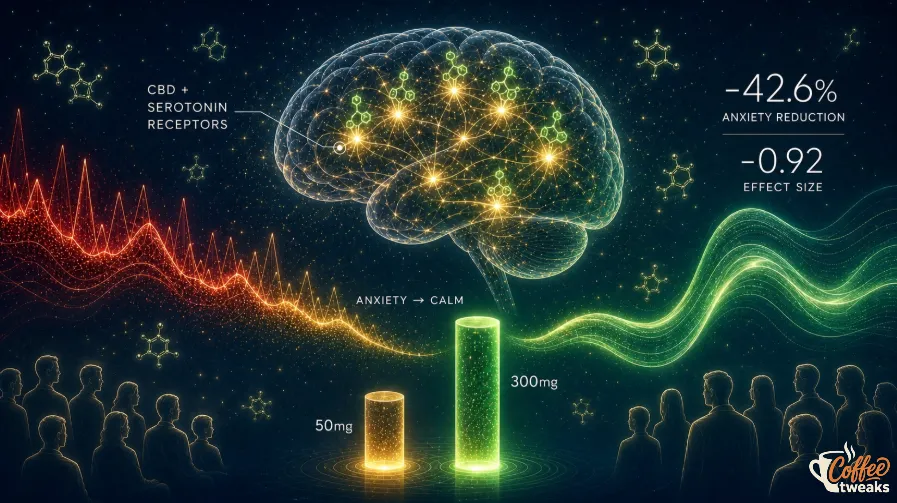
A 2024 phase 3 randomized controlled trial conducted across multiple sites in India enrolled 178 participants with mild to moderate anxiety. Those receiving CBD showed a mean reduction of -7.02 points on the GAD-7 scale versus placebo (p < 0.0001) — a clinically meaningful improvement in anxiety symptoms.
A 2022 open-label trial found that CBD reduced anxiety severity by 42.6% over 12 weeks in young people aged 12–25 with treatment-resistant anxiety disorders. Depressive symptoms and overall functioning also improved significantly.
However, a 2023 randomized controlled trial found that 300mg of oral CBD did not reduce cognitive symptoms of anxiety (such as worry) after a single dose. After two weeks of repeated administration, 300mg showed some reduction in physical anxiety symptoms — but not at the commercially common 50mg dose.
What This Means for CBD Coffee
The evidence supporting CBD for anxiety exists — but with important caveats:
What Research Actually Says
Here's a plain-English summary of where the science stands:
What we know:
What we don't know:
Research gaps are significant. No peer-reviewed clinical trial has examined CBD coffee as a product category. The existing evidence is promising for CBD as an anxiolytic compound, but extrapolating that to a 15mg CBD latte is a stretch the current data doesn't fully support.
Can CBD Cancel Out Caffeine?
Not exactly — and this is an important distinction.
CBD doesn't block caffeine or neutralize it. Caffeine operates primarily on adenosine receptors; CBD operates on a different set of pathways. They're not antagonists in the direct pharmacological sense.
What may happen, based on the proposed mechanisms:
Think of it less like “CBD cancels caffeine” and more like “CBD may take the sharp edges off.” Whether that happens at the doses in a cup of coffee is still uncertain.
Potential Benefits People Report
Okay but hear me out — because this is where it gets genuinely interesting.
Important: What follows is a mix of anecdotal reports and plausible mechanisms. These are not confirmed medical benefits.
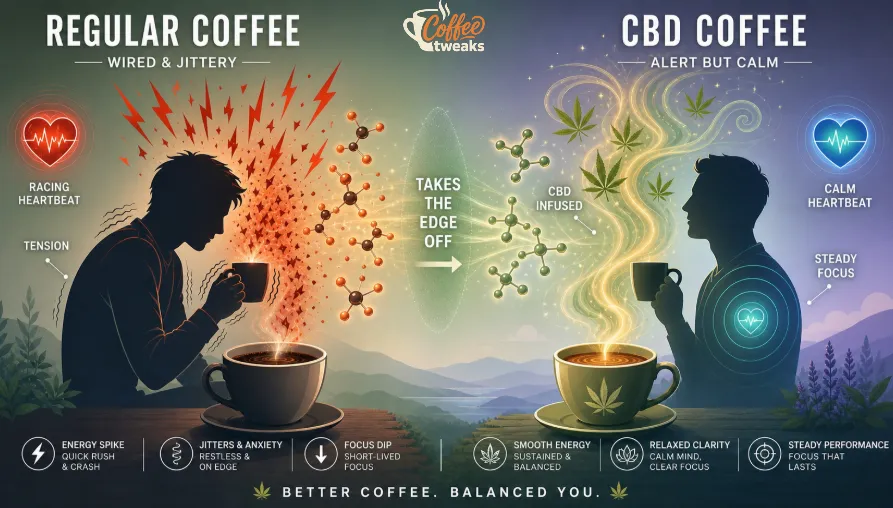
People who use CBD coffee regularly commonly describe:
In online forums and product reviews, the phrase “it takes the edge off” appears repeatedly. And that phrasing is actually quite accurate — it doesn't describe eliminating caffeine's effects; it describes softening the uncomfortable ones.
The honest caveat: Placebo effects are powerful, especially for products associated with wellness rituals. Without controlled studies on CBD coffee specifically, we can't rule out that much of what people experience is expectation and ritual rather than pharmacology.
Possible Side Effects
CBD coffee isn't risk-free. Here's what you need to know:
CBD-Specific Risks
Caffeine-Specific Risks (Still Present)
Even with CBD, you're still consuming caffeine. Cardiovascular stimulation, sleep disruption, and dependency remain relevant — particularly for people sensitive to caffeine.
Who Might Benefit?
CBD coffee may be worth exploring if you:
This changed my whole morning — not because CBD coffee is a miracle, but because taking lower doses of caffeine intentionally and pairing it with something calming created a better ritual. The mindfulness angle is real, even if the pharmacology is still being studied.
Who Should Avoid CBD Coffee?
Do not use CBD coffee without first consulting your doctor if you:
CBD Coffee vs. Regular Coffee
| Feature | Regular Coffee | CBD Coffee |
|---|---|---|
| Caffeine content | Standard (80–120mg/cup) | Same caffeine, usually |
| Jitteriness potential | Moderate to high (dose-dependent) | Potentially reduced (anecdotal + limited evidence) |
| Anxiety risk | Present, especially for sensitive individuals | Possibly lower — evidence is limited |
| Alertness | High | Generally maintained |
| Taste | Classic coffee flavor | Varies; some detect earthy notes |
| Cost | $10–20/lb (standard specialty) | $20–50/lb or more |
| Regulation | Heavily regulated (FDA food standards) | Loosely regulated (CBD market) |
| Drug test risk | None | Possible with full-spectrum CBD |
| Medication interactions | Minimal (caffeine has some CYP interactions) | Higher risk with CBD |
| Liver safety | Well-established at moderate intake | Emerging liver enzyme concern |
| Evidence for anxiety relief | Established to cause anxiety in some | Emerging, limited, dose-dependent |
Tips If You Want to Try CBD Coffee
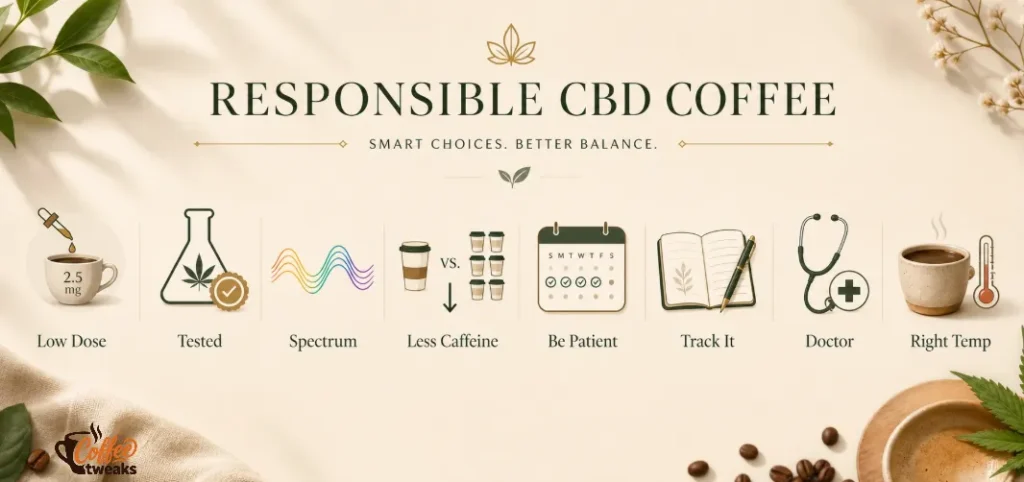
I didn't expect to love this but — if you approach it thoughtfully, CBD coffee can be a genuinely pleasant experiment. Here's how to do it responsibly:
Common Mistakes to Avoid
- Expecting instant results. One cup won't transform your mornings. CBD's anxiolytic effects in studies were more pronounced with consistent use over time.
- Buying based on marketing, not testing. The CBD market is flooded with products making exaggerated claims. A flashy label means nothing without a COA.
- Taking too much. More CBD isn't always better. High doses can cause drowsiness, GI issues, and — as the 2025 FDA data shows — liver enzyme elevations.
- Ignoring medication interactions. This is genuinely serious. CBD inhibits key liver enzymes and can change how your medications work. Always check with a pharmacist or physician.
- Using CBD coffee instead of professional treatment. If you have significant anxiety that interferes with your daily life, please seek professional help. CBD coffee is a wellness experiment, not mental health care.
- Assuming all CBD coffee is the same. Dosing, CBD type, extraction quality, and bioavailability vary dramatically between products.
Frequently Asked Questions
Does CBD coffee make you sleepy?
It can, particularly at higher CBD doses. Drowsiness/somnolence was reported in 8% of participants in the 2025 FDA trial. The caffeine in the coffee may offset this for some people, but others — especially those sensitive to CBD — may feel tired. Start low and observe how you respond.
Can CBD stop caffeine jitters?
Some people report fewer jitters with CBD coffee, and CBD's proposed mechanisms (serotonin and GABA modulation, potential mild sympatholytic effects) are plausible. However, direct evidence specifically for caffeine-induced jitters is lacking. It may help; it may not. Individual results vary.
Is CBD coffee addictive?
CBD itself does not have addictive properties — the World Health Organization (WHO) concluded in a 2018 report that CBD exhibits no potential for abuse or dependence. The caffeine in the coffee is mildly addictive in the traditional sense. So: no more addictive than regular coffee.
Can I drink CBD coffee every day?
The research on daily CBD use is still developing. The 2025 FDA trial identified liver enzyme elevations with regular CBD use over 28 days. If you consume it daily, start at a low dose, have your liver enzymes checked periodically (especially if you're on any medications), and take breaks. Don't treat it as an assumed-safe daily supplement indefinitely.
How much CBD is usually in CBD coffee?
Most commercial CBD coffee products contain between 10mg and 25mg of CBD per serving. Compare that to clinical study doses of 150–800mg — the difference is significant when evaluating research findings against real-world products.
Can CBD coffee cause anxiety?
Paradoxically, yes — in some cases. At higher doses, CBD has been reported to cause or worsen anxiety in some individuals, possibly due to its bell-curve dose-response relationship (where too much can be counterproductive). Poor-quality products with higher-than-labeled THC levels could also cause anxiety. Additionally, the caffeine itself remains anxiogenic.
Does CBD show up on a drug test?
Pure CBD isolate typically does not trigger a positive drug test. However, full-spectrum CBD products contain trace amounts of THC that can accumulate with daily use and produce a positive result. If drug testing is a concern, use broad-spectrum or isolate products and look for third-party COA verification of THC levels below 0.3%.
Does CBD affect heart rate?
Some studies suggest CBD may modestly lower heart rate under stressful conditions. However, caffeine in the coffee will still produce a degree of cardiovascular stimulation. Evidence is mixed and dose-dependent. If you have a heart condition or arrhythmia, consult your cardiologist before trying CBD coffee.
Can I mix CBD oil with my regular coffee?
Yes, and this is actually one of the most controllable ways to try the combination. Use a high-quality, third-party tested CBD oil and stir it into your brew. Note that CBD is fat-soluble — adding a small amount of butter, coconut oil, or MCT oil may improve absorption. However, bioavailability when ingested remains lower than sublingual administration.
How long does CBD coffee take to work?
When ingested (drunk), CBD typically takes 30–90 minutes to produce effects, as it must pass through the digestive system. The caffeine will kick in faster (15–45 minutes). So you may feel the coffee's alertness before any potential calming effects from CBD become noticeable.
Is CBD coffee legal?
In the United States, hemp-derived CBD products (containing ≤0.3% THC) are federally legal under the 2018 Farm Bill. However, CBD is still not approved as a food additive by the FDA, meaning technically, adding CBD to food and beverages exists in a regulatory gray zone. Individual state laws vary. Internationally, legality varies significantly — check your local regulations before purchasing.
What's the difference between hemp coffee and CBD coffee?
Hemp coffee sometimes refers to coffee blended with roasted hemp seeds (which contain negligible CBD), while CBD coffee specifically contains CBD extract. They're not the same. Check the product label and COA to confirm actual CBD content.
Can CBD coffee replace anxiety medication?
No. Absolutely not. CBD coffee should never be used to replace prescribed anxiety medications without guidance from a licensed healthcare provider. Stopping psychiatric medications abruptly can be dangerous, and the evidence for CBD as a standalone anxiety treatment — let alone at the doses in coffee — does not support replacement of established therapies.
Is the CBD in coffee as effective as CBD oil?
Likely less effective, for two reasons: heat during brewing may degrade some CBD, and ingested CBD has lower bioavailability than sublingual (under the tongue) CBD oil. That said, “less effective” doesn't mean “ineffective” — it simply means the dose reaching your system may be lower than labeled.
Final Verdict
No exaggeration when I say this: CBD coffee sits in an honest, complicated middle ground. The science on CBD for anxiety is genuinely promising — with a 2024 meta-analysis showing significant effect sizes and a 2024 randomized controlled trial demonstrating meaningful symptom reduction. The science on caffeine-induced anxiety is well-established, and the proposed mechanisms by which CBD could soften that effect are biologically plausible.
But the honest truth is this: we don't yet have direct clinical evidence that CBD coffee, as a product, reduces coffee-related anxiety at the doses typically found in commercial products. The gap between clinical study doses (150–800mg) and what's in your cup (10–25mg) is real and meaningful.
And honestly? That's the whole point — being clear about that gap doesn't mean dismissing CBD coffee. It means approaching it as a mindful experiment rather than a medical intervention.
Some people genuinely find their mornings smoother, their focus cleaner, their tension lower. If you're a coffee lover with mild jitters who's tried everything else, CBD coffee is a reasonable, low-risk (at low doses, with a healthy liver and no medications) thing to explore.
What it is not: a cure for anxiety disorder, a replacement for mental health care, or a one-size-fits-all solution.
If you love your coffee and hate the anxiety it sometimes brings — CBD coffee might take the edge off. Just go in with open eyes, realistic expectations, a third-party tested product, and maybe a quick chat with your doctor first.
Medical Disclaimer: This article is for informational purposes only and does not constitute medical advice. CBD products are not FDA-approved for treating anxiety disorders. Always consult a qualified healthcare professional before starting any new supplement, especially if you take medications or have a health condition.