What Is CBD Coffee? Benefits, Effects & Is It Worth It?

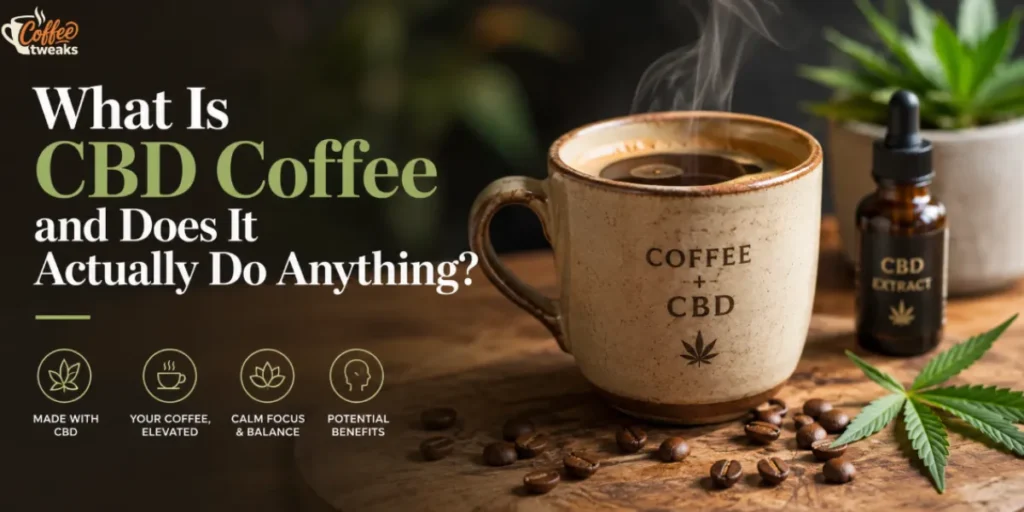
Okay but hear me out…
I used to roll my eyes at CBD coffee. Hard. It felt like one of those wellness trends designed to take money from people who already spend too much at Whole Foods. I was skeptical in the way that only someone who deeply loves regular coffee can be skeptical.
Then a friend handed me a cup without telling me what was in it. I just noticed my morning felt… different. Less wired. Still focused. Still me, just without that low-level hum of anxious energy I'd accepted as part of the deal.
So I actually went and looked into what was going on. Here's everything I found. 🌿
What CBD Actually Is (And What It Isn't)
CBD stands for Cannabidiol. It's a naturally occurring compound found in the hemp plant, which is part of the cannabis family. And yes, I know what you're thinking. But here's the thing that stops most people in their tracks: CBD is not the part that gets you high.
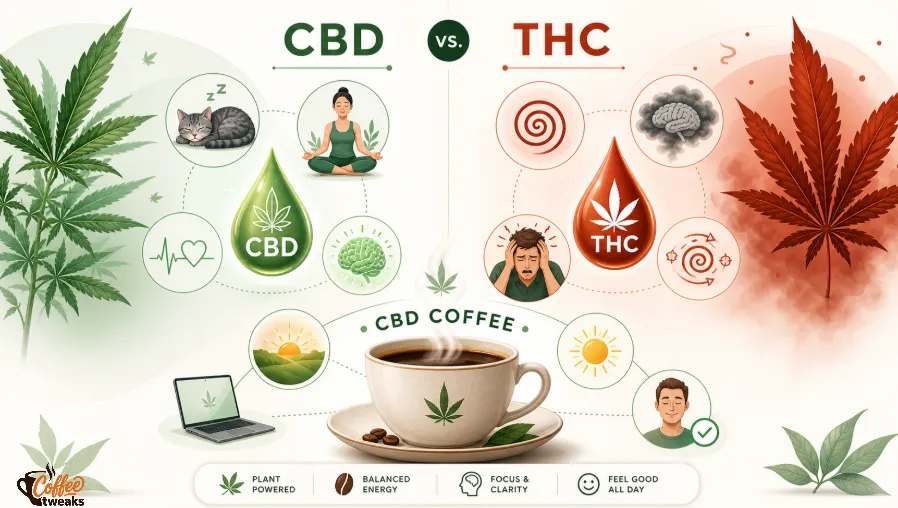
That's THC. Tetrahydrocannabinol. A completely different compound. THC binds to receptors in your brain and creates the intoxicating effect associated with marijuana. CBD doesn't work that way at all. It's non-psychoactive. It won't impair you, cloud your thinking, or make your afternoon Zoom call interesting in an unexpected way.
Most commercial CBD comes from industrial hemp, and in the United States, hemp-derived CBD became federally legal under the 2018 Farm Bill, as long as it contains less than 0.3% THC. Regulations vary by country, so it's worth a quick check wherever you are.
The reason people started adding it to coffee is simple: coffee wakes you up, sometimes too intensely. CBD is widely associated with calm. The idea was to put them together and see if you got the best of both.
So What Is CBD Coffee, Exactly?
It's exactly what it sounds like: coffee that contains CBD. But how that CBD gets into your cup matters a lot more than most brands admit.
There are essentially three ways you'll encounter it:
The reason this matters: CBD is fat-soluble. It doesn't naturally mix with water. Drop a standard CBD oil tincture into a hot cup of coffee and it'll mostly float on the surface, which means inconsistent absorption and an oily mouthfeel that nobody asked for.
Water-soluble CBD formats dissolve evenly and typically absorb better. If you're buying CBD coffee for an actual effect and not just the novelty, this is the detail worth paying attention to.
Pre-infused beans are convenient and give you consistent dosing per cup. If you're making it yourself at home, water-soluble CBD is your best friend.
One more thing on brewing: very high heat can degrade cannabinoids, but standard coffee brewing water (around 90 to 96°C) is below the threshold where significant degradation happens. Standard French press or pour-over methods are better than paper filters, which can bind to CBD and reduce what ends up in your cup. ☕
How CBD Works Inside Your Body
Your body has an entire system built for interacting with cannabinoids. It's called the endocannabinoid system, or ECS, and it was only discovered in the early 1990s which means we're still in relatively early days of understanding it.
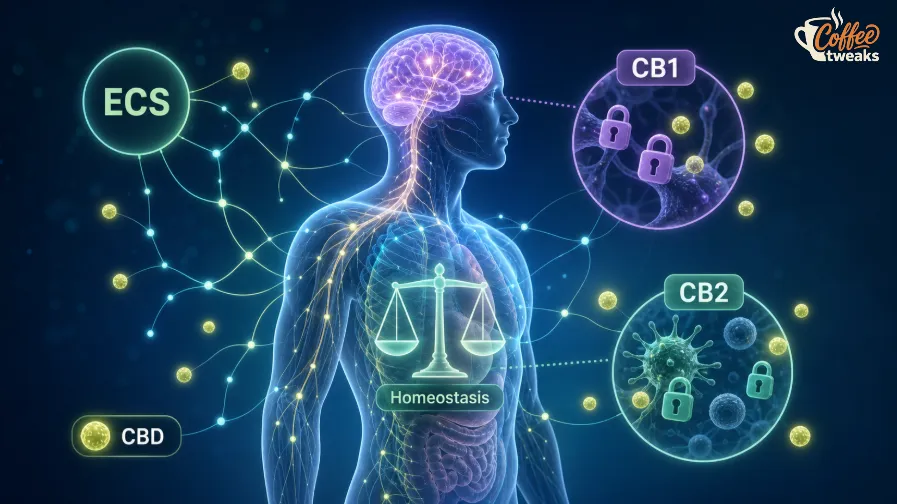
The ECS runs through your brain, nervous system, immune system, and most of your major organs. Its whole job is homeostasis, meaning it works to keep your internal environment balanced when life is throwing noise, stress, and overstimulation at you.
The ECS has two main receptor types. CB1 receptors sit mostly in the brain and nervous system and are involved in mood, pain perception, and cognition. CB2 receptors live mostly in immune tissue and deal with inflammation.
THC binds directly and strongly to CB1 receptors, hence the high. CBD doesn't do that. It works more indirectly, appearing to slow down the breakdown of your body's own calming compounds, interact with serotonin receptors, and influence several other pathways.
The simplified version: CBD doesn't flip a switch. It seems to help your own system maintain balance, particularly when something is pushing it out of balance. Something like, say, three shots of espresso before a meeting.
How Caffeine Works (Because This Context Matters)
Caffeine works by blocking adenosine receptors. Adenosine is a molecule that builds up throughout your day and makes you feel progressively sleepier. Caffeine's chemical structure is similar enough to adenosine that it fits into the same receptor docking spots and blocks the signal, without triggering it. The result is reduced fatigue, sharper alertness, and elevated mood because dopamine gets a little more room to move.
A standard cup of brewed coffee has roughly 80 to 120mg of caffeine. Most healthy adults can tolerate up to around 400mg per day without serious issues. The problem for people who are caffeine-sensitive isn't always the total amount. It's the rate of onset, the spike, and the accompanying increase in cortisol and adrenaline that can tip sensitive nervous systems into jitteriness, heart pounding, or that vague low-level anxiety that follows a strong cup.
No exaggeration when I say: that specific experience of “too much coffee, can't calm down” is exactly the gap CBD coffee is trying to address.
What Happens When You Combine Them
Here's where I have to be genuinely honest with you, because I think the wellness industry does a terrible job of this.
There are no high-quality clinical trials specifically studying the CBD-plus-caffeine combination in humans. That research doesn't exist yet. What we have is this:
A 2025 study published in Frontiers in Pharmacology found that CBD acts as an inhibitor of caffeine metabolism in the body, specifically affecting liver enzymes that break down caffeine. The practical implication is that CBD may slow how quickly caffeine clears your system, potentially producing a longer, more even release rather than a sharp spike followed by a crash.
That's a real biochemical finding with plausible implications for why people report smoother energy from CBD coffee. It's not confirmation that CBD coffee will feel different for you. But it's not nothing, either.
Beyond that, CBD on its own has demonstrated effects on anxiety and stress response in several studies. The mechanisms exist. The question is whether the doses found in a cup of CBD coffee are high enough to trigger them meaningfully in most people.
And honestly? That's the honest complication nobody wants to say out loud.
What People Claim vs. What Has Evidence
I want to break this down clearly, because the claims around CBD coffee range from genuinely plausible to completely unsupported.
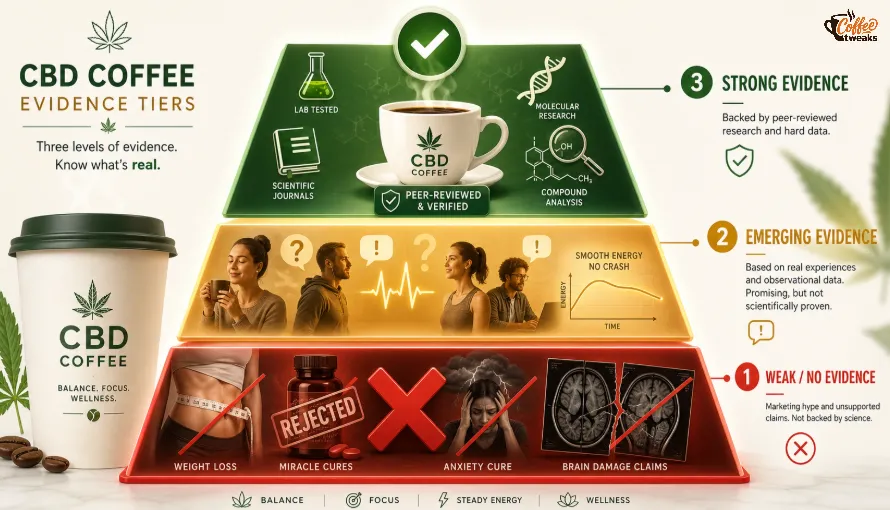
1. What has reasonable backing:
Coffee's benefits are real and well-studied independent of CBD. Antioxidants, improved alertness, links to reduced risk of certain conditions with regular moderate consumption. That part isn't in question.
CBD has documented biological activity at sufficient doses. Anxiety reduction, pain modulation, sleep support. The evidence base exists, even if the research is ongoing.
The possibility that CBD slows caffeine metabolism has actual biochemical research supporting it.
2. What is consistent anecdote but not confirmed science:
Reduced jitters with CBD coffee. Thousands of people report this. No controlled trial has confirmed it specifically for this combination. But the volume and consistency of the reports across different products, different doses, and different people is worth noting even before the studies exist.
Calmer, more sustained energy without the crash. Same situation. Widespread anecdotal pattern, not yet clinical fact.
3. What is marketing language with no credible support:
Weight loss from CBD coffee. Ignore this claim entirely.
CBD coffee as treatment for anxiety disorder, chronic pain, or any specific medical condition. A cup of CBD coffee is not a pharmaceutical. The doses per cup (typically 10 to 30mg) are far below those used in clinical CBD studies targeting specific conditions.
What It Actually Tastes Like
I get asked this a lot. The honest answer is: it depends entirely on what type of CBD is used.
CBD isolate has almost no taste. Coffee made with isolate-infused beans or isolate powder tastes like regular coffee.
Full-spectrum CBD oil, which contains the whole hemp plant extract including minor cannabinoids and natural terpenes, has a distinct earthy, slightly herbal flavor. Some people like it. Some find it strange. In a dark roast, it's barely noticeable. In a light roast, it comes through more.
If you're ordering a pre-made CBD coffee from a café and it tastes faintly grassy or herbal, that's the full-spectrum CBD. Not a sign of a bad product. Just a flavor note worth knowing about before your first sip. ✨
Dosage: The Numbers That Matter
The numbers matter here, and most brands are frustratingly vague about them.
A typical 12oz bag of CBD-infused coffee grounds contains somewhere between 150mg and 750mg of CBD total. Depending on how many grams you use per cup, you're getting roughly 7mg to 34mg per serving.
General CBD wellness research suggests:
So a typical CBD coffee cup lands you in a range where some effect is plausible. You're not in therapeutic treatment territory, but you're not at homeopathic-trace-amount territory either. It's a real dose of something that has real biological activity. What that translates to varies from person to person.
If you want precise, consistent dosing for a specific wellness goal, standalone CBD products with clearly labeled measurements are more reliable than coffee. But for a daily ritual that incorporates CBD naturally, coffee is one of the most enjoyable delivery formats available.
Side Effects and Who Should Be Careful
CBD coffee is generally well-tolerated, but it has two ingredients worth thinking about.
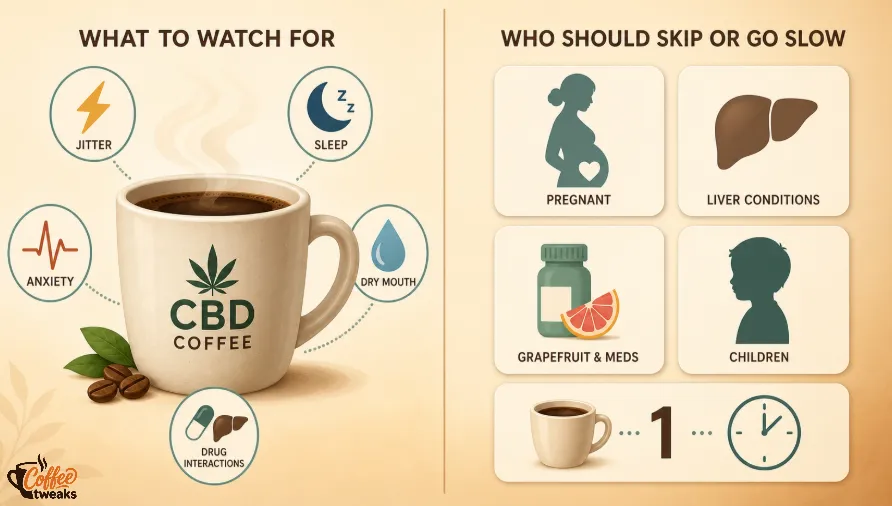
From the caffeine side: anxiety, jitteriness, disrupted sleep (especially for afternoon cups), and digestive sensitivity are all possible if you're sensitive to stimulants.
From the CBD side: most people experience nothing negative at standard doses. Some people notice mild drowsiness, dry mouth, or subtle digestive changes. At the very high doses used in clinical settings, liver enzyme elevation has been recorded, but the amounts in CBD coffee are nowhere near those levels.
The more serious consideration is drug interactions. CBD is processed by the same liver enzyme family (CYP450) that metabolizes many common medications, including blood thinners like warfarin, certain antidepressants, and some heart medications. If you take daily prescription medication, speak to a pharmacist before adding CBD to your routine. This is basic pharmacology, not scaremongering.
Skip CBD coffee entirely if you are:
Go slowly if you are:
The Cost Breakdown
A quality 12oz bag of specialty coffee typically runs $12 to $18. The same format in CBD-infused beans from a reputable brand: $22 to $45.
The alternative: buy your favorite coffee and add water-soluble CBD separately. A 1,000mg bottle of quality CBD tincture from a reputable brand costs roughly $30 to $50 and provides around 100 individual 10mg doses. That's about $0.30 to $0.50 of CBD per cup, added to whatever coffee you already love.
If you value convenience and consistency, pre-infused beans are worth the premium. If you want more control over dose and flavor, the DIY route is cheaper and more flexible.
Either way, before you buy anything, look for a COA: a Certificate of Analysis from a third-party lab. This document confirms that the CBD amount stated on the label actually matches what's inside. Reputable brands publish these openly. If a brand doesn't have one, don't buy it.
Who Is CBD Coffee Actually For
I didn't expect to love this but, genuinely, CBD coffee has become part of my morning routine. Not because I believe it's doing something miraculous. Because it made my mornings feel a little more like mine.
It's a good match if you:
It's probably not for you if:
Does It Actually Do Anything?
No exaggeration when I say: something is happening in that cup.
Whether it's a measurable chemical interaction between CBD and caffeine metabolism, a genuine calming effect from the CBD itself, or the simple placebo power of switching from something that made you anxious to something that feels gentler, the experience of CBD coffee is consistently reported as different from regular coffee.
❌ What it won't do: cure your anxiety, treat your pain, fix your sleep disorder, or replace any medication. Anyone selling you CBD coffee with those promises is selling you a story, not a product.
✅ What it might do: give you a more comfortable caffeine experience. Take the hard edge off your morning if you're caffeine-sensitive. Make your cup feel like a bit more of an intentional choice. And honestly? That's the whole point. 🌿☕✨
Buy from a brand with transparent lab testing. Start with one cup. Pay attention to how you feel across a week, not just the first sip. Your body will tell you whether it's worth keeping. No wellness influencer, including me, can do that part for you.