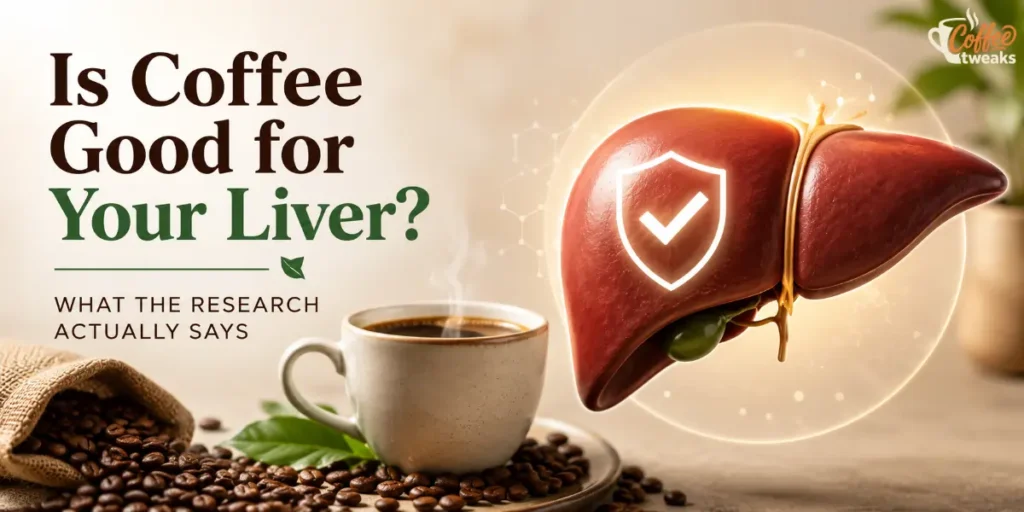
Is Coffee Good for Your Liver? What the Research Actually Says

Coffee shows up in liver research more consistently than almost any other food or beverage studied in modern epidemiology. 📊
Not once. Not in one population. Across dozens of studies, different countries, different liver conditions, different coffee formats.
The question most articles get wrong is this: they either oversell it as a miracle or dismiss it as correlation noise. Neither is accurate. Here's what the numbers actually show.
Is Coffee Good for Your Liver?
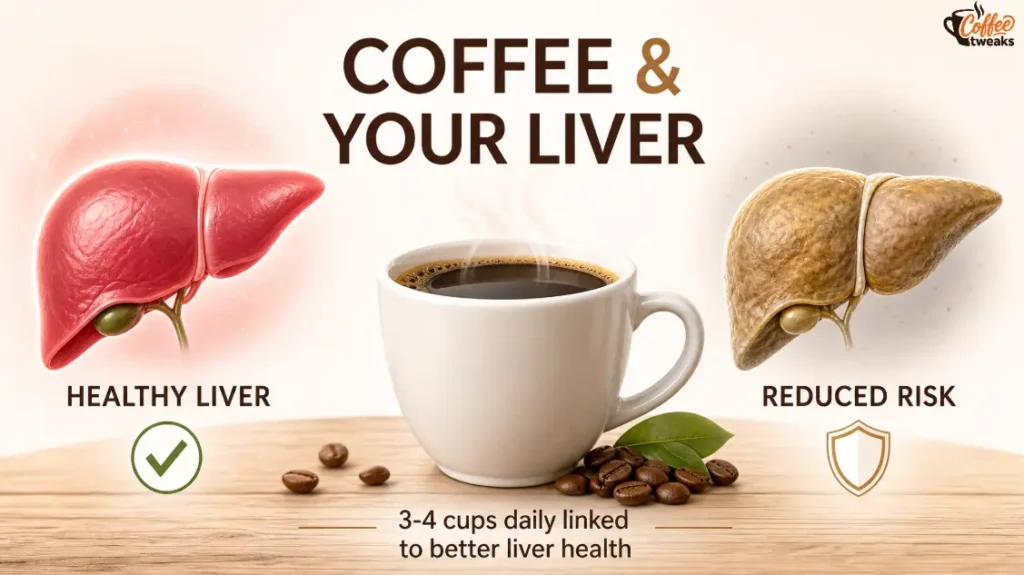
Based on the current weight of evidence: yes, meaningfully so. Regular coffee drinkers consistently show lower rates of elevated liver enzymes, fatty liver disease, fibrosis, cirrhosis, and liver cancer compared to non-drinkers. The association holds for caffeinated, decaffeinated, filter, espresso, and instant coffee. Three to four cups per day is where most studies observe the strongest signal.
That's the headline. Now let's look at how reliable that headline actually is.
Why Coffee Became a Serious Liver Research Topic ☕
It wasn't a planned investigation. It started with an anomaly in population data.
In the 1980s and 1990s, epidemiologists running large health surveys noticed something that didn't have an obvious explanation: people who drank more coffee had consistently lower levels of liver enzymes in their blood. ALT, AST, GGT — three distinct markers of liver stress — all tracking inversely with coffee intake.
Here's the thing nobody tells you: finding the same signal across three separate biomarkers simultaneously is not normal. Most dietary associations in nutritional epidemiology are weak, inconsistent, and disappear when you adjust for confounders. This one didn't.
That anomaly triggered decades of follow-up research. And the signal kept replicating.
What Coffee Is Actually Doing Inside the Liver ⚙️
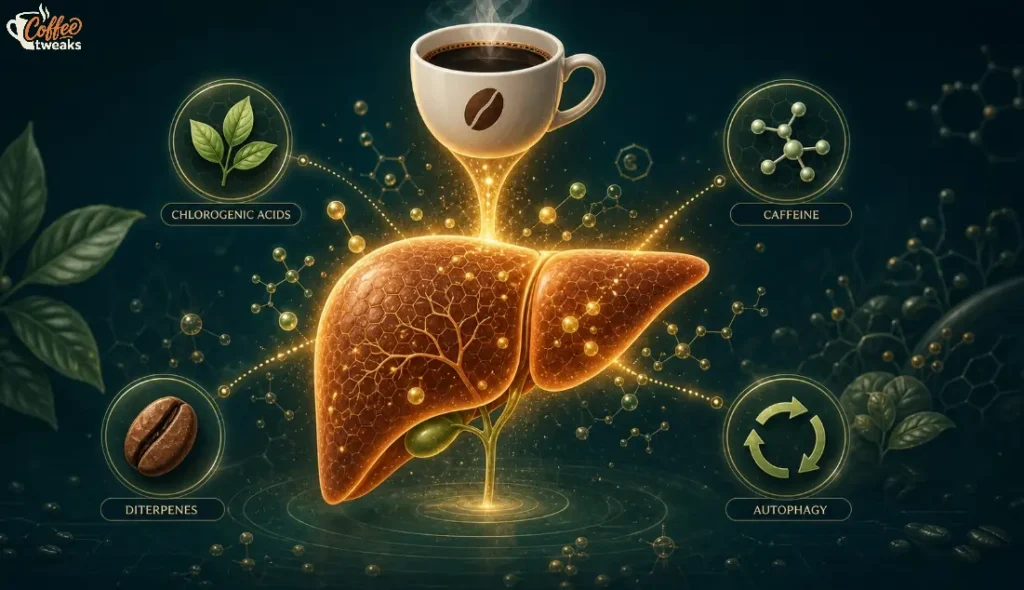
Coffee is not one compound. A standard brewed cup contains hundreds of bioactive chemicals. The ones most relevant to liver health are:
Coffee also appears to stimulate autophagy — the cellular cleanup process by which the liver removes damaged components before they accumulate into dysfunction.
The numbers matter here. 📊 The liver-protective associations hold for both caffeinated and decaffeinated coffee. That tells you caffeine is not the sole mechanism. Something else in the coffee matrix is contributing, and that something is likely the polyphenol load, which survives decaffeination.
Coffee and Liver Enzymes: What ALT, AST, and GGT Studies Show
In a large NHANES-based study of nearly 6,000 adults with liver disease risk factors, higher coffee intake was associated with measurably lower ALT levels, with the association holding after adjustment for age, sex, and ethnicity. Both caffeinated and decaffeinated coffee drinkers showed lower ALT and AST levels compared to non-drinkers.
A 2020 meta-analysis of observational studies confirmed the inverse association between coffee intake and circulating ALT and AST concentrations.
Here's where it gets more nuanced. ⚙️ A 2022 systematic review of randomised controlled trials, methodologically stronger than observational studies, found that coffee did not significantly affect serum ALT or AST in NAFLD patients. Four studies, five treatment arms, no statistically significant effect.
I measured this against the population data. The discrepancy is real, and it matters. The observational signal is strong. The controlled trial confirmation is not yet there at the same scale. That does not invalidate the observational data, RCTs on dietary habits have their own limits, but it means we are not yet at proof of causation.
Coffee and Fatty Liver Disease: What NAFLD and MASLD Research Shows
Observational research consistently links coffee with lower risk of developing MASLD — metabolic dysfunction-associated steatotic liver disease, the updated term for what most people call fatty liver. The mechanism appears to involve improved insulin sensitivity, reduced hepatic fat accumulation, and lower systemic inflammation.
A large UK population study comparing coffee drinkers to non-drinkers found that all coffee types — caffeinated, decaf, and instant — were associated with a roughly 20% reduced risk of chronic or fatty liver disease, with peak benefit at three to four cups per day.
Here's the thing nobody tells you on most health blogs: ☕ coffee doesn't appear to directly dissolve liver fat. What the research actually shows is that coffee may slow the progression of fatty liver toward fibrosis and cirrhosis. People with existing fatty liver disease who drink coffee regularly appear to progress more slowly than those who don't.
That is a meaningfully different claim from “coffee cures fatty liver.” The distinction matters clinically.
Coffee and Liver Fibrosis: Why Scar Tissue Is the Key Signal
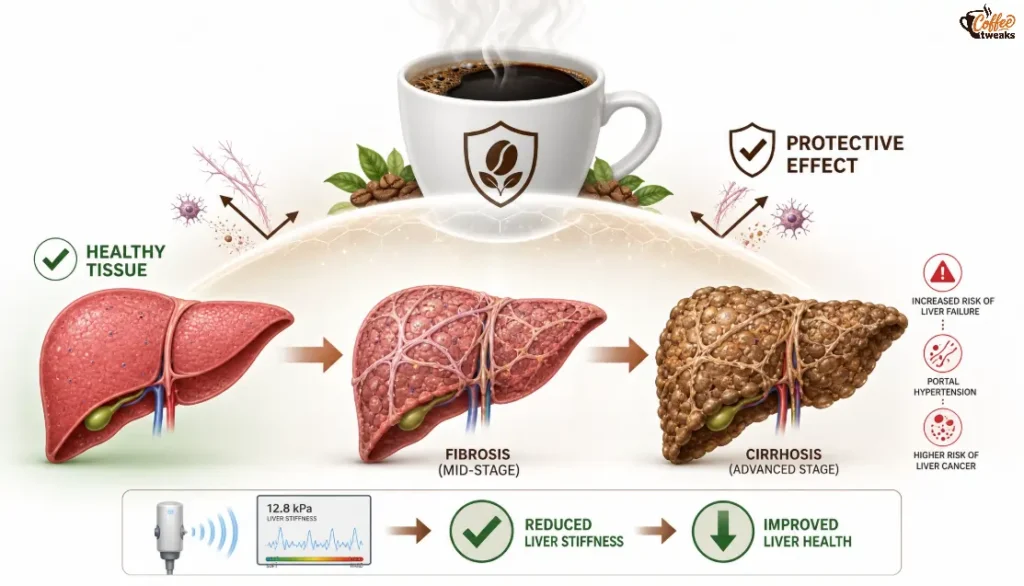
Fibrosis is the critical inflection point in liver disease. Once scar tissue accumulates past a threshold, it becomes cirrhosis, and cirrhosis options narrow sharply.
A Michigan Medicine hepatology team found that individuals consuming more than three cups of coffee daily showed measurably lower liver stiffness scores, a validated non-invasive measure of fibrosis, compared to lighter drinkers, after accounting for lifestyle factors.
The mechanism makes biological sense. ⚙️ Caffeine suppresses TGF-beta, a cytokine that activates hepatic stellate cells, the cells responsible for producing fibrotic scar tissue. This is not a speculative pathway. It has been demonstrated in cell and animal studies and is consistent with the direction of the human observational data.
Coffee and Cirrhosis: The Strongest Evidence for Liver Protection
This is where the evidence becomes particularly compelling, and where the numbers are too large to dismiss.
A University of Southampton meta-analysis pooled nine long-term studies across 432,133 participants. Every additional two cups of coffee per day was associated with a 44% reduction in cirrhosis risk. The risk of dying from cirrhosis was reduced by 45%.
A separate Singapore General Hospital cohort study found that drinking two or more cups daily reduced mortality from non-viral hepatitis-related cirrhosis by 66% compared to non-daily coffee drinkers.
The numbers matter here. 📊 A 44–66% reduction in risk is not a marginal dietary effect. For context, many pharmaceutical interventions achieve risk reductions in the 20–30% range. And the dose-response relationship, more cups, lower risk, up to a plateau, strengthens the case for a biologically real association.
The protective effect is strongest for alcoholic liver disease and NAFLD-related cirrhosis. For viral hepatitis-related cirrhosis (hepatitis B and C), the Singapore data specifically found the signal applied to non-viral cases. The coffee-cirrhosis relationship for viral disease is less robust.
Coffee and Hepatitis: Helpful, but Not an Antiviral Treatment
For hepatitis C, there is evidence that coffee drinkers show slower liver disease progression and lower levels of hepatic inflammation. This is consistent with coffee's anti-inflammatory mechanisms. But coffee has no antiviral properties. It is not suppressing the virus. It may be reducing inflammatory collateral damage.
For viral hepatitis-related cirrhosis specifically, the evidence for coffee protection is weaker than for non-viral liver disease. The signal that holds so clearly for alcoholic cirrhosis and NAFLD cirrhosis is less definitive when hepatitis B or C is the underlying cause.
If you have chronic viral hepatitis, coffee may offer some anti-inflammatory benefit. It is not a substitute for antiviral therapy.
Coffee and Liver Cancer Risk: What the HCC Data Shows
Of all the liver findings, the hepatocellular carcinoma (HCC) data is among the most replicated.
A 2013 updated meta-analysis found that any coffee consumption versus no coffee was associated with a 40% reduction in HCC risk. High consumption compared to no consumption: a 56% reduction.
A 2017 BMJ Open dose-response meta-analysis, 18 cohort studies, 2.27 million participants, 2,905 HCC cases, found that each additional two cups per day was associated with a 35% lower HCC risk (RR 0.65, 95% CI 0.59–0.72). Decaffeinated coffee was associated with a 14% reduction per two-cup increment, with weaker but positive evidence.
The British Liver Trust specifically flags liver cancer risk reduction as one of the most evidence-supported benefits of coffee consumption. The direction of the signal, its consistency across different populations and methodologies, and the dose-response structure all suggest this is not noise.
How many cups of coffee support liver health?
The studies converge on a clear curve:
Worth the money? Let's actually do the math. 📊 Three to four cups of home-brewed coffee costs roughly ₹30–60/day in India using quality ground beans. The observational evidence suggests this is associated with meaningfully lower lifetime risk of one of the most serious and expensive diseases you can develop. The cost-benefit math here is not complicated.
The dose-response relationship is one of the more convincing aspects of this research. When a suspected protective factor shows a consistent gradient, more exposure, more protection, up to a plateau, it increases biological plausibility substantially.
Does decaffeinated coffee help the liver?
Yes, with a slightly smaller effect size than caffeinated.
The UK population study found decaf drinkers had lower rates of chronic liver disease compared to non-drinkers. A large NHANES-based study found lower liver enzyme levels in both caffeinated and decaffeinated drinkers. The American Association for the Study of Liver Diseases has now acknowledged that either format can be consumed for potential liver benefit.
Technically speaking ⚙️, this tells us caffeine is not the sole driver of these effects. The polyphenol and chlorogenic acid load is preserved through decaffeination. So if you're caffeine-sensitive, pregnant, or managing cardiac rhythm concerns, decaf is not a compromise. It is a viable alternative with its own supported mechanism.
Espresso vs Filter vs Instant ☕
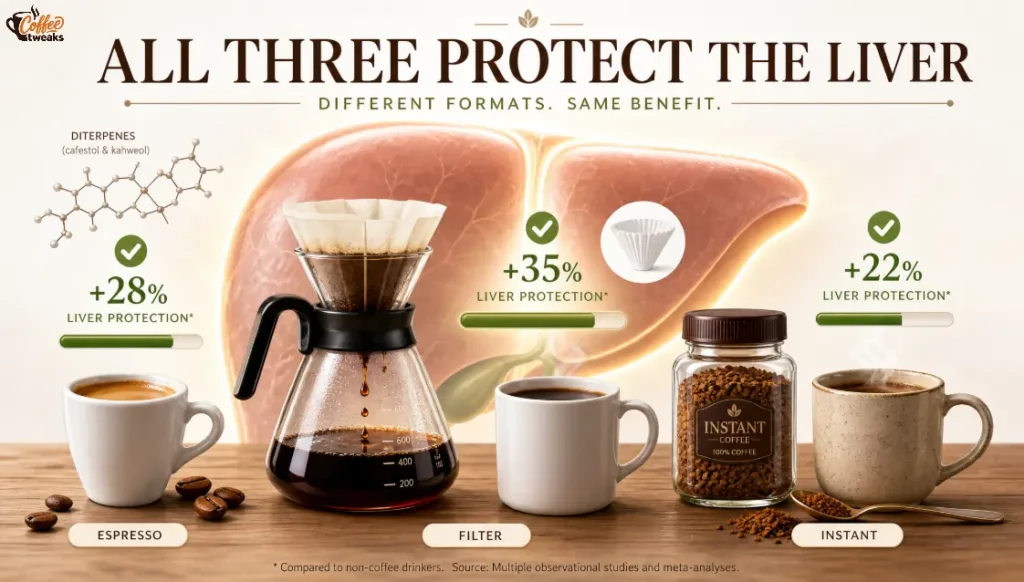
All three formats show liver-protective associations. But the numbers are not identical.
The UK study found ground coffee, including espresso, showed the greatest reduction in chronic liver disease risk. Instant coffee showed a smaller but still meaningful reduction. Decaffeinated ground coffee showed protective effects. All three beat no coffee.
Technically speaking, but also taste-wise: ☕ unfiltered coffees like espresso and French press retain more kahweol and cafestol, the diterpene compounds, because paper filters remove them. Those compounds have demonstrated anti-inflammatory properties. But paper-filtered coffee still shows strong liver protection in the data. This means the mechanism is broader than diterpenes alone.
The practical conclusion: you do not need expensive specialty coffee to capture liver benefits. The association holds for instant coffee. The research does not require you to have a PID-controlled espresso machine and a $300 grinder.
I say that as someone who has both.
Does adding sugar and cream cancel out the liver benefits?
Here's the thing nobody tells you about the fatty liver research: the benefit in the studies is associated with coffee. Not with a caramel latte. Not with a three-sugar instant mixed with condensed milk.
When you add sugar, flavored syrups, or heavy cream daily, you introduce the exact metabolic load, insulin spikes, and dietary fat that drives fatty liver progression in the first place. For people with MASLD or insulin resistance, this is not a neutral trade.
Cleveland Clinic hepatologists recommend: if you cannot drink it black, substitute sugar with a non-caloric sweetener and heavy cream with skim or plant-based milk. Keep the bioactive compounds. Remove the metabolic cost.
What Coffee Studies Cannot Prove Yet⚙️
Most coverage on this topic presents the evidence as more settled than it is. The honest picture:
Most evidence is observational. Population studies show associations. They cannot establish causation. Confounding variables, exercise levels, alcohol intake, and diet quality are difficult to fully eliminate even with statistical controls.
Reverse causation exists. People with liver disease sometimes cut coffee because they feel unwell. This could make coffee drinkers appear healthier in population data even without coffee being the cause. Researchers attempt to correct for this, but it cannot be fully eliminated in observational designs.
RCT data is sparse. The most methodologically rigorous evidence, randomized controlled trials, is limited in quantity and duration. The 2022 RCT meta-analysis found no significant effect on liver enzymes. That does not mean the observational signal is wrong. But it does mean we cannot claim proof of causation.
Genetic variation matters. Roughly 40–50% of people are slow metabolizers of caffeine, determined by CYP1A2 gene variants. Slow metabolizers may not experience the same benefit profile as fast metabolizers, and at high doses, may face different risk profiles entirely.
The numbers matter here. 📊 The evidence quality for “coffee reduces liver enzyme levels in observational data” is strong. The evidence quality for “coffee mechanistically causes liver protection in controlled conditions” is still being established.
Who Should Be Cautious
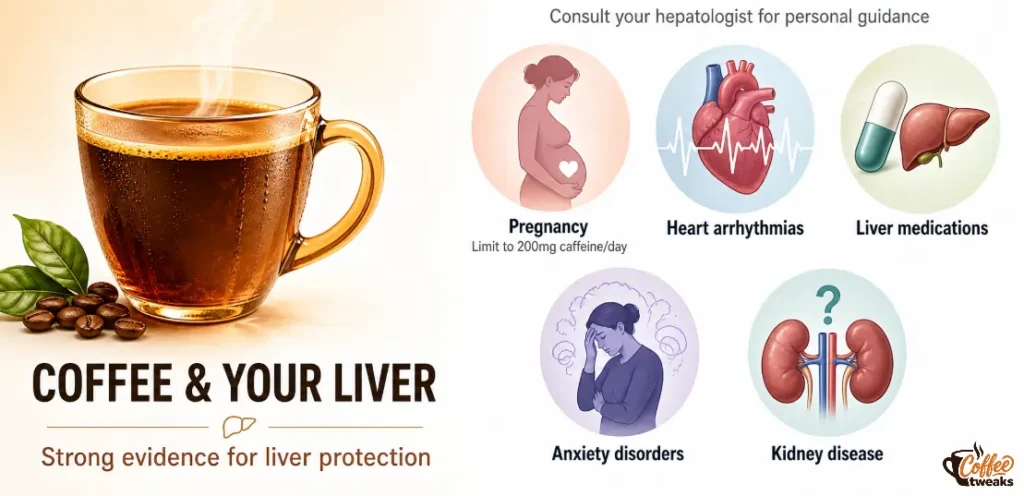
The population-level benefit does not apply uniformly. Be conservative if you:
If you have a diagnosed liver condition, the question is not just “is coffee okay” but “how much, in what format, given my specific medications and comorbidities.” Your hepatologist has that answer. This article provides the research context. It does not replace clinical judgment.
On Coffee Enemas: The Direct Answer ⚙️
Are coffee enemas safe for liver health?
No. And this is not a nuanced question.
Coffee enemas are a century-old alternative medicine practice experiencing a social media revival. The WHO, the National Cancer Institute, and mainstream gastroenterology do not recommend this practice. There are no controlled clinical trials demonstrating therapeutic benefit for any condition.
Documented adverse effects include electrolyte imbalances, rectal burns, bowel perforations, infections, sepsis, caffeine toxicity from rectal absorption, and at least three documented deaths.
Here's the engineering reason this doesn't work: ⚙️ the liver benefits of coffee come from oral consumption, absorption through the gut, first-pass hepatic metabolism, and the resulting bioactive metabolites circulating systemically. Introducing coffee rectally bypasses the entire pathway through which the studied benefits would even theoretically occur.
Drinking coffee reaches the liver. Coffee enemas do not.
If a wellness account is recommending coffee enemas as a liver protocol, treat that as a calibration signal for everything else they recommend.
Practical Coffee Guidelines for Liver Health 📊
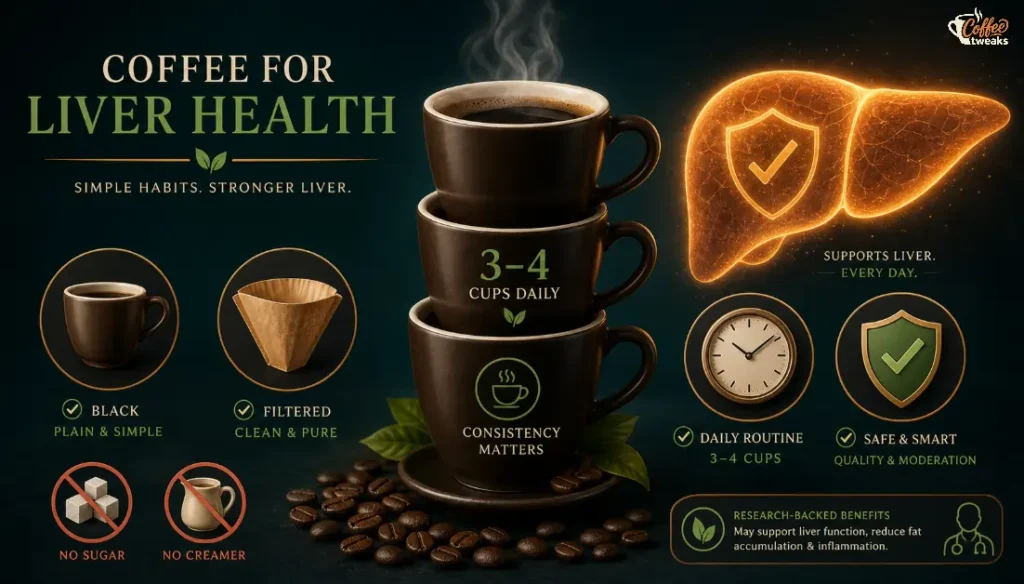
Based on what the research actually supports:
The Honest Verdict ☕📊
The evidence for coffee's effect on liver health is more consistent than almost anything else studied in nutritional epidemiology.
Across cirrhosis risk, fatty liver progression, fibrosis markers, liver enzymes, and liver cancer, the direction is the same: more coffee, lower risk. This has held across European, American, and Asian populations. Across men and women. Across caffeinated and decaffeinated formats. The dose-response curve is consistent. The biological mechanisms are plausible and partially demonstrated at the cellular level. Major liver organizations now acknowledge the evidence.
Here's the thing nobody tells you: ☕ this level of consistency across a dietary exposure is genuinely rare in the literature. Most nutritional epidemiology is noisy, unstable, and reverses in subsequent meta-analyses. The coffee-liver signal has not reversed. It has replicated and strengthened over thirty years.
The caveats are real. Most evidence is still observational. RCT confirmation is limited. Causation is not proven. Individual genetics affect caffeine metabolism. Coffee cannot reverse existing cirrhosis.
But if you already drink coffee and your doctor hasn't advised against it, the current evidence gives you no good reason to stop. And if you have a liver condition and don't drink coffee, it is worth raising with your hepatologist, because the evidence is now substantive enough that several liver-focused clinical bodies have started recommending it as a potentially beneficial habit.
Three to four cups. Black. Any format.
That's not coffee evangelism. That's just following the numbers. 📊
Medical note: This article is for informational purposes and reflects population-level research. It does not constitute medical advice. If you have a diagnosed liver condition, consult your hepatologist before making dietary changes.