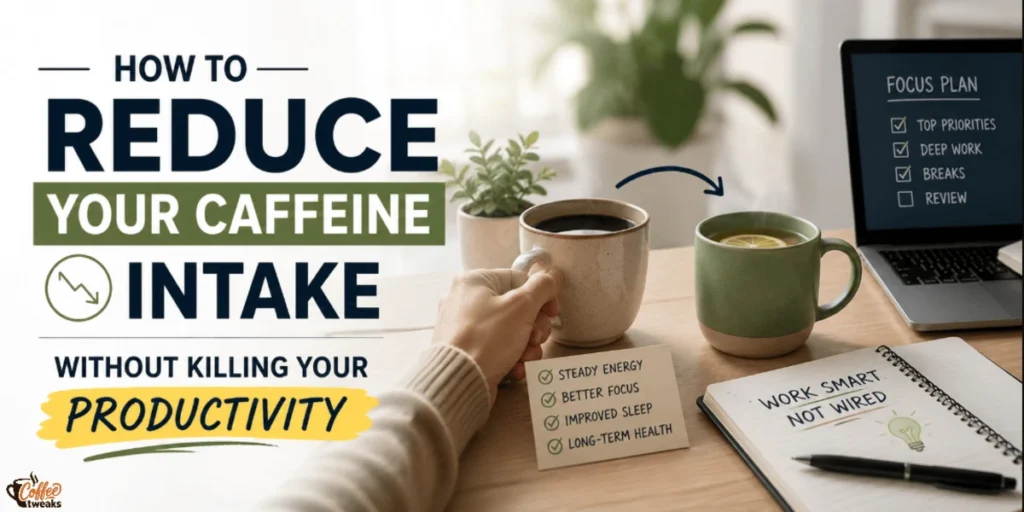
How to Reduce Caffeine Intake Without Killing Your Productivity

Real talk.
If your plan for cutting back on caffeine is to quit cold turkey on a Monday morning, I’ve got bad news.
You’re about to spend three days with a skull-splitting headache, zero motivation, and the sudden, deeply personal conviction that everything in your life is terrible.
And none of it is necessary.
I love coffee. I genuinely respect caffeine. But I also know what drinking six cups a day for years does to your brain chemistry, and I know exactly what happens when people try to cut back the wrong way. The internet is loaded with advice like “swap your espresso for chamomile tea!” and “just stay positive!”
That’s not a caffeine reduction plan. That’s a Pinterest board.
This guide is different. It’s built on neuroscience, designed for people who drink seriously, and structured so you can cut back without watching your productivity fall off a cliff.
Let’s get into it.
First: What Is Caffeine Actually Doing in Your Brain?
Most articles skip this part. That’s a mistake, because once you understand the mechanism, the entire reduction strategy clicks into place.
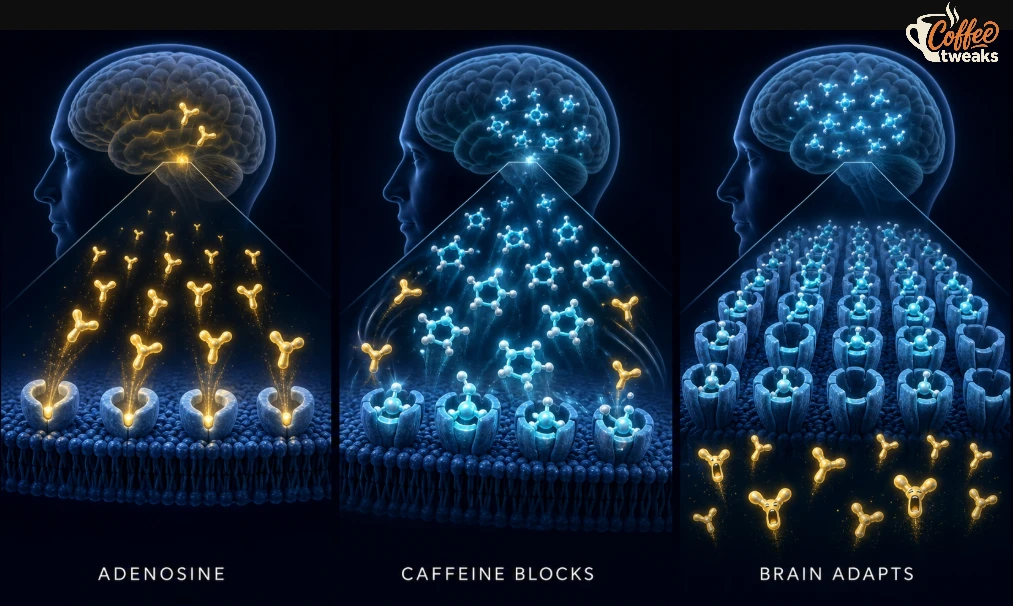
Your brain continuously produces a chemical called adenosine, think of it as your natural fatigue signal. Throughout the day, adenosine accumulates and binds to receptors that progressively slow brain activity and increase sleep pressure. By late evening, adenosine levels are high enough that you have to sleep. That’s the system working perfectly.
Here’s where caffeine hijacks things.
Caffeine is structurally similar enough to adenosine that it fits into the exact same receptor sites, but instead of activating them, it blocks them. It sits in the receptor, does nothing, and stops adenosine from delivering its fatigue message. The result: sustained alertness, sharper reaction time, better focus.
So far, so great. Here’s the problem.
Your brain is adaptive. When adenosine receptors are consistently blocked, the brain responds by growing more adenosine receptors to compensate.
After weeks or months of high-dose caffeine use, your brain has literally restructured itself to expect caffeine. You now have more adenosine receptor sites than a non-user, and those receptors are hypersensitive.
You’re no longer drinking four cups to feel good. You’re drinking four cups to feel normal.
Without caffeine, that expanded pool of receptors gets flooded. Withdrawal hits within hours. And now you understand exactly why.
Why Cold Turkey Is Such a Bad Idea
Let’s talk about what actually happens when you stop abruptly.
| Withdrawal Stage | What’s Happening |
|---|---|
| Hours 12–24 | Headache begins, energy drops, mild brain fog |
| Hours 20–51 | Symptoms peak: headache, fatigue, irritability, low mood |
| Days 2–9 | Gradual resolution, cognitive function returns |
That headache is not random. It has a very specific mechanism.
Caffeine is a vasoconstrictor; it keeps your cerebral blood vessels slightly narrowed. The moment you stop, those vessels dilate rapidly. The sudden flood of blood flow triggers the throbbing, bilateral headache that most cold-turkey quitters describe as one of the worst of their lives. For people with a migraine history, abrupt cessation can trigger a full-blown attack.
The data on who suffers most is clear: people consuming more than 300mg per day, roughly three or more large coffees, are at significantly higher risk of severe symptoms. If you’re stacking coffee and energy drinks and hitting 600–800mg daily, expect nearly a full week of impaired function if you stop abruptly.
And here’s the cruel irony.
Most people cave on day two and reach for coffee just to kill the headache. Which restarts the dependency cycle completely. The cold turkey approach doesn’t just fail, it actively reinforces the habit it was supposed to break.
I’ve been wrong before. Not about this.
The Cortisol Problem Nobody Talks About
Here’s something most caffeine guides completely ignore: the timing of your doses matters as much as the amount.
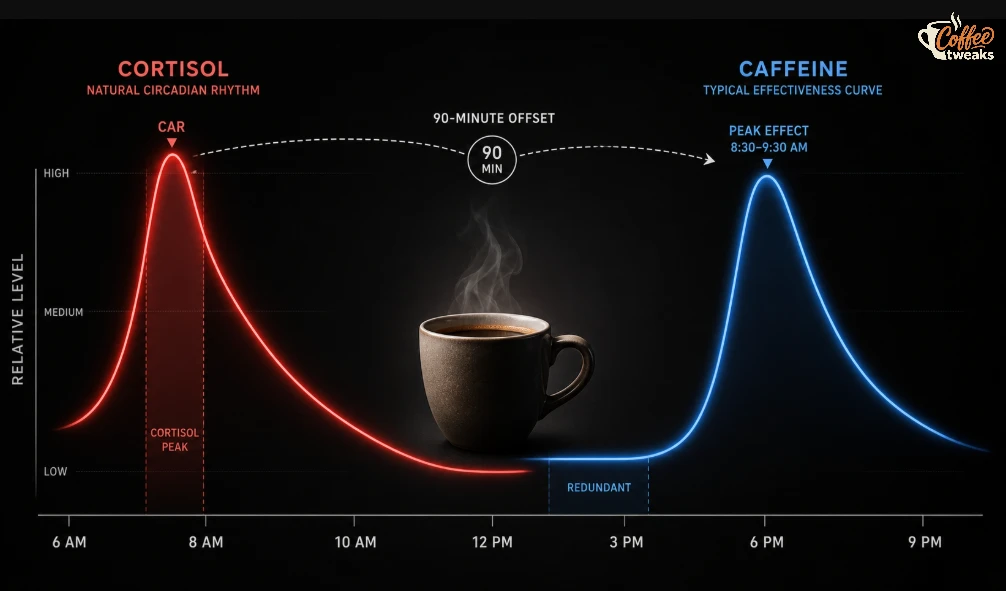
Every morning, your cortisol levels naturally peak 30 to 60 minutes after waking. This is called the cortisol awakening response, your body’s built-in alertness mechanism. It’s free, it’s effective, and most heavy coffee drinkers are suppressing it without realising it.
When you consume caffeine during this natural cortisol peak, you’re essentially doubling up on stimulation that your body was already providing. Research shows that at daily intakes around 300mg and above, caffeine’s cortisol-raising effect never fully disappears throughout the day, meaning afternoon doses keep cortisol elevated well into the evening.
Chronically elevated cortisol is linked to: disrupted sleep, impaired memory consolidation, mood dysregulation, and over time, increased cardiovascular risk.
This is why timing your caffeine, not just reducing it, is a fundamental part of the strategy. Delay your first dose 60 to 90 minutes after waking, and you’ll notice it works significantly better. That’s not a placebo. That’s your adenosine receptors actually having something to block, rather than just maintaining tolerance.
The Decaf Blend Method: The Most Underused Tool in Caffeine Reduction
Before the 30-day plan, I want to highlight one specific technique that works better than almost anything else for habitual coffee drinkers.
Here’s the concept: Instead of replacing your coffee, you gradually shift the ratio of regular to decaf in your brew.
The blend ratios look like this:
One important note: decaf is not caffeine-free. A typical cup contains around 10 to 15mg versus roughly 95 to 140mg in regular brewed coffee. That trace amount is actually useful, it prevents you from hitting absolute zero too suddenly, acting as a natural floor during your taper.
The blend method essentially lets you taper without ever consciously calculating milligrams. Which makes it far more sustainable for people who don’t want to turn their morning coffee into a chemistry experiment.
Your 30-Day Plan to Reduce Caffeine Intake 🎯
This is not a rigid medical protocol. It’s a realistic, week-by-week guide built around how caffeine dependence actually works. Adjust the pace to your situation; if you’re starting at a very high dose, extend each phase by a few days.

Week 1 — Audit, Don’t Cut (Yet)
Before reducing anything, spend two or three days tracking your actual intake. Not what you think you drink — what you actually consume. This includes:
Most heavy users are genuinely surprised when they add it all up. Hitting 600–800mg daily without realizing it is more common than you’d think.
Your Week 1 target: a 25% reduction.
Not half. Not three-quarters. Just 25%. The key move is to eliminate the last caffeine dose of the day first, not the morning cup. That’s the psychologically and physiologically hardest one to cut. Remove the afternoon or evening dose first. You get two benefits immediately:
- Your daily total drops without touching the intake that feels most essential
- Your sleep quality starts improving almost immediately
What to expect this week: Mild headache on days one or two. Slightly lower afternoon energy. Some irritability mid-week. These are manageable. They do not justify reversing course.
Week 2 — Time It Smarter, Blend It Down
Another 10 to 15% reduction from your Week 1 level. But the bigger tool this week is timing.
Delay your first caffeine dose until 90 minutes after waking. Let your cortisol awakening response do its job first. By the time caffeine enters the picture, your natural alertness is peaking and starting to descend, and now caffeine fills the gap instead of stacking on top.
Your first cup will feel noticeably more effective. Which means you’ll crave a second dose later and later.
If you brew at home, this is the week to start the decaf blend. Start at 75% regular / 25% decaf for your later cups. Your taste buds won’t notice. Your brain will barely register the difference.
What to expect this week: The worst is likely behind you if you held Week 1 steady. Energy will feel variable — good hours and flat hours. That’s your brain recalibrating its adenosine receptor density. It takes time. That’s normal.
Week 3 — Consolidate, Don’t Push
You’re now at approximately 50 to 60% of your original intake. Week 3 is about consolidation, not aggressive reduction. Hold your current level for most of the week before one final small cut at the end.
This is the week most people notice something they didn’t expect:
They feel more stable, not more tired.
High-dose caffeine creates a cycle of artificial peaks and crashes. Constant spikes of alertness followed by sharp drops. Many people have normalized this pattern so thoroughly that they don’t even recognize it as instability anymore. At a lower, steadier intake level, energy becomes more predictable and flat in the best possible way.
Sleep quality is typically noticeably better by now. The science here is unambiguous: caffeine reduces total sleep time, delays sleep onset, and suppresses slow-wave sleep (the deep, restorative phase essential for memory consolidation and hormone regulation).
A 2023 meta-analysis found caffeine reduced total sleep time by an average of 45 minutes and sleep efficiency by 7%. That compounds over months. Better sleep is one of the most powerful cognitive performance tools available. You’re starting to access it.
Move to a 50/50 regular-to-decaf blend this week.
What to expect this week: Most people feel relatively normal. Occasional afternoon dips, nothing dramatic. Many people choose to stabilize here, at roughly half their original intake, which is a completely reasonable goal.
Week 4 — Find Your New Baseline
The final week is about locking in a sustainable level that you can actually maintain long-term.
Based on clinical tapering guidelines, a target of 100 to 200mg per day represents a sweet spot for most people, roughly one to two smaller coffees, or one standard mug of well-brewed filter coffee. At this level, most people experience caffeine’s real benefits (enhanced alertness, improved focus, elevated mood) without the dependency trap.
This does not mean you can never drink more. It means this becomes your daily floor, not your ceiling. Strategic higher doses for specific high-demand situations remain available and work again precisely because your tolerance has reset.
Move to a 25% regular / 75% decaf blend, or simply one regular morning cup and decaf for everything after.
What to expect this week: Stable energy. Better sleep. And that first morning coffee hitting harder than it has in years. That’s the whole point.
Staying Productive During the Reduction
The question every high-functioning coffee drinker asks: “Will my work actually suffer?”
Honest answer: briefly, slightly, and only in weeks one and two, and far less than you’d expect if you do this right.
Here’s the real picture most people miss. In heavy habitual users, a significant portion of caffeine’s “performance benefit” is simply offsetting withdrawal. You’re not cognitively enhanced. You’re returning to baseline after a deficit. Once your tolerance resets, even 100mg provides a meaningful boost because your adenosine receptors are no longer upregulated to compensate.
Practical adjustments that actually help:
The Mistakes That Kill Most Reduction Attempts
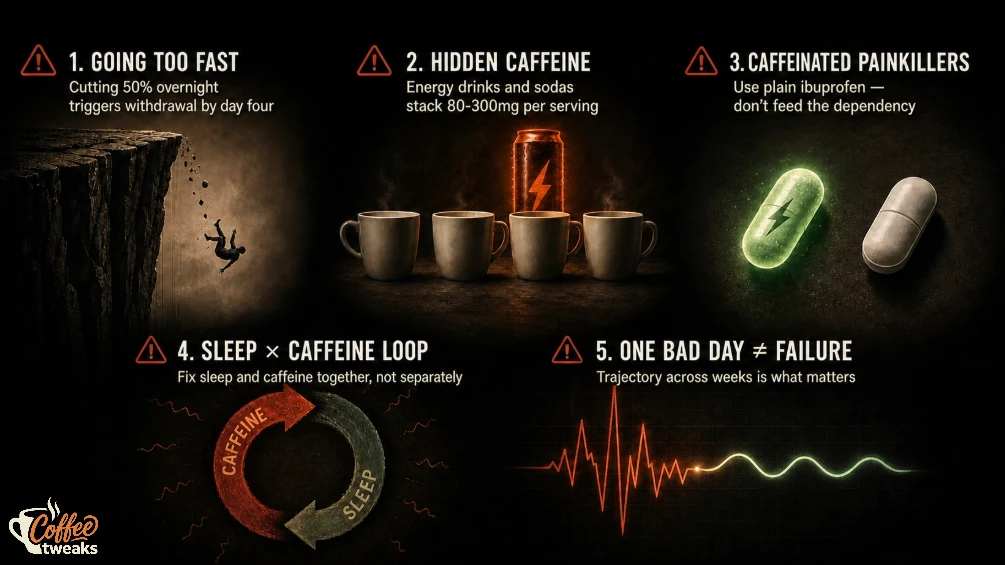
Going too fast. Cutting 50% of intake over a long weekend feels like a commitment. What it actually does is trigger withdrawal severe enough that you quit the plan by day four. The research on tapering is clear: 25 to 50% every few days, not overnight.
Not counting everything. Switching from four coffees to two coffees and two energy drinks is not reduction. Depending on the brand, a single energy drink can contain 80 to 300mg of caffeine, sometimes stacked with additional stimulants. If you’re reducing caffeine, you’re tracking everything, not just the coffee cups.
Using caffeine-containing pain relievers for withdrawal headaches. Many OTC headache medications contain caffeine because it enhances their analgesic effect. Taking one to manage your withdrawal headache provides short-term relief but perpetuates the dependency cycle. Plain ibuprofen or acetaminophen handles the pain without feeding the problem.
Ignoring sleep at the same time. Cutting caffeine while continuing to sleep poorly creates a brutal feedback loop. Poor sleep drives fatigue, fatigue drives caffeine craving, the reduction fails. If you’re addressing caffeine, address your sleep cutoff simultaneously. They are not separate issues.
Treating a bad day as evidence the plan doesn’t work. Some days during the taper will be genuinely rough. That’s biochemistry, not failure. The trajectory across weeks matters. A bad Thursday in week two is irrelevant to how you feel in week four.
What Changes on the Other Side
Here’s what most people report after 30 days at a lower, stable intake.
Sleep quality improves noticeably. Often within two to three weeks of cutting back and setting an earlier daily caffeine cutoff, people see meaningful gains in sleep depth and duration. Better sleep means sharper cognition, better mood regulation, and lower baseline cortisol, which in turn reduces background anxiety and improves stress resilience.
Anxiety drops. High daily caffeine intake keeps cortisol elevated and the sympathetic nervous system in a low-level activation state for much of the day. It’s essentially a mild, constant stress signal. Pulling back removes it. Most heavy users describe their emotional baseline as noticeably calmer within four to six weeks, something they genuinely did not expect going in.
Coffee works again. This one is underappreciated. Tolerance is real and measurable. When your adenosine receptor density resets, one well-timed, quality cup of coffee delivers the kind of alertness and focus that six cups a day could no longer provide. That’s the actual trade volume for effectiveness. Most people who complete this process agree it was completely worth it.
FAQ
How do I reduce caffeine without getting headaches?
Gradual tapering — not cold turkey. Reduce by around 25% of your current intake, hold there for several days, then reduce again. The decaf blend method is one of the most practical tools for this because it doesn’t require changing anything about your coffee ritual. Delaying your first morning dose and eliminating your last daily dose first both help minimize headache severity.
How long does caffeine withdrawal last?
Symptoms typically begin within 12 to 24 hours of reduction, peak around 20 to 51 hours, and resolve within 2 to 9 days. With a proper gradual taper, most people experience symptoms on the milder end of that range, often resolving within three to four days.
Can I switch straight to decaf?
Technically, but it’s not recommended for heavy users. Decaf contains about 10 to 15mg per cup — so you won’t hit zero — but the drop from 600mg to 30mg is still steep enough to trigger significant withdrawal. A blend transition over several weeks is a far more comfortable approach.
How much caffeine should I cut each week?
A 25% reduction every several days is the clinically supported guideline. For very heavy users starting above 600mg, reducing by 50 to 75mg per step rather than hitting exact percentages is more practical and equally effective. There’s no prize for going fast.
Will reducing caffeine improve my sleep?
Yes, and the evidence is strong. Caffeine reduces total sleep time, delays sleep onset, and suppresses slow-wave deep sleep. Reducing intake and setting an early afternoon cutoff typically produces noticeable sleep improvements within two to three weeks.
Can I stay productive on less caffeine?
Yes — and often more so. High habitual intake builds tolerance to the point where you’re mostly offsetting withdrawal rather than genuinely enhancing performance. Once tolerance resets, a moderate single dose provides a far more meaningful cognitive boost. Most people report more stable, predictable energy throughout the day at reduced intake compared to the peaks and crashes of high-dose use.
What’s the minimum amount of caffeine that can cause dependency?
Research shows withdrawal can occur after as little as 100mg per day over three or more consecutive days. Most regular coffee drinkers are well above this. Severity of withdrawal scales with both dose and duration of habitual use.