Coffee and Intermittent Fasting: Does Black Coffee Break a Fast?

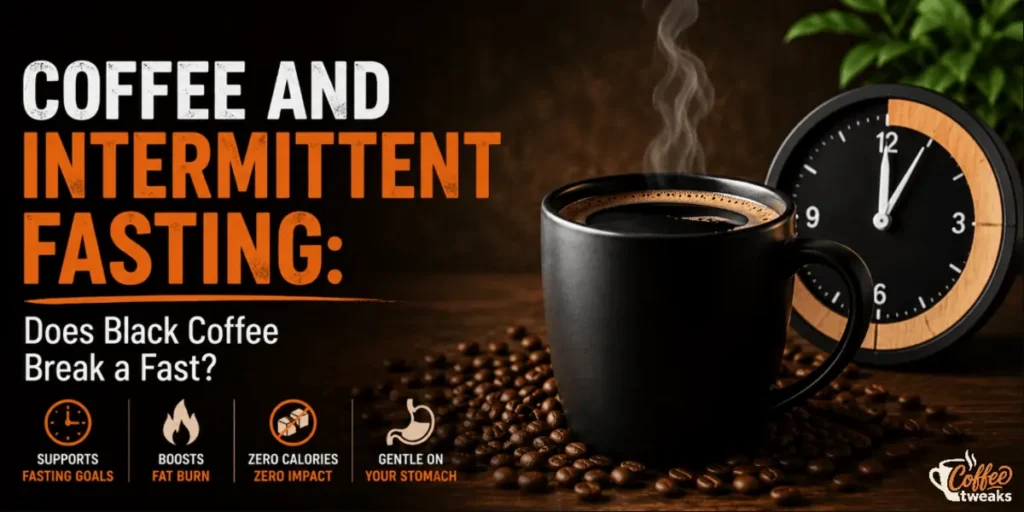
Here’s the thing nobody tells you when you start intermittent fasting…
The answer to “does coffee break a fast” is not yes or no. It is it depends on what you mean by breaking a fast.
That is not a hedge. That is the most accurate answer available in the current scientific literature. And if someone gave you a cleaner answer than that, they were either simplifying or guessing.
I spent several days reading studies, reviewing clinical protocols, and combing through the mechanistic research on what fasting actually does to the body, and what coffee actually does to fasting. What I found was more nuanced, and more interesting, than the standard “black coffee is fine, just skip the cream” answer you get from most articles on this topic.
Here is what the evidence actually shows.
What Breaking a Fast Really Means
Before we can answer whether coffee breaks a fast, we have to answer a harder question: what does breaking a fast actually mean?
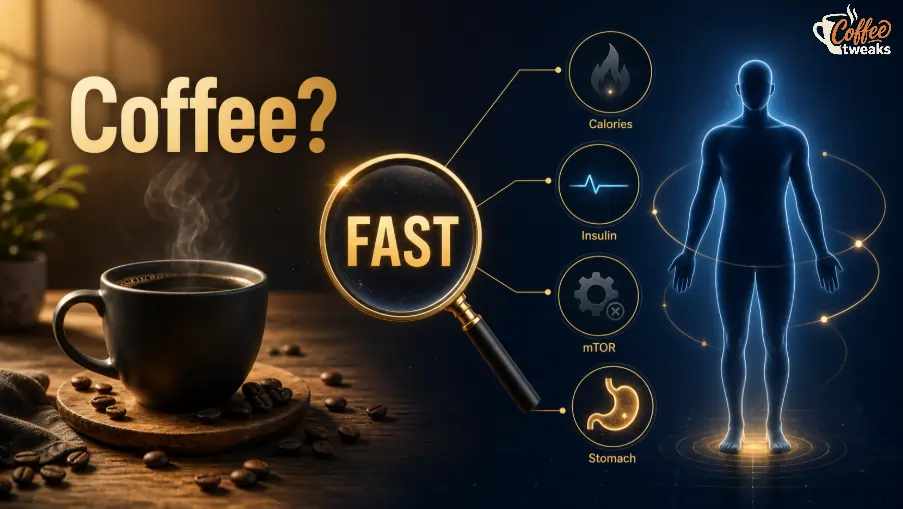
This sounds like a philosophical question. It is not. It is a technical one. And the answer depends entirely on which physiological state you are trying to protect.
There are at least five distinct ways to define “breaking a fast,” and they do not all have the same answer when it comes to black coffee.
Definition 1 — Caloric threshold: The most common definition. A fast is broken when you consume calories that meaningfully interrupt your metabolic fasted state. Under this definition, plain black coffee does not break a fast.
A standard 240 ml (8 fl oz) cup of black coffee contains approximately 2–5 calories, almost entirely from trace proteins and coffee oils. That is metabolically negligible. Your body does not shift out of a fasted state over 3 calories.
Definition 2 — Insulin response: Some fasting protocols define “breaking the fast” as any food or drink that triggers a meaningful insulin secretion. Insulin signals the fed state to your cells. When insulin rises, certain fasting benefits, including fat oxidation and ketone production, are suppressed.
The research here is genuinely mixed. Studies show that plain black coffee does not meaningfully spike insulin in most healthy people. However, caffeine does affect insulin sensitivity at the cellular level, which is a separate and more complicated story we will get to.
Definition 3 — mTOR activation: For those fasting specifically to maximise autophagy, the cellular cleanup process, the relevant switch is the mTOR pathway. mTOR is activated by amino acids and calories, and its activation suppresses autophagy.
Black coffee contains negligible protein, so it does not directly activate mTOR. Some animal research even suggests coffee polyphenols may support autophagy rather than suppress it, though the evidence in humans is limited and we should not overstate it.
Definition 4 — Gut rest: Certain therapeutic fasting protocols, used for conditions like irritable bowel syndrome, inflammatory bowel disease, or post-surgical recovery, are specifically designed to rest the gastrointestinal tract.
Coffee stimulates gastric acid secretion and increases gut motility. Under this definition, even black coffee may interfere with the goals of a gut-rest fast.
Definition 5 — Medical fasting: Pre-surgical and pre-procedure fasting follows entirely different rules set by anaesthesiologists and medical professionals. In most clinical contexts, black coffee does break a medical fast, because any liquid that is not plain water changes gastric fluid volume and pH in ways that are clinically relevant under anaesthesia. Always follow your doctor’s instructions here; this article is not relevant to that context.
📊 The numbers matter here. These five definitions produce five different answers. Most articles pick one and apply it universally. That is where they go wrong.
The Nutritional Reality of Black Coffee
Let us start with what we actually know with confidence.
A standard 8 fl oz (240 ml) cup of brewed black coffee contains:
That calorie count is not zero. But it is not meaningfully different from zero in a fasting context. Your body expends roughly 60–80 kcal per hour at rest. Three calories from a cup of black coffee is the kind of number that disappears into the noise of normal metabolic variation.
The protein content, around 0.3 g, is worth noting for people fasting specifically to preserve autophagy, since amino acids can theoretically activate mTOR and suppress cellular cleanup. But 0.3 g is a trace amount. For context, a single large egg contains roughly 6 g of protein.
The mTOR activation threshold from dietary protein is not well established in humans, but 0.3 g from a cup of coffee is not the threat that 30 g of protein from a meal would be.
☕ Here is where bean choice and brew method become relevant in a way nobody else is talking about. A cold brew concentrate contains more caffeine and significantly more chlorogenic acids than a standard drip brew.
An espresso shot, approximately 30 ml, contains far less liquid but similar caffeine and slightly more oils than a drip cup. If you are fasting and drinking three double espressos back to back, your cumulative caffeine intake is higher, your cortisol response may be more pronounced, and your gut acid stimulation is more sustained. The method matters.
How Caffeine Affects Insulin
Here is the thing nobody tells you about coffee and insulin sensitivity.
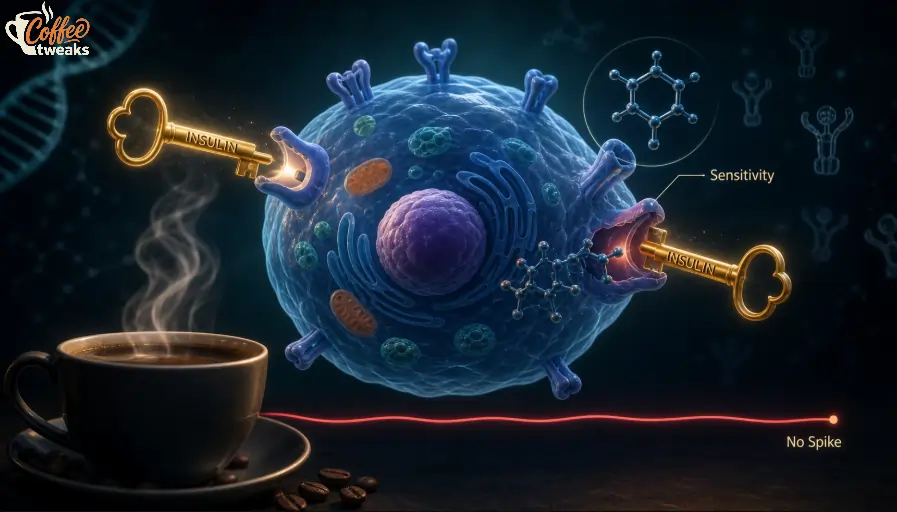
Caffeine and insulin have a complicated, context-dependent relationship. And understanding this is what separates a useful answer from a simplistic one.
The short version: black coffee does not cause a meaningful insulin spike the way carbohydrates do. If you drink a plain black coffee during your fasting window, your blood glucose is unlikely to rise, and your pancreas is unlikely to secrete a significant pulse of insulin. On that specific question, does coffee trigger a glucose-insulin response, the evidence is fairly clear, and the answer is no.
The longer version is more nuanced.
Caffeine has been shown to impair insulin-mediated glucose uptake at the cellular level, not by raising insulin, but by reducing the cell’s sensitivity to the insulin that is already there. This is a well-documented pharmacological effect of caffeine. It works, in part, by blocking adenosine receptors and activating the sympathetic nervous system, which releases catecholamines that can reduce insulin sensitivity transiently.
This matters more for some fasting goals than others.
If you are fasting for weight loss or general metabolic health, a modest and transient reduction in insulin sensitivity from your morning coffee is unlikely to meaningfully affect your outcomes. The effect is short-lived, and the overall metabolic benefits of your fast dwarf this minor perturbation.
If you are fasting specifically to manage type 2 diabetes or pre-diabetes, or if you are monitoring your post-meal glucose responses carefully, this caffeine-insulin interaction deserves more attention.
Some research in people with type 2 diabetes shows that caffeine can blunt the post-meal glucose disposal, meaning that if you break your fast with a meal, having had caffeine beforehand may slightly slow the clearance of glucose from your blood. This is not a reason to avoid coffee, but it is a nuance worth knowing.
📊 One research point worth flagging honestly: studies on caffeine and insulin sensitivity show significant individual variation. Genetics, particularly variants in the CYP1A2 gene that determines how fast you metabolise caffeine, play a meaningful role in how your body responds. Fast caffeine metabolisers tend to see different metabolic responses than slow metabolisers. This is real and under-discussed.
Coffee, Autophagy and the Evidence
Autophagy has become the fasting community’s favourite topic, and for good reason. The process of cellular self-cleaning, in which damaged proteins and organelles are broken down and recycled, is genuinely fascinating biology. The 2016 Nobel Prize in Physiology was awarded for autophagy research, and the field has generated serious scientific interest since then.
The question relevant to us: does coffee support or suppress autophagy during a fast?
The animal research here is actually encouraging for coffee drinkers. Multiple studies in mice have found that both caffeine and coffee polyphenols can activate pathways associated with autophagy, particularly through AMPK activation and mTOR suppression.
AMPK is essentially the cell’s energy sensor; it activates when energy is low (as during fasting) and, when activated, it suppresses mTOR, which in turn allows autophagy to proceed. Some research suggests caffeine can mimic aspects of this energy-sensing signal.
The evidence in humans is far more limited. We do not yet have well-powered human trials that directly measure autophagy markers in people who drink coffee during a fast versus those who do not. The mechanistic basis for coffee supporting autophagy is plausible, and the animal data is interesting. But treating it as established fact in humans would be premature.
What we can say with more confidence: black coffee does not appear to meaningfully suppress autophagy the way a caloric meal would. It does not provide the amino acids or significant calories that activate mTOR and shut down the cellular cleanup process. Whether it actively promotes autophagy in humans remains an open and genuinely interesting research question.
☕ The polyphenols in coffee, particularly chlorogenic acids, add an additional layer of interest. These compounds have demonstrated effects on multiple metabolic pathways, including glucose metabolism and oxidative stress. Darker roasts have lower chlorogenic acid content because the roasting process degrades these compounds.
If polyphenol-mediated metabolic effects matter to you, lighter roasts deliver significantly more of them. A light Ethiopian washed coffee brewed as a pour-over will contain substantially more chlorogenic acids than the same mass of a dark French roast pulled as espresso. That is not a minor difference, it can be a 2–4x variation.
Does Coffee Fit Your Fasting Goal?
This is the section that most fasting articles never write. The answer to “does coffee break my fast” genuinely depends on your primary reason for fasting. Let me go through the main scenarios.
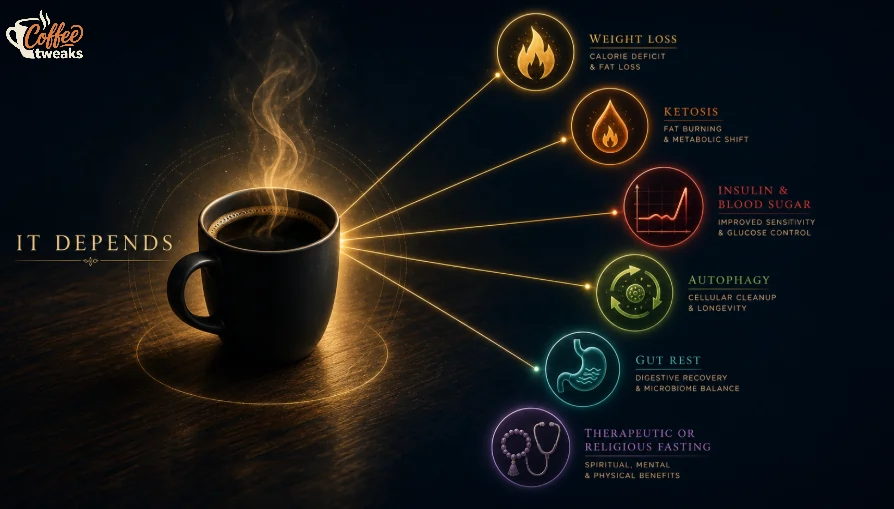
If your goal is weight loss
Black coffee actively works in your favour here. Caffeine has a documented thermogenic effect, measurably increasing metabolic rate by approximately 3–11% in the short term, though this effect diminishes in regular coffee drinkers as tolerance develops. More practically, many people find that black coffee suppresses appetite during the fasting window, making it easier to sustain a 16:8 or 18:6 pattern without breaking early. The calories in black coffee are negligible relative to any reasonable caloric deficit.
📊 The research on coffee and appetite suppression shows genuinely mixed results, some people experience reduced hunger, others do not. This appears to be highly individual. If coffee keeps you from breaking your fast at hour 14, that sustained fast is almost certainly delivering more weight-loss benefit than the 3 calories from the coffee are costing you.
If your goal is fat burning and ketosis
This is where it gets interesting. Caffeine stimulates lipolysis, the breakdown of stored fat into free fatty acids. It does this partly through catecholamine release. During a fasting window, this aligns with what your body is already trying to do: mobilise fat stores for fuel. Black coffee may actually accelerate fat oxidation during the fasting period, which is directionally supportive of your goal.
Some research also suggests caffeine promotes ketone production by the liver, though this effect is modest compared to the ketogenic shift that comes from sustained fasting itself. If you are using intermittent fasting to maintain nutritional ketosis, black coffee is not going to knock you out of ketosis. If anything, the evidence points the other way.
If your goal is blood sugar management and insulin sensitivity:
Here is where the most honest nuance lives.
For most metabolically healthy people, black coffee during a fast does not meaningfully affect blood glucose or insulin. The caloric content is negligible, and the glucose response is essentially zero.
However, if you have insulin resistance, type 2 diabetes, or are managing pre-diabetes, the caffeine-mediated reduction in insulin sensitivity warrants attention. Some people with type 2 diabetes see modest blood glucose elevations after coffee, not because coffee contains glucose, but because caffeine triggers a stress hormone response that can slightly raise blood sugar through glycogenolysis (the liver releasing stored glucose).
This effect is real but highly variable. Monitoring your own continuous glucose data, if you have access to it, is far more informative than any general recommendation.
There is also a meaningful distinction between caffeine and coffee here. Decaffeinated coffee has been associated in large epidemiological studies with reduced risk of type 2 diabetes, possibly because of chlorogenic acids improving insulin sensitivity, while the picture for caffeinated coffee is more complex. If blood sugar management is your primary fasting goal, decaf during the fasting window may actually serve you better than regular coffee.
If your goal is autophagy and longevity
As covered above, black coffee is unlikely to suppress autophagy, and some evidence suggests it may support the pathways involved. For someone fasting specifically to promote cellular cleanup, if for longevity, cancer prevention, or neurological health, black coffee during the fast is not a threat. It is arguably an ally, though we should be careful not to overstate what the current human evidence supports.
What would suppress autophagy: adding cream (which contains fat and some protein), adding milk (fat, protein, carbohydrates), adding sugar (triggers insulin), or adding protein powder (directly activates mTOR). Black means black.
If your goal is gut rest
This is the scenario where black coffee is most genuinely problematic during a fast.
Coffee, even black, even decaf, is a potent stimulant of gastric acid secretion. It increases gastric motility and, in some people, stimulates the gastrocolic reflex (the urge to have a bowel movement shortly after drinking coffee). None of this is catastrophic for a healthy person. But if you are fasting specifically to let your gastrointestinal tract rest and recover, as done in some therapeutic fasting protocols for IBS, GERD, or post-inflammatory gut healing, black coffee works against that goal.
For gut-rest fasting, plain water and certain herbal teas (non-stimulating varieties like chamomile or peppermint) are better companions to the fast than coffee.
If your goal is therapeutic or religious fasting
Medical or religious fasting protocols have their own rules, and black coffee may or may not be permitted depending on the specific framework. For pre-surgical medical fasting, as mentioned earlier, follow your medical team’s instructions without exception. For religious fasting (Ramadan, Yom Kippur, certain Christian fasting traditions), the rules about coffee vary by tradition and interpretation. This article does not address religious practice.
Coffee, Fasting and Cortisol
There is a frequently ignored interaction between coffee and fasting that deserves a dedicated section.
Cortisol, your body’s primary stress hormone, follows a natural diurnal rhythm. It peaks within 30–45 minutes of waking, a pattern called the Cortisol Awakening Response (CAR). This peak serves a useful biological purpose: it helps mobilise energy and ramp up alertness as you transition from sleep to wakefulness.
Here is the problem: caffeine also stimulates cortisol release. When you drink coffee immediately upon waking, which is exactly what most morning fasters do, you are stacking an exogenous cortisol stimulus on top of the already-peaked natural CAR. Some researchers and clinicians suggest this compounding effect may contribute to the afternoon energy crashes, increased anxiety, and sleep disruptions that some people experience with habitual morning coffee.
This is not a reason to abandon your morning coffee. But there is a practical argument, based on the biology of the CAR, for delaying your first coffee by 60–90 minutes after waking, once the natural cortisol peak has subsided. You get a second, lower cortisol trough in that window, and the caffeine then provides a genuine lift rather than an overshoot on an already-elevated stress hormone.
⚙️ This is actually a timing insight that improves coffee performance, not just fasting outcomes. If you find that your morning coffee hits you harder some days than others, the timing relative to waking is one variable worth examining.
What Actually Breaks a Fast: A Practical Hierarchy
Since we are being precise about this, here is a practical breakdown of what clearly breaks a fast versus what does not, and where the genuinely contested territory lives.
Does not break a fast (strong consensus):
Likely does not break a fast for weight loss and metabolic purposes, but contested for other goals:
Breaks a fast for most fasting goals:
Breaks a fast for autophagy specifically:
📊 The bulletproof coffee grey zone is worth addressing directly. Proponents of butter coffee argue that because MCT oil and butter do not raise insulin significantly, they do not “break” the fast. There is something to this argument for insulin-focused fasting goals. But calorically, a standard bulletproof coffee delivers 200–400 kcal, primarily from fat.
That is a meaningful metabolic input. Your body processes those calories. The concept of a “fat fast”, using fat calories to extend ketosis without a full metabolic reset, is real and practised in certain protocols, but it is not intermittent fasting in the conventional sense.
Calling bulletproof coffee fasting-compatible is a category error unless your protocol specifically allows it.
Coffee While Fasting 16:8: The Real-World Application
For the vast majority of people doing 16:8 intermittent fasting, arguably the most popular fasting protocol in the world, the practical answer is this:

Black coffee during the fasting window is compatible with the goals of 16:8 fasting. The calories are negligible. The fat-burning and ketone-production benefits of the fast are not meaningfully disrupted. The cognitive boost from caffeine can actually make the fasting window more sustainable by improving focus and reducing perceived hunger.
The 16:8 format typically means not eating from approximately 8 pm to noon the next day. For someone who wakes at 6:30 am, that means a 5.5-hour morning window of fasting before the eating window opens. A cup or two of black coffee during that window is something the available research supports without significant concern.
☕ One practical observation worth sharing: many people find the bitterness of black coffee more pleasant, not less, when consumed in a fasted state. The palate may be more sensitive without the dampening effect of recent food. If you have been reflexively adding oat milk because you assumed you needed it, try skipping it for a week. You might find a properly extracted espresso or a well-brewed pour-over is entirely satisfying without additives.
How Brewing Method Affects Fasting
⚙️ This is the section that coffee-curious fasters almost never encounter, and it matters more than most people realise.
Different brew methods produce coffees with meaningfully different chemical profiles. This affects not just taste but also the specific compounds interacting with your fasting state.
Drip/filter coffee: Produces a clean cup with moderate chlorogenic acid content and oils largely removed by the paper filter. The paper filter traps diterpene compounds (cafestol and kahweol) that are associated with modest increases in LDL cholesterol when consumed in large quantities. For fasting, filter coffee is very clean — low oils, no meaningful macronutrient content, good polyphenol delivery.
Espresso: A 30 ml shot is concentrated. Higher oil content than filtered coffee because there is no paper filter. Slightly more cafestol and kahweol per serving than drip, but significantly less total liquid volume. In terms of fasting impact, two espresso shots are equivalent to roughly one cup of drip coffee in terms of caloric and macronutrient content.
French press and full immersion: No paper filter means higher oil content and more unfiltered compounds. More cafestol and kahweol per cup than filter coffee. Still negligible in caloric terms for fasting purposes, but worth knowing if cardiovascular lipid management is part of your health picture.
Cold brew: Typically brewed at a higher coffee-to-water ratio and consumed concentrated or diluted. Can contain 1.5–2x the caffeine of a standard drip coffee per equivalent volume. The extraction chemistry is different — lower acidity, different chlorogenic acid profile due to the absence of heat. Still black, still negligible calories, still compatible with fasting.
Instant coffee: Contains approximately the same caloric content as brewed coffee — effectively zero. The polyphenol content is lower than specialty-grade brewed coffee but not absent. For fasting purposes, instant black coffee breaks nothing.
The roast level matters too. Light roasts retain more chlorogenic acids (degraded by heat during roasting), more caffeine by weight (caffeine is also partially lost in roasting, though the difference between light and dark is modest), and more of the origin compounds that give a coffee its distinct character.
Dark roasts develop different antioxidant compounds through the Maillard reaction, so they are not nutritionally empty — just different. If you are optimising for polyphenol intake during your fasting window, a light-to-medium roast has more to offer.
What Science Still Does Not Know
One of the things that separates serious health journalism from wellness-blog content is the willingness to say: we do not know yet.
Here is what remains genuinely uncertain in the coffee-and-fasting literature:
The human evidence on coffee and autophagy is thin. Most of what we know comes from animal studies or from in-vitro cellular research. We cannot confidently say that drinking black coffee during a fast enhances, preserves, or diminishes autophagy in living human beings at a clinically meaningful level. It probably does not suppress it significantly. Whether it actively enhances it is a more speculative claim.
The optimal caffeine dose for fasting-related metabolic benefits is unknown. Most studies on caffeine and metabolism use specific doses that may not map neatly onto real-world coffee drinking patterns. The thermogenic and lipolytic effects of caffeine are documented but modest and dose-dependent, and tolerance develops fairly rapidly in habitual coffee drinkers.
The interaction between coffee, fasting, and the gut microbiome is largely unexplored at a clinical level. Coffee has well-documented prebiotic properties and affects microbial diversity, and fasting reshapes the gut microbiome in its own ways. How these interact is an area where the science is early.
Long-term data on coffee consumption within structured intermittent fasting protocols is essentially absent. Most studies look at coffee and fasting as separate variables. The specific combination — regular coffee intake within a sustained 16:8 or 18:6 protocol over months to years — has not been well characterised in clinical trials.
📊 Scientific uncertainty does not mean we cannot act. It means we should calibrate our confidence appropriately. Black coffee during a fast is well-supported for weight loss, fat oxidation, and ketosis goals. It is plausibly supportive for autophagy goals. It is potentially counterproductive for gut-rest fasting. It deserves monitoring for people managing insulin resistance or type 2 diabetes.
Coffee Tips for Different Fasting Goals
To make this actionable, here is how I would approach coffee depending on your primary fasting objective.

☕ One final practical note: The quality of what you drink during your fasting window matters more than most people acknowledge — not primarily because of how it affects the fast, but because you are drinking it black, without additives to mask flaws.
A poorly extracted espresso or a stale, over-roasted filter coffee hits very differently when there is nothing to soften it. Your fasting window is, accidentally, one of the best arguments for buying better coffee. When you cannot add anything to it, the coffee itself has to be good.
Common Questions, Given Precise Answers
Does coffee with just a splash of milk break a fast?
A small splash of milk is unlikely to affect weight loss or ketosis, but its protein and carbohydrates technically interrupt strict autophagy or insulin-focused fasting.
Does Decaf Coffee Break a Fast?
No. Plain decaf has negligible calories and retains useful polyphenols, making it suitable for most fasting goals without the effects of caffeine.
Can I Drink Coffee Before a Blood Test?
Usually not. Most fasting blood tests require water only because coffee may affect cortisol, glucose, triglycerides and some test readings.
Does coffee break a fast for weight loss specifically?
No. Plain black coffee has negligible calories and may support fat burning, making it compatible with weight-loss fasting.
Will coffee suppress my appetite while fasting?
It can for some people. Caffeine may temporarily reduce hunger, but the strength of the effect varies widely.
Does adding cinnamon to black coffee break a fast?
A small amount of cinnamon is unlikely to break a practical fast. It contains very few calories and may support blood sugar control.
The Bottom Line
📊 Let me close with the honest version of the answer:
Black coffee does not break an intermittent fast in any meaningful way for the vast majority of fasting goals. The caloric content is negligible. It does not spike insulin or blood glucose in healthy people. It may actively support fat oxidation, ketone production, and some of the cellular pathways involved in autophagy — though the human evidence on the autophagy piece is still developing.
The answer changes for people managing insulin resistance or type 2 diabetes, where caffeine’s effects on insulin sensitivity and the cortisol-glucose axis are worth monitoring. It also changes for gut-rest fasting, where coffee’s stimulatory effects on gastric acid and motility work against the goal.
The answer also changes the moment you add anything to the coffee. Cream, milk, sugar, butter, MCT oil, collagen — each of these introduces a variable that shifts the metabolic picture in different ways for different fasting goals.
Black coffee and intermittent fasting are not just compatible. For most people, they reinforce each other. The fast sharpens the senses. The coffee sharpens the mind. The biology, for once, is on your side.
Drink it black. Make it good. The chemistry agrees.