
Australian Coffee Culture: Melbourne’s Flat Whites and Fame

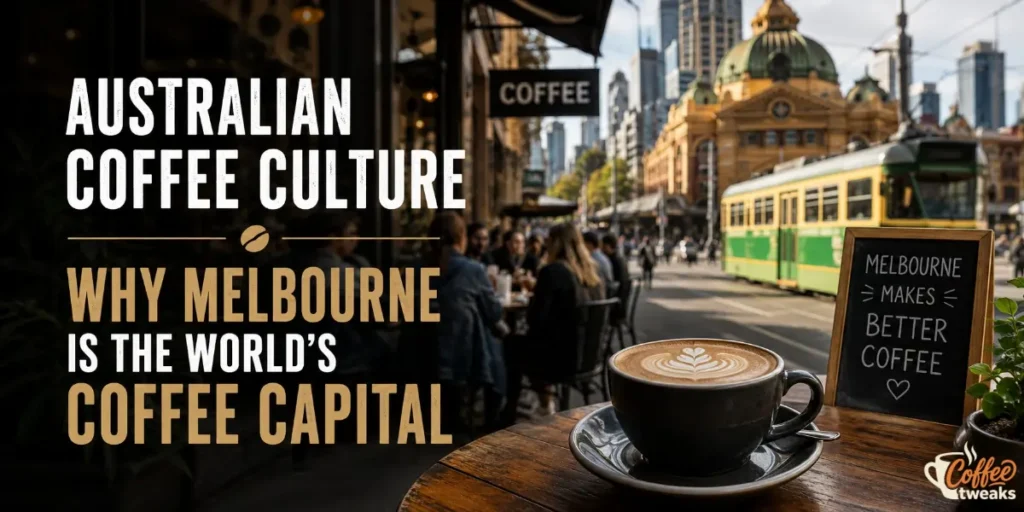
Okay but hear me out.
I landed in Melbourne thinking I had coffee figured out. I grew up in Buenos Aires and live in Barcelona now, so I have opinions.
Then I ordered a flat white in a laneway off Flinders Lane and just stood there for a second. It did not taste like caffeine. It tasted like someone actually cared.
That is the whole story of Australian coffee culture in one cup. You do not really get it until you feel it.
What Makes Australian Coffee Culture Unique
Here is the short version: coffee in Australia is not a productivity tool. It is a reason to sit down.
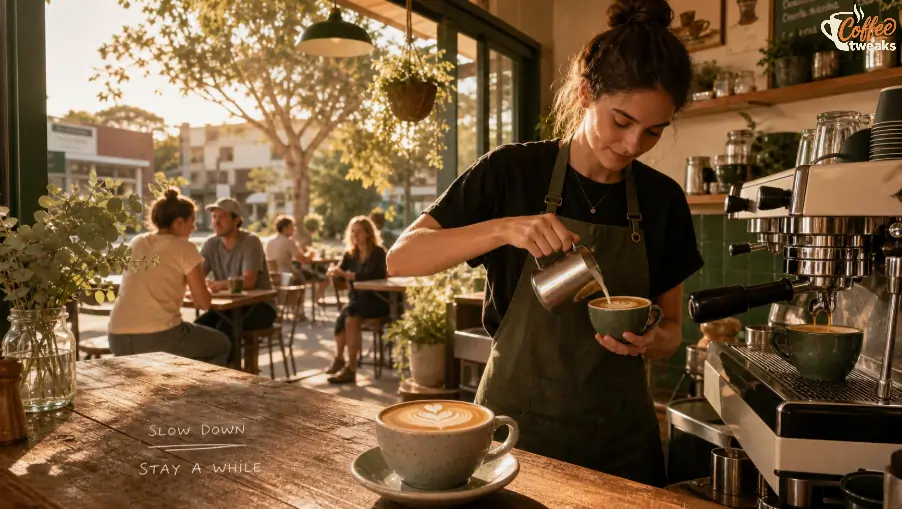
That sounds small. It is not. It changes everything about how the coffee gets made and how you drink it.
A few things make it genuinely different:
The result is a national standard that sits weirdly high. There is almost no bad coffee. That still amazes me.
Why Melbourne? The Story Behind the City
Every café person eventually asks the same thing. Why Melbourne specifically?
The answer goes back to the 1950s, and it starts with people, not beans.
The Migrants Who Started It
After World War II, Melbourne welcomed huge waves of Italian and Greek immigrants. They brought espresso machines and, more importantly, the philosophy: sit over a small cup for as long as you need to.
Pellegrini's Espresso Bar opened on Bourke Street in 1954 and is still going. For those early communities it was not a café. It was a piece of home.
Coffee here was never a commodity. It was a reason to gather. That stuck.
The 1990s Changed Everything
By the 1990s a new generation of café owners got obsessed. Where did the beans come from? How were they roasted? What happened if you changed the shot by three seconds?
That curiosity built the specialty coffee movement in Melbourne. The city stopped following coffee trends and started making them.
The Laneways Did the Rest
Melbourne's narrow laneways, those graffiti-covered alleys between the main streets, gave tiny cafés cheap and atmospheric spaces to exist.
No exaggeration when I say some of the best coffee I had came from a 12-seat room down an alley that looked like nothing. Just someone who loved coffee and a great machine.
The Flat White: Australia's Gift to the World
What is a flat white? A flat white is a double shot of espresso with a small amount of steamed milk and a thin layer of microfoam on top. Less milk than a latte, silkier texture, more coffee-forward.
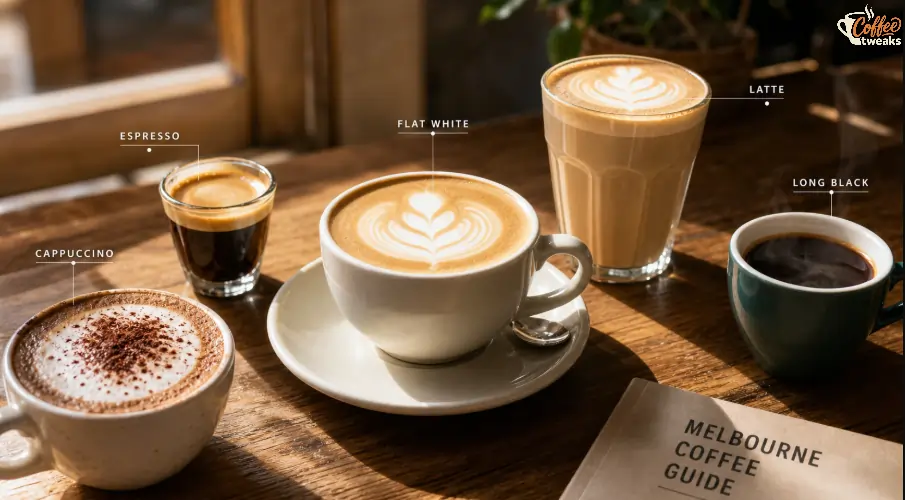
That is the snippet answer. Now the fun part.
Where Did It Come From?
Okay but hear me out, this debate has been raging for decades and nobody has won.
Australia says the 1980s, with some pointing to a Sydney café called Bar Coluzzi. New Zealand says Wellington, same era. Neither side has the receipt.
What everyone agrees on: the flat white came from the southern hemisphere, and it reflected how Aussies and Kiwis actually wanted their coffee. Stronger than a latte. Properly textured milk, not a pile of foam.
Australian and Kiwi baristas carried it to London in the early 2000s. That is how it conquered Europe. Starbucks added it globally in 2015, which is either a tribute or a watering-down depending on who you ask.
How It Compares to Everything Else
| Drink | Espresso | Milk | Foam |
|---|---|---|---|
| Flat White | Double shot | Small, around 150ml | Thin microfoam |
| Latte | Single or double | Large, around 240ml | Light foam |
| Cappuccino | Single shot | Equal milk and foam | Thick, often dusted |
| Long Black | Double ristretto | None, hot water | None |
| Magic (Melbourne) | Double ristretto | Like a flat white, smaller | Microfoam |
Why Starbucks Failed in Australia
This is the question everyone asks, and honestly it makes total sense once you have spent a week there.
Starbucks arrived in 2000 and opened 84 stores fast. By 2008 it had closed 61 of them. One of the most famous coffee flops in history.
Here is what actually went wrong:
No exaggeration when I say the Starbucks story in Australia is basically a lesson in walking into a room assuming you are the smartest one there.
Melbourne Neighborhoods and Their Coffee Personalities
Here is what surprised me most. Coffee in Melbourne is not one district. It is the whole city, and every neighborhood has a personality.
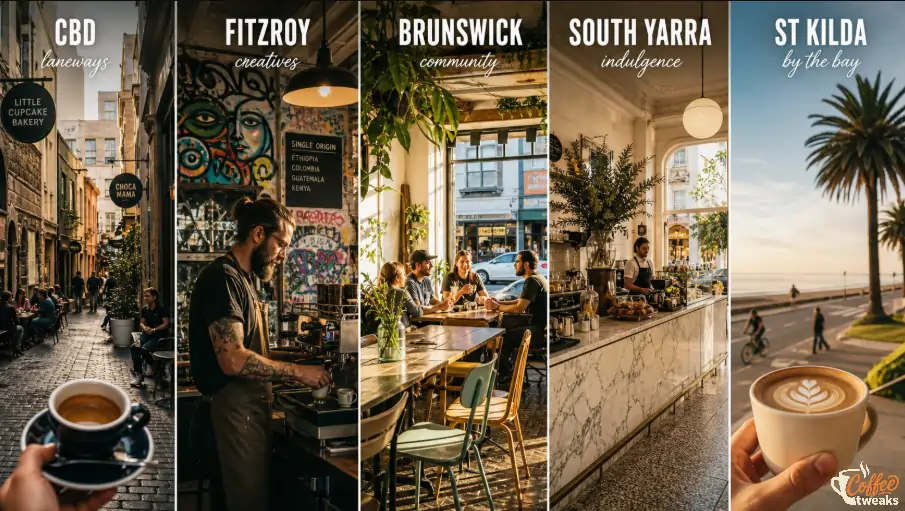
CBD Laneways
Degraves Street, Centre Place, Hardware Lane. Touristy, yes, but the coffee holds up. This is where you come for atmosphere with your espresso.
Fitzroy
Artsy, a little grungy, full of roasters with strong opinions about extraction. This is specialty coffee heartland. Patricia and Saint Ali energy.
Brunswick
Multicultural and relaxed. The cafés here have community baked in. You sit next to a stranger and somehow leave knowing three things about their life.
South Yarra and Prahran
The polished end. Outstanding coffee paired with serious brunch. The Kettle Black, in a converted Victorian terrace, somehow feels warm despite being beautiful.
St Kilda
Beachside and a little bohemian. People drink slower here, water in view. The pace drops and nobody minds.
The Cafés That Actually Define Melbourne
I am not giving you fifteen “must visit” spots. That is useless. These are the ones that mean something.
The Magic: Melbourne's Quiet Little Secret
If the flat white is Australia's export, the magic is Melbourne's gift to itself.
A magic is a double ristretto with textured milk, served short and concentrated. Like a flat white but smaller and more intense. You mostly find it in Melbourne and almost nowhere else.
I didn't expect to love this but the magic became my daily order for the entire week. Right size. Real intensity. Milk that softens it without hiding it.
This changed my whole morning. Ordering one also makes the barista look at you differently, like you are slightly less of a tourist. I will take it.
Australian Specialty Coffee and the Third Wave
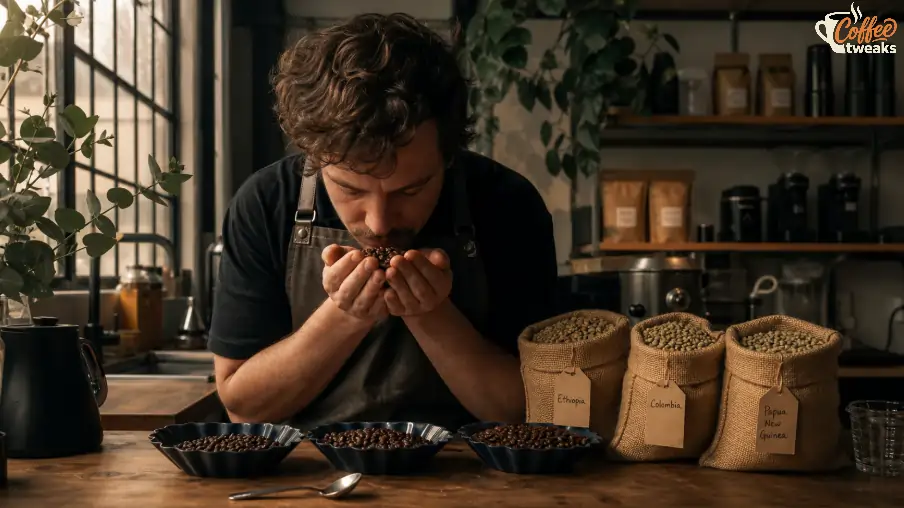
Quick definition, because it matters. Third wave coffee treats coffee like wine. Origin, terroir, processing, roast. The whole craft.
Melbourne was doing this before the term went mainstream.
Roasters like Five Senses, Dukes, and Axil have worked directly with farmers in Ethiopia, Colombia, and Papua New Guinea for years. It is not just about flavour. It is about relationships and accountability.
Here is the part that gets me. Caring where the coffee comes from is not a marketing line in Melbourne. Customers genuinely expect it. The standard is the people, not the branding.
How to Order Coffee in Australia
I watched a fellow traveler freeze at a counter, so let me save you that moment.
Two things to know. Small means small here, and that is on purpose. Australians think oversized coffee just dilutes the flavour, and they are right.
And alternative milks are everywhere. Oat, almond, soy. Order them freely. Nobody blinks.
Why Melbourne Feels Different From Anywhere Else
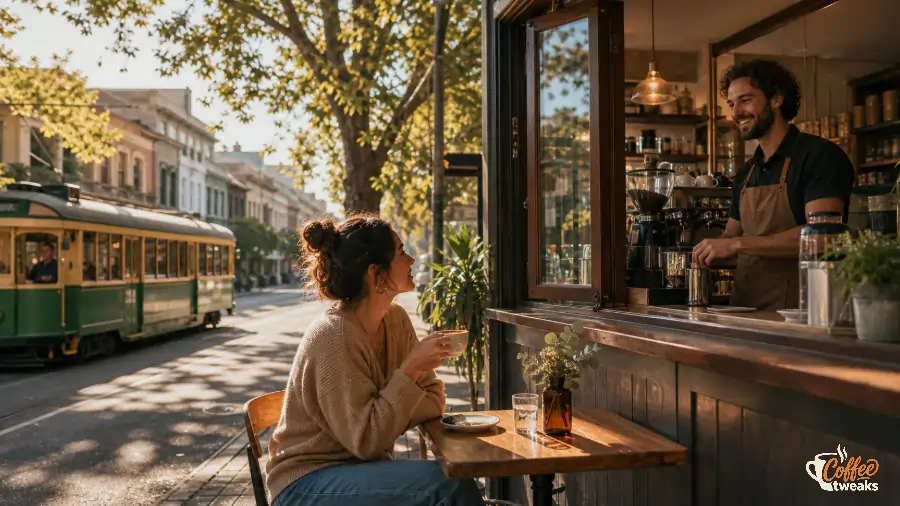
I have had beautiful coffee in Tokyo, Oslo, Copenhagen, Rome. Every one of those cities gives a coffee lover something.
But Melbourne has all three things at once. Quality, community, and accessibility, in the same cup, on the same street.
The barista is likely highly trained, genuinely passionate, and completely approachable. The café is likely independent, comfortable for solo visitors, and unintimidating. The coffee is excellent without making you feel like you need a degree to enjoy it.
This changed my whole morning, every single day I was there.
Melbourne coffee does not demand that you know things. But it quietly rewards you if you do. That balance is rare, and the city pulls it off across hundreds of little independent businesses.
People Also Ask
Is Melbourne really the world's coffee capital?
Melbourne is widely ranked among the world's top coffee cities alongside Tokyo and Oslo. What sets it apart is the density of independent specialty cafés and how deeply coffee sits in everyday community life.
Why is Australian coffee so much better?
It was shaped by Italian and Greek migration in the 1950s, which made espresso the standard early. The specialty movement of the 1990s pushed quality even higher, creating an unusually high national baseline.
Did Australia invent the flat white?
Australia and New Zealand both claim it, with most Australian accounts pointing to the 1980s. The exact origin is disputed, but both countries spread it globally through baristas who moved to London in the early 2000s.
Why did Starbucks fail in Australia?
It underestimated the existing café culture. Locals already had high-quality independent options and saw no reason to pay more for weaker chain espresso.
A Last Sip Before You Go
Here is what I kept thinking on my last morning, sitting with a magic and watching the laneway wake up.
Melbourne does not stand out because it has the most cafés or the rarest beans. It stands out because the city decided, collectively and over decades, that coffee was worth slowing down for.
Not worth rushing. Not worth scaling into mediocrity. Worth doing properly, every time, at the corner café in Brunswick the same as the roastery in Fitzroy.
Coffee here is not something you book. It is something the city just hands you for showing up.
And honestly? That's the whole point. 🌿☕✨