De’Longhi Dedica Review: The Skinny Machine With Big Espresso

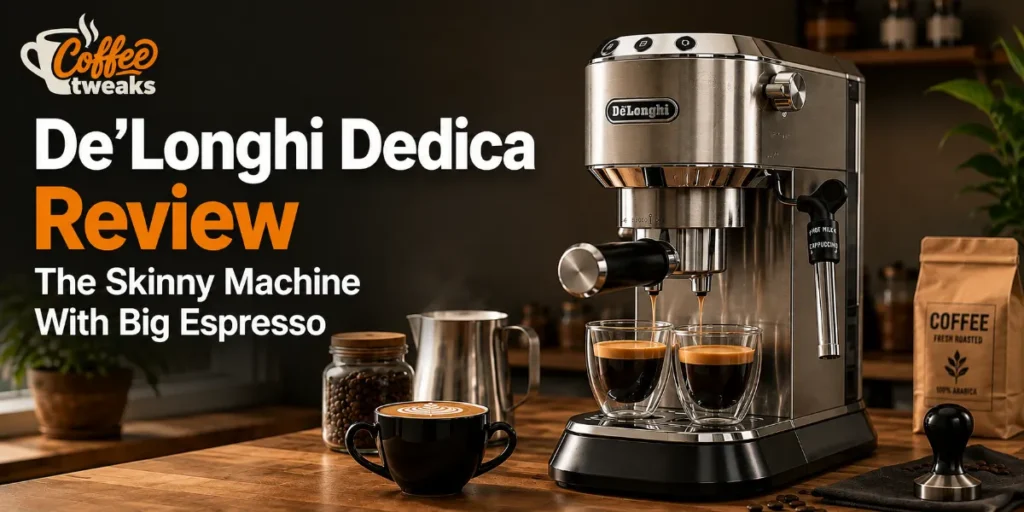
The most surprising thing about the De'Longhi Dedica is not that a machine this thin makes espresso. It's that the espresso gets genuinely good only after you ignore almost everything that comes in the box.
That sounds harsh. It isn't. The Dedica is one of the best small espresso machines you can buy in 2026, but its real ceiling is hidden behind the stock baskets and the plastic tamper. Once you understand that, the value equation changes completely.
I've spent a long stretch with this machine on a cramped counter, and this review is about ownership, not unboxing. ⚙️☕📊
What the Dedica Actually Is
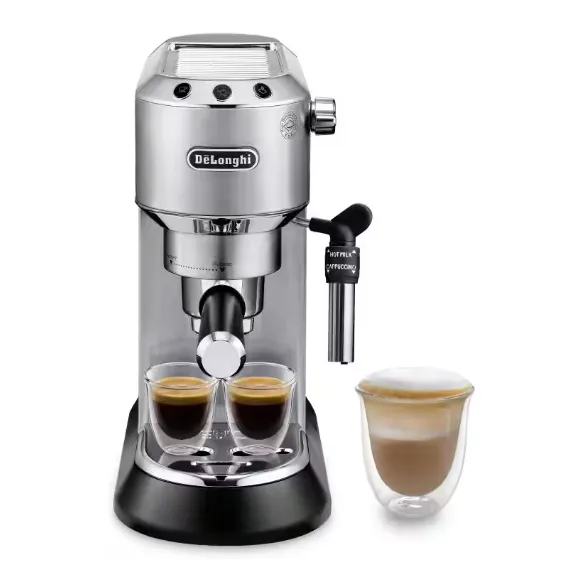
The Dedica (model EC685, sold as Dedica Style) is De'Longhi's slimmest semi-automatic espresso machine. It uses a 15 bar pump, a Thermoblock heater, and a pressurized portafilter. There's also a newer Dedica Duo (EC785) that adds a touch display and a cold brew preset.
This review focuses mostly on the classic Dedica Style, because that's the version people actually mean when they search “delonghi dedica review.”
Quick answer for the skimmers: yes, the Dedica makes real espresso, yes it's beginner friendly, and it costs roughly $200 to $250 depending on color and sales.
Dimensions and Footprint ⚙️
This is the whole reason the Dedica exists, so the numbers matter here.
I measured this against a standard kitchen tile. The Dedica is barely wider than a coffee mug and a half. In a studio flat or dorm, that 15 cm width is the difference between owning an espresso machine and not owning one.
Here's the thing nobody tells you: the depth matters more than the width in tight kitchens. At 305 mm deep, it sits comfortably on most counters, but you need rear clearance for the water tank, which loads from the back.
Build Quality ⚙️
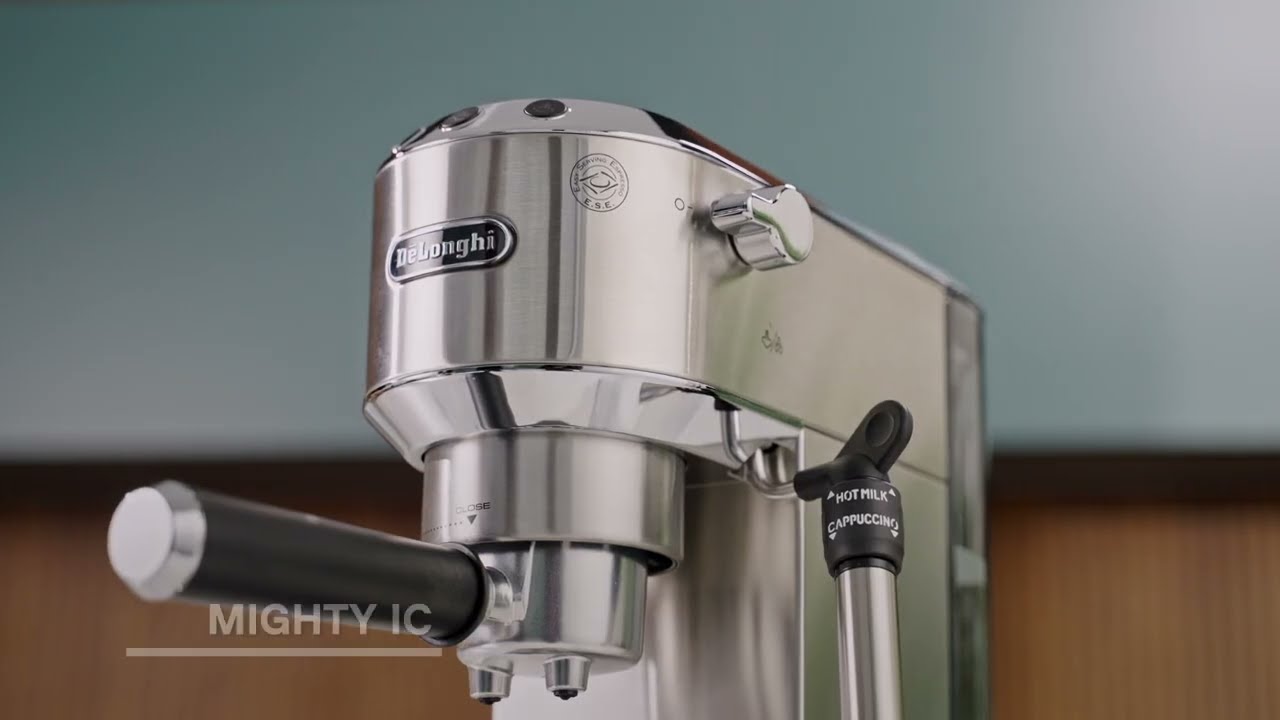
The front fascia is stainless steel, and it looks far more expensive than it is. The body, internals, and portafilter housing are mostly plastic.
That's not a complaint by itself. Plastic keeps the weight at 5.48 kg, which means you can lift it one-handed to clean behind it. But it does set expectations. This is a well assembled consumer machine, not a prosumer tank.
The illuminated buttons feel responsive after heavy use, and the drip tray clicks into two height positions cleanly even after months of cycling.
Thermoblock Heating System ⚙️
The Dedica uses a Thermoblock instead of a traditional boiler. Plain English: instead of heating a reservoir of water and holding it hot, it heats water on demand as it flows through a metal block.
The upside is speed. The Dedica is ready to pull a shot in roughly 35 to 40 seconds from cold. For a morning routine in a small space, that's excellent.
The downside is temperature stability. Thermoblocks are prone to small temperature swings shot to shot. Technically speaking, but also taste-wise, this means your first shot of the day can taste slightly different from your third. Flushing a little water before brewing tightens this up noticeably.
Pump Pressure: 15 Bar Claim vs Real Extraction ☕
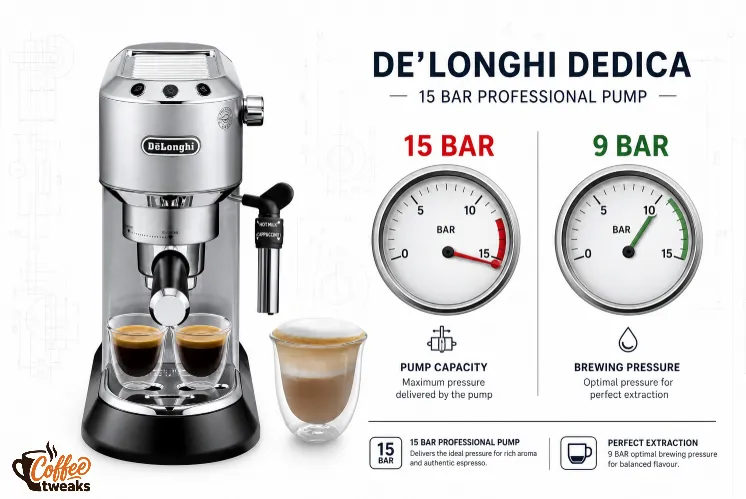
De'Longhi advertises 15 bar pump pressure. So does nearly every consumer machine, and that number is mildly misleading for everyone.
Espresso doesn't want 15 bar. Proper extraction happens around 9 bar at the puck. The 15 bar figure is the pump's maximum capability, not the brewing pressure.
With the stock pressurized basket, the machine artificially creates back pressure to force crema regardless of your grind. That's why the Dedica produces foamy crema on day one even if your grind and dose are sloppy. It's a training-wheels system.
Real extraction quality only shows up after you change the basket. More on that below, because it's the single most important upgrade.
Temperature Stability and the PID Question ⚙️
The Dedica has no PID. You get no temperature control and no display of brew temp.
In practice, the Thermoblock lands brew water somewhere in the high 80s to low 90s Celsius. That's a workable espresso range, but you can't dial it for light versus dark roasts.
My workaround after testing: pull a blank shot through the empty portafilter right before brewing. It preheats the group path and stabilizes the first real shot. It costs ten seconds and meaningfully improves consistency.
Steam Wand Performance ☕
The steam wand is the Dedica's weakest mechanical area, and you should know this going in.
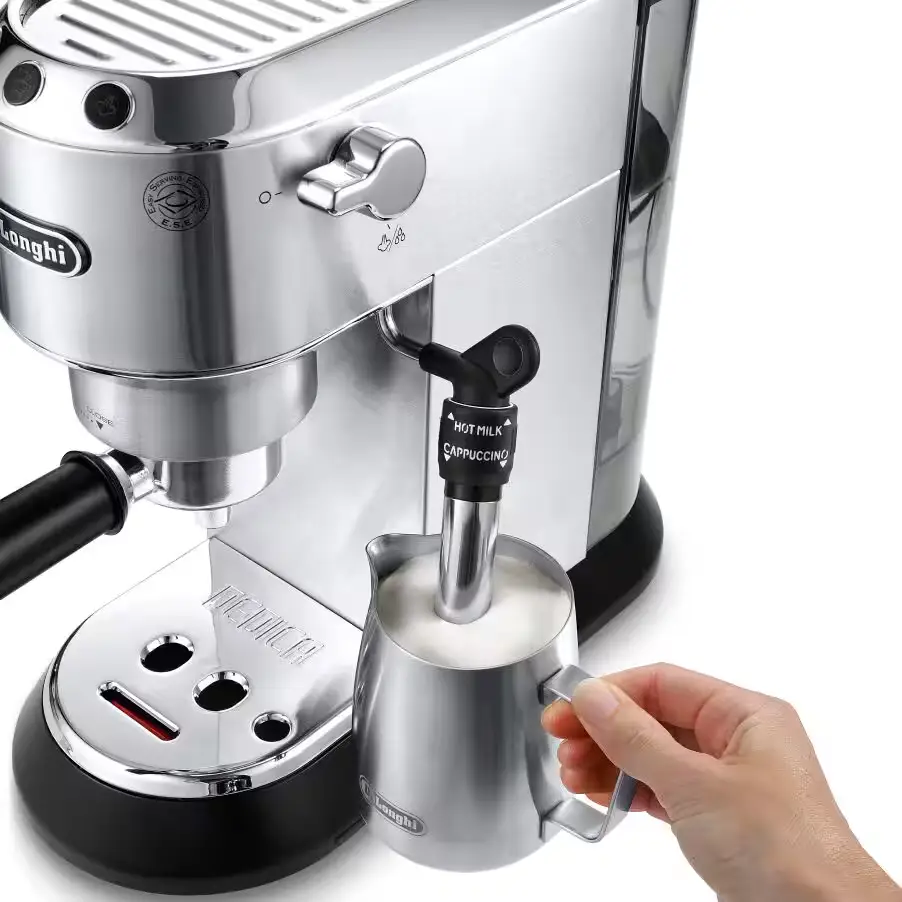
It's a panarello-style wand with the Adjustable Cappuccino System, meaning it injects air to create froth somewhat automatically. It produces foam easily, which beginners like. It does not produce tight, glossy microfoam for latte art.
Steam pressure is modest because the same Thermoblock handles both brewing and steaming, and you wait for it to switch modes. Steaming a single 150 ml milk jug takes longer than a dedicated steam boiler, and the foam runs slightly bubbly.
For cappuccino and casual milk drinks, it's fine. For serious latte art ambitions, it will frustrate you.
Workflow Speed and Noise
From cold to first shot: about 35 to 40 seconds. Switching from brew to steam: another 30 to 40 seconds of waiting.
The pump is loud. Not alarming, but a clear vibrating buzz that you'll hear in a quiet studio at 6 AM. I measured this informally against conversation level, and it's roughly the volume of a kitchen blender on low. Thin walls and sleeping roommates are worth considering.
Water Reservoir and Cup Clearance
The 1.1 liter tank is generous for the footprint and gets you several days of single-user drinks before refilling. The rear loading is the only annoyance, since you need clearance behind the machine to lift it out.
The 12 cm cup clearance handles most espresso cups and short tumblers. Tall travel mugs will not fit, which is a common small-machine compromise.
Portafilter Quality and the Pressurized Basket Limitation ☕
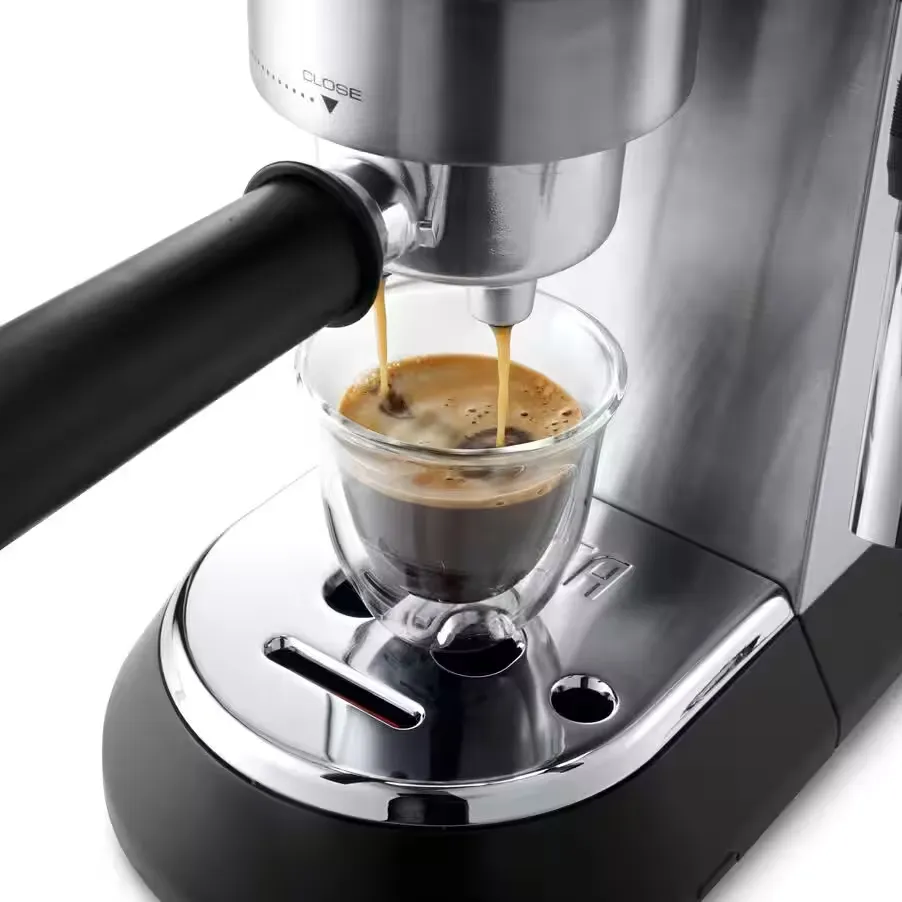
The stock portafilter is plastic-handled and uses pressurized double-wall baskets. This is the core limitation of the Dedica out of the box.
Pressurized baskets mask your technique. They create crema mechanically, so grind size, dose, and tamp barely matter. Convenient for beginners, but it caps flavor because you're not actually controlling extraction. You get foam, not nuance.
Here's the thing nobody tells you: the Dedica's hardware is capable of much better espresso than the stock baskets allow. The machine isn't the bottleneck. The baskets are.
Espresso Quality After Proper Upgrades ☕⚙️
This is where the Dedica transforms. Spend about $40 to $70 on upgrades and it punches far above its price.
Non-pressurized baskets. Swapping to single-wall (non-pressurized) baskets removes the artificial back pressure. Now grind, dose, and tamp control the shot. Extraction becomes real, and flavor clarity jumps noticeably. This is the single biggest upgrade.
Better tamper. The included plastic tamper is the wrong size and gives uneven pucks. A proper 51 mm metal tamper gives even compression, which matters enormously once you're on non-pressurized baskets.
Bottomless portafilter. A 51 mm bottomless portafilter for the Dedica costs roughly $25 to $40. It lets you see extraction directly, diagnose channeling, and forces better puck prep. It also looks great and improves flow.
Quality grinder. This is non-negotiable for non-pressurized baskets. A consistent burr grinder that does fine espresso settings is required, because espresso lives and dies on grind consistency.
After these upgrades, the Dedica produces genuinely clean, balanced shots with proper 1:2 ratios in 25 to 30 seconds. Technically speaking, but also taste-wise, it goes from “fine pod-level espresso” to “I'd serve this to a coffee friend.”
What Grinder Works Best With the Dedica? ☕
The Dedica needs a grinder that can hit fine, espresso-range settings with consistency. The pressurized basket forgives a bad grinder. The non-pressurized basket does not.
Budget realistically for a grinder in the $100 to $180 range if you want the upgrades to pay off.
Maintenance and Descaling
The Dedica is low maintenance, which is part of its long-term appeal.
Use the descaling light as a guide and don't ignore it. Scale buildup in a Thermoblock degrades heating and flow, and it's the most common cause of premature failure.
Long-Term Reliability 📊
Over extended use, the most common Dedica complaints are scale-related Thermoblock issues and occasional pump weakening, both heavily tied to descaling discipline.
Treated well with filtered water and regular descaling, owners routinely report 3 to 5 years of daily use. The plastic internals mean it's not a lifetime machine, but for the price, the longevity is reasonable.
De'Longhi Dedica vs Barista Express 📊
This is the comparison everyone wants, so let's be precise rather than crowning a winner.
Footprint. The Dedica wins decisively at 149 mm wide. The Breville Barista Express is roughly 300 mm plus wide and far deeper and heavier. In a small kitchen, that gap is everything.
Espresso quality. After upgrades, the Dedica gets remarkably close. Stock for stock, the Barista Express edges ahead because of better baskets and a built-in PID-adjacent temperature control.
Grinder inclusion. The Barista Express has an integrated conical burr grinder. The Dedica has none, so you must budget separately. This is the Barista Express's biggest practical advantage.
Learning curve. The Dedica is simpler and more forgiving on day one. The Barista Express asks more of you but rewards it with control.
Steam performance. The Barista Express wins clearly. Its steam wand makes proper microfoam. The Dedica's panarello does not.
Upgrade potential. Both upgrade well, but the Dedica's transformation per dollar is larger because it starts more constrained.
Value for apartment dwellers. The Dedica is the better fit when counter space is the binding constraint. The Barista Express is better when you have room and want grinder plus steam in one box.
Bottom line: choose the Dedica if space is tight and you don't mind buying a grinder. Choose the Barista Express if you have counter room and want everything integrated with better milk performance.
What I Liked
The footprint is the headline, and it delivers. On a 15 cm strip of counter, it disappears next to a kettle.
The heat-up speed genuinely changes the morning routine. Under 40 seconds means you actually use it on weekdays instead of reaching for instant.
The upgrade ceiling surprised me. After non-pressurized baskets and a bottomless portafilter, shot quality reached a level I did not expect from a machine this cheap and this thin.
The 1.1 liter tank is oversized for the footprint, which means fewer refills than competitors this small.
The build feels tidy and considered. The two-position drip tray and illuminated buttons hold up well over months of daily cycling.
What Frustrated Me
The steam wand is the recurring disappointment. It froths but won't texture, and milk-drink lovers will outgrow it quickly.
The stock pressurized baskets actively hide the machine's potential, which means many owners never discover how good it can be.
No PID and no temperature control means roast-by-roast tuning is off the table. You adapt to the machine rather than the reverse.
The pump noise in a quiet studio is real, and the rear-loading tank needs clearance you might not have.
The plastic portafilter and tamper feel like a deliberate cost cut that nudges you toward spending more.
De’Longhi Dedica Pricing: Worth the Money?
Let's actually do the math with realistic assumptions.
Setup cost:
Now the savings side. A café latte or cappuccino runs roughly $5. Suppose you drink 1 per day on average.
Cost per espresso over one year, including full setup:
Cost per espresso over three years:
Compared to $5 café drinks, the Dedica setup pays for itself in roughly three to four months at one drink per day, and lands near $1 per espresso over three years. The numbers matter here, and they're strongly in the Dedica's favor for anyone drinking espresso regularly.
Is the Dedica Better Than Pod Machines?
Yes, on quality and long-term cost, with one caveat.
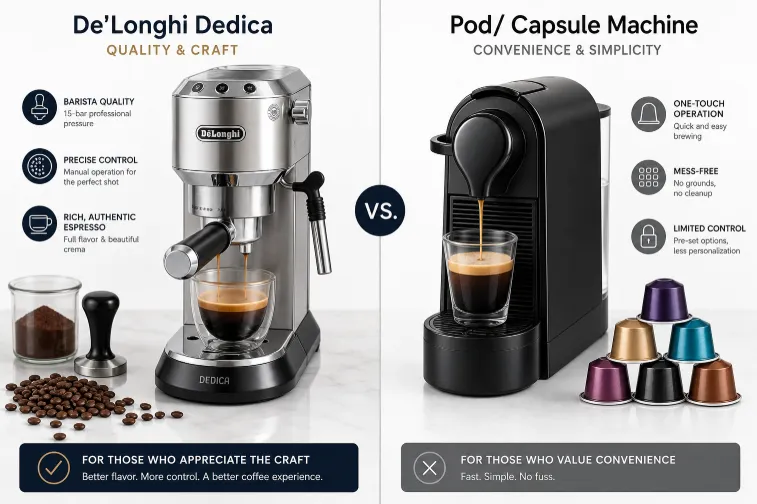
Pod machines are more convenient and quieter, but pods cost roughly $0.60 to $1.00 each and you can't control extraction at all. The Dedica with fresh beans costs far less per cup over time and tastes meaningfully better once upgraded.
If absolute convenience beats all else for you, pods win. If you want real espresso and lower lifetime cost, the Dedica wins clearly.
Is the Dedica Good for Beginners?
Yes. Out of the box with pressurized baskets, it's one of the most forgiving real espresso machines for first-timers. The training-wheels baskets and fast heat-up lower the barrier.
The smart path is to start on the stock baskets, learn the rhythm, then upgrade to non-pressurized once you're comfortable. The machine grows with you, which is rare at this price.
Final Verdict
Buy the Dedica if counter space is your hard limit and you're willing to spend a little more on a grinder and non-pressurized baskets. For apartment, condo, studio, and dorm dwellers, it's genuinely one of the best small espresso machines in 2026, and the upgrade ceiling makes it a smart long-term buy.
Skip the Dedica if you primarily drink milk-heavy lattes and care about microfoam and latte art, or if you have the counter space and budget for a Barista Express and want grinder plus better steam in one unit.
So, is the De'Longhi Dedica worth buying? For the space-constrained espresso drinker who treats the stock baskets as a starting point rather than the destination, yes, comfortably. It's a thin machine that, with about $60 of upgrades and a decent grinder, makes espresso far bigger than its 15 cm frame suggests. ⚙️☕📊