CBD Coffee Benefits: Science vs Marketing Claims (2026)

Okay but hear me out.
I ignored CBD coffee for almost a year. Every time I saw it in a café window or in my Instagram feed, I kept scrolling. The ads all sounded the same: calm focus, better mornings, zero jitters, balanced energy. It sounded like someone had taken every wellness buzzword from 2019 and dissolved it in a bag of Arabica beans.
I was skeptical. And honestly, I think healthy skepticism is one of the most underrated tools a wellness-curious person can have.
So instead of buying a bag based on a pretty label, I spent several weeks going deep into the actual research. I looked at human trials, systematic reviews, expert analyses, Reddit threads from people who have tried it, and the science behind how CBD behaves once it enters your body. I wanted to separate the genuine signal from the marketing noise.
Here is what I found. None of it is perfect. Some of it is genuinely interesting. And all of it will help you decide whether CBD coffee deserves space on your kitchen shelf or not.
What Actually Is CBD Coffee?
Before we get into the evidence, a quick grounding in what we are actually talking about.
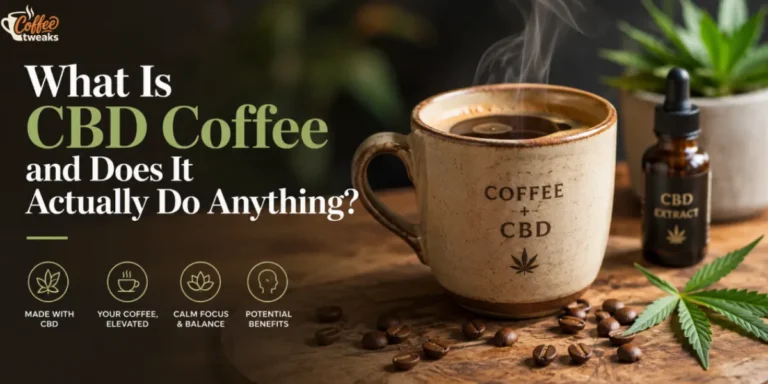
CBD, short for cannabidiol, is a naturally occurring compound found in the cannabis plant. Unlike THC, the compound most people associate with cannabis, CBD is non-psychoactive. It will not get you high.
It interacts with the body through a network called the endocannabinoid system (ECS), which is involved in regulating everything from mood and sleep to pain response and immune function.
CBD does not bind directly to the main cannabinoid receptors the way THC does. Instead, it influences the system more indirectly, through mechanisms that researchers are still mapping out.
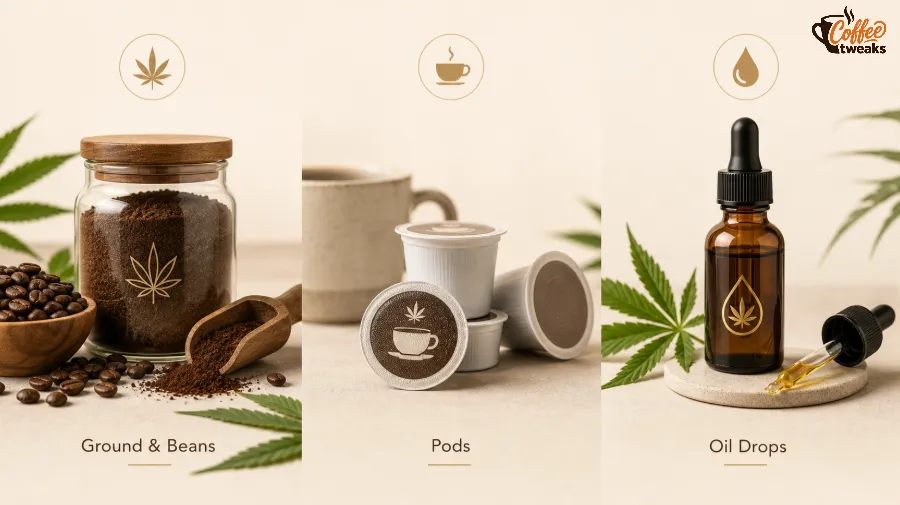
CBD coffee is simply regular coffee that has had CBD infused into it, either during the roasting process, through coating the beans with CBD oil, or by adding water-soluble CBD to ground coffee. The form matters, and we will get back to that in a moment.
The 2018 United States Farm Bill removed hemp from the legal definition of marijuana under federal law, which made hemp-derived CBD products with less than 0.3% THC federally legal. That opened the commercial floodgates. Since then, CBD has shown up in everything from face serums to sparkling water, and yes, in your morning cup.
The Promises on the Label vs. What Research Actually Says
This is the heart of the matter. Walk into any wellness-forward coffee shop or open any CBD coffee brand website, and you will encounter a fairly consistent list of promises: reduced jitters, calm focus, stress relief, better sleep, reduced inflammation, and an overall smoother morning experience.
Some of these claims have a thread of scientific plausibility. Others are being sold to you on the back of zero human evidence. Let me break each one down honestly.
Does CBD Reduce Coffee Jitters? Plausible, But Not Proven in Coffee Specifically
This is probably the most widely marketed claim in the CBD coffee world, and it is also the one that has the most biological logic behind it even if the direct evidence is thin.
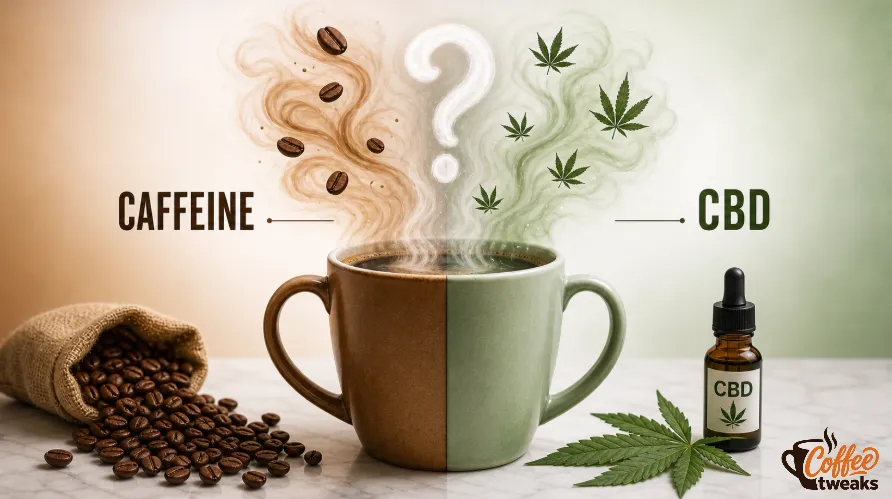
Here is what we know. Caffeine stimulates the central nervous system by blocking adenosine receptors, which keeps you alert. In some people, especially at higher doses, this leads to increased heart rate, restlessness, and that wired, anxious edge that coffee drinkers know all too well.
Research has confirmed that caffeine intake is associated with elevated anxiety risk in healthy adults, particularly when consumed in larger amounts.
CBD, on the other hand, is thought to act on serotonin 5-HT1A receptors, which play a role in anxiety modulation. Several human studies have shown CBD can reduce anxiety in specific high-stress contexts, including public speaking scenarios and in people with social anxiety disorder.
A randomized clinical trial found CBD reduced both self-reported anxiety and measurable cortisol levels under induced stress conditions.
So the question becomes: does combining them in a cup of coffee produce a meaningful calming of caffeine-induced anxiety? Here is where the evidence gets genuinely interesting. A 2024 randomized controlled trial published in a peer-reviewed pharmacology journal examined exactly this combination.
Fifty-four young adults who were daily caffeine users were given 200 mg of caffeine combined with varying doses of CBD ranging from 25 to 240 mg. The researchers found that the combination did not significantly alter subjective drug effects compared to caffeine alone. Importantly, no negative effects emerged.
The researchers described it as preliminary safety evidence for using these products together, while stressing that further research into cognitive and physiological effects is still needed.
That is honest science. It tells you the combination is probably safe. It does not tell you it works as advertised. And critically, the doses used in that study (25 to 240 mg of CBD) are far higher than what is typically found in commercially sold CBD coffee.
A standard CBD coffee product often contains somewhere between 5 and 20 mg of CBD per serving, which raises real questions about whether the dose is even in a range where you would notice anything at all.
CBD and Anxiety: What the Broader Research Shows
Setting aside the coffee-specific question for a moment, the broader evidence on CBD and anxiety is more developed, though still far from conclusive for general use.
Several studies and reviews have found positive signals. A 2022 phase 2 clinical trial provided preliminary evidence that a full-spectrum, high-CBD product could reduce anxiety symptoms with reasonable tolerability.
A systematic review noted that CBD reduced anxiety in clinical populations in multiple studies, though authors consistently flagged that most human trials used high doses, had small sample sizes, short follow-up periods, and often focused on specific anxiety disorders rather than the general population.
The World Health Organization reviewed CBD’s profile in 2018 and noted it is generally well-tolerated with a good safety record, showing no evidence of abuse potential and a range of potential therapeutic uses.
Harvard Medical School, reviewing the same body of evidence, concluded that studies and clinical trials exploring CBD’s effect on anxiety were promising but not yet definitive.
What is missing is long-term randomized controlled trial data in healthy adults at the low doses found in consumer products.
Research suggesting CBD helps with anxiety has predominantly been conducted at doses of 300 mg or above, which is meaningfully different from what you would find in a cup of CBD coffee.
👉 Read More: CBD Coffee for Anxiety
Does CBD Coffee Improve Focus?
I see this one on almost every CBD coffee website and honestly it is the claim I find most frustrating, not because it is completely wrong but because it conflates the well-documented cognitive benefits of caffeine with speculative benefits of CBD.
Caffeine genuinely improves alertness, concentration, and short-term cognitive performance. That is not controversial and it is not CBD doing that work.
As for CBD’s independent effects on cognition, a 2024 meta-analysis published in Nature reviewed multiple studies and found that acute CBD use alone is unlikely to significantly impair daily functioning or workplace performance.
Another four-week study on cognitive function and CBD found mixed results depending on what aspect of cognition was being measured. The honest summary is that current evidence does not clearly support CBD as a cognitive enhancer in healthy adults.
In people with specific neurological or psychiatric conditions, there are some signals suggesting CBD may help preserve or restore cognitive function, but that is a very different context from a healthy person wanting a sharper morning.
The “calm focus” claim is essentially the theoretical result of combining caffeine’s stimulating effects with CBD’s potential anxiety-reducing effects. It makes biological sense as a hypothesis. It has not been robustly tested in humans in the way a CBD coffee brand would have you believe.
Does Heat Destroy CBD? The Science of Putting Cannabidiol in Hot Coffee
This is one of the most practically important questions for CBD coffee drinkers, and the answer is more nuanced than either side usually admits.
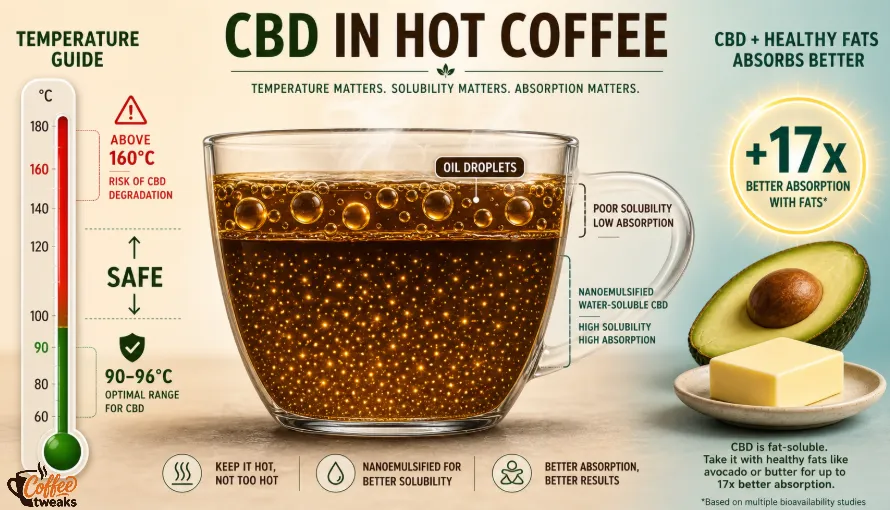
CBD is sensitive to heat, light, and oxidation. Research published in peer-reviewed chemistry literature has demonstrated that prolonged exposure to high temperatures can trigger thermal degradation, changing CBD’s chemical structure and reducing its potency.
A study found that heating consumer cannabis oils led to free radical-initiated degradation, causing measurable CBD depletion.
However, the temperature thresholds matter enormously here. CBD begins to degrade meaningfully at temperatures above approximately 160 degrees Celsius (around 320 degrees Fahrenheit).
A standard cup of hot coffee is typically brewed between 90 and 96 degrees Celsius, which is well below the degradation threshold. The short contact time also matters. Briefly mixing CBD into hot coffee is very different from sustained exposure to high heat.
The more significant issue for CBD in hot drinks is actually solubility rather than heat degradation. CBD is naturally oil-soluble, not water-soluble. Drop standard CBD oil into coffee and it does not properly integrate. It floats, it separates, and your body absorbs very little of it. This is a real absorption problem, not just a texture one.
Oral bioavailability of standard CBD taken with water is estimated at somewhere between 9 and 13% according to pharmacokinetic research, meaning your body absorbs a small fraction of what you consume.
By contrast, nanoemulsified or water-soluble CBD formulations, which use a process called nano-emulsification to break CBD into tiny droplets that disperse in water, have been shown in clinical data to achieve bioavailability roughly three to four times higher than standard oil-based oral CBD.
This is why the type of CBD used in the coffee product you are buying genuinely matters. A product that simply coats beans with CBD oil and calls it a day may deliver very little effective CBD to your system.
Quality brands that use water-soluble or nano-emulsified CBD are working with better science. But here is the thing: the ingredient list rarely tells you which technology was used, which makes it difficult to evaluate from the outside.
Eating a high-fat meal alongside CBD has also been shown in a 2025 study published in Nature’s Scientific Reports to dramatically increase bioavailability, with the geometric mean ratio of CBD maximum concentration being 17.4 times higher when taken with a high-fat meal compared to fasting. If you drink your CBD coffee on an empty stomach, you are likely absorbing even less than the already low baseline estimates.
CBD and Sleep: The Evidence Is More Interesting Than Expected
Here is one area where I did not expect to find much and was genuinely surprised. The signal around CBD and sleep, while still preliminary and not definitive, is more developed than for some of the other claims.
A systematic review of 34 studies on CBD and insomnia reported that all of them found improvement in insomnia symptoms in at least some participants. A 2024 randomized controlled pilot trial testing 150 mg of nightly CBD versus placebo found positive signals for sleep aid in primary insomnia, though the sample was small at 30 participants total.
Separate research examining the neurological effects of CBD found that oral CBD administration extended the sleep period, though it also altered certain properties of non-REM sleep oscillations, suggesting the story is more complex than simply “more CBD equals better sleep.”
Interestingly, a 2024 study found that 15 mg of CBD was as effective as 5 mg of melatonin for improving sleep quality, which is a notable comparison given melatonin’s widespread use.
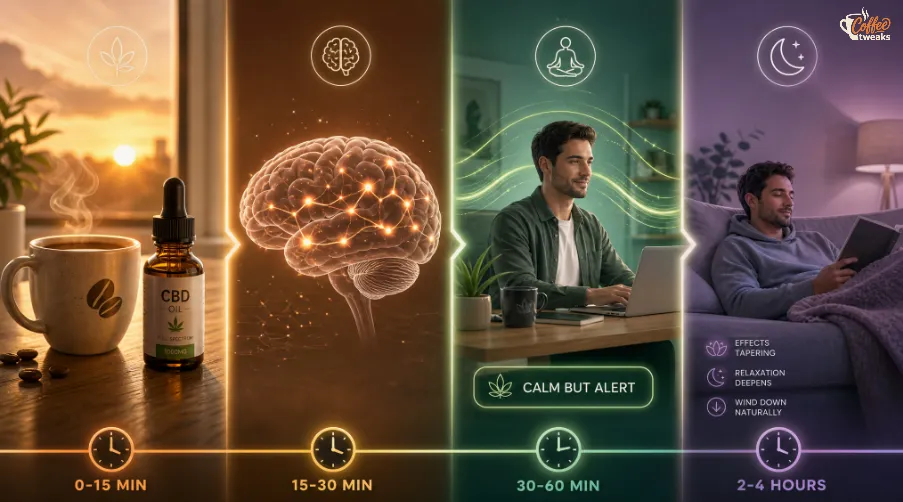
There is a significant catch here though. Combining CBD with caffeine, specifically for sleep purposes, is contradictory. Caffeine has a half-life of approximately five to six hours in most adults, meaning that a morning cup of CBD coffee is unlikely to be impacting your sleep at all. If CBD does support sleep quality, you would need to take it separately in the evening, not in your morning coffee.
Marketing CBD coffee as a sleep supporter because “CBD supports sleep” is a stretch that ignores what caffeine simultaneously does to your sleep architecture.
CBD and Inflammation: Real Signals, But Mostly From Lab and Animal Work
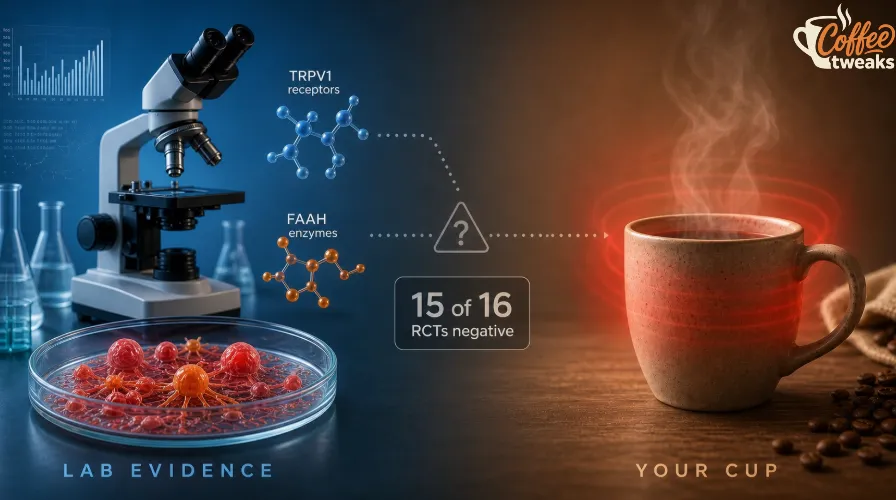
You will see “anti-inflammatory properties” cited frequently in CBD coffee marketing. The biological rationale is real: CBD has been shown in cell studies and animal models to reduce inflammatory markers, and it interacts with TRPV1 receptors and inhibits FAAH enzymes in ways that have anti-inflammatory downstream effects.
However, the clinical picture for inflammation in humans is much messier. A rigorous review of 16 randomized controlled trials examining CBD for pain found that 15 of the 16 were negative, showing no greater pain-relieving effect than placebo. Researchers at the University of Bath concluded there is currently no evidence CBD products reduce chronic pain in humans and flagged potential harms at higher doses.
A separate 2024 systematic review was more cautious, noting CBD could be effective for certain types of pain based on its analgesic and anti-inflammatory properties, but acknowledged the evidence base is heterogeneous and inconsistent.
The anti-inflammatory claim for CBD coffee is particularly difficult to evaluate because the doses in consumer drinks are low, bioavailability is variable, and no human trials have specifically examined whether drinking CBD coffee reduces inflammatory markers. Lab evidence, while fascinating, does not automatically translate to your cup.
The Product Quality Problem Nobody Talks About Enough
This section might be the most important in the entire article. Because even if you believe the biological case for CBD, the consumer market has a serious quality and accuracy problem.
A foundational study examining the label accuracy of 84 CBD products purchased online found that only about 31% were accurately labeled. Approximately 43% contained more CBD than the label stated, while 26% contained less, which is the more problematic scenario since it could negate any potential effect.
Among vaporization liquid products, 87.5% were mislabeled. A more recent 2022 study from Johns Hopkins found that of 89 over-the-counter products tested, 78% were over-labeled, meaning they contained less than 90% of the CBD they claimed to contain.
The FDA does not currently regulate most CBD products as food or dietary supplements. In 2023, the FDA formally concluded that its existing regulatory pathways are not appropriate for CBD in food and drinks and that a new framework would be needed. Until such a framework exists, companies are operating with limited oversight, and there is no standardized requirement to verify that what is on the label matches what is in the bag.
This means when you buy a bag of CBD coffee claiming 10 mg of CBD per serving, you may be getting significantly more or less than that. The roasting and infusion process adds another layer of unpredictability, since heat exposure and oxidation during manufacturing can degrade CBD before the product even reaches your kitchen.
What to actually look for: brands that publish third-party certificate of analysis (COA) documents from accredited independent laboratories, tested at the batch level rather than just the product formula level. The COA should confirm CBD concentration, THC levels (which should be below 0.3%), and ideally confirm the absence of pesticides, heavy metals, and solvents.
The Dose Question Is Genuinely Unresolved
If you are hoping for a clear answer on how much CBD is the “right” amount, I have to be honest with you: the science does not have one, at least not for healthy adults using CBD preventively.
Research has found that therapeutic benefits of CBD in clinical populations became more clearly evident at doses of 300 mg or above. The United Kingdom’s Food Standards Agency in recent years lowered its recommended daily maximum to 10 mg of CBD per day for healthy adults due to concerns about safety data at higher doses, down from 70 mg previously.
This adjustment reflects genuine uncertainty about long-term safety at moderate doses in the general population, not a finding that CBD is dangerous at those levels.
Most CBD coffee products sit somewhere between 5 and 25 mg per serving. Whether that range produces any meaningful physiological effect in a healthy person who drinks it orally with coffee, given all the bioavailability challenges already described, remains genuinely unknown.
The research that has shown positive effects typically used controlled doses administered in controlled ways, which is a very different scenario from a mass-market infused coffee.
Side Effects and Drug Interactions: Not to Be Dismissed
CBD has a generally favorable safety profile. The WHO’s review and multiple independent analyses conclude it is well-tolerated and does not carry significant abuse or dependence potential. At doses up to 1500 mg per day, repeated human studies have not found serious safety signals in otherwise healthy adults.
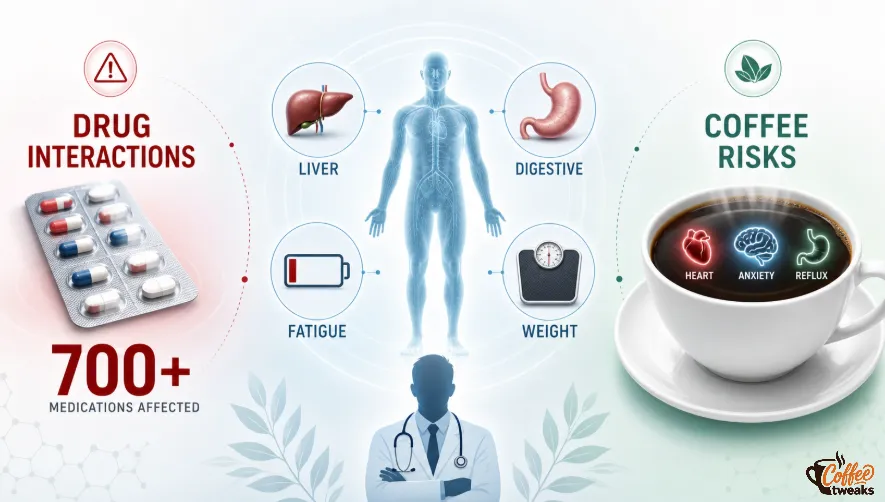
That said, side effects do exist and are worth knowing. Research has documented diarrhea, changes in appetite and weight, fatigue, and elevated liver enzymes, particularly at higher doses. Drug interactions are a more pressing concern.
CBD inhibits cytochrome P450 enzymes, which are responsible for metabolizing a wide range of medications, including anticoagulants, antiepileptics, antidepressants, and opioid analgesics. One interaction database lists over 700 known drug interactions with cannabidiol. If you are on any regular medication, talking to your doctor before adding CBD to your daily routine is not just a cautionary footnote. It is genuinely important.
Coffee itself also carries its own list of considerations. Caffeine worsens anxiety disorders, gastroesophageal reflux disease, certain heart arrhythmias, and is contraindicated during pregnancy. People with any of these conditions need to evaluate the coffee component independently of whatever the CBD does or does not do.
👉 Read More: CBD Coffee Side Effects
What Actual CBD Coffee Users Report
Setting aside the controlled trials for a moment, the real-world picture from forums and community discussions is usefully grounding. Reddit’s dedicated CBD community reflects a genuinely mixed experience with CBD coffee.
Some users describe noticeable reductions in caffeine-related anxiety and a feeling of slightly smoother energy. Others describe noticing nothing at all, which is consistent with what the science would predict given variable bioavailability and dosing inconsistencies.
A recurring theme in community discussions is that CBD coffee is expensive relative to what it delivers, and that buying CBD separately and adding it to your own coffee gives you more control over dose and quality.
Several experienced users note that the product quality gap between brands is substantial, and that some CBD coffees seem to have negligible amounts of actual CBD once you account for degradation during roasting and infusion.
The Marketing vs. Reality Summary ☕
To make this as useful as possible, here is an honest breakdown of the most common claims.
The claim that CBD coffee reduces jitters has some biological plausibility and early human safety data from combined caffeine and CBD trials, but has not been specifically tested in the doses and format of commercial CBD coffee products. It remains an interesting hypothesis.
The claim that CBD coffee improves focus relies primarily on caffeine’s well-documented effects and not on any CBD-specific cognitive benefit that has been demonstrated in healthy adults.
The claim that CBD coffee reduces anxiety connects to real research on CBD and anxiety, but that research used much higher doses than are present in coffee products and involved specific clinical populations rather than general wellness consumers.
The claim that CBD coffee supports sleep is biologically contradictory, since caffeine directly disrupts sleep architecture. Any sleep benefit from CBD would need to come from a separate, evening application.
The anti-inflammation claim draws from preclinical and animal data that is genuinely interesting but has not translated consistently into positive human trial results, particularly for pain.
The claim that CBD coffee is safe to drink is the one supported by the broadest evidence, assuming you are not on medications that interact with CBD and you are drinking a third-party-tested product with accurate labeling.
Practical Guide for Anyone Still Interested 🌿
If you want to try CBD coffee with realistic expectations, here is what genuinely matters.
Look for third-party lab testing with a current, batch-specific certificate of analysis. Avoid products where the lab report is not publicly available or is only available “upon request.” Check that CBD content is verified independently, not just stated on the label.
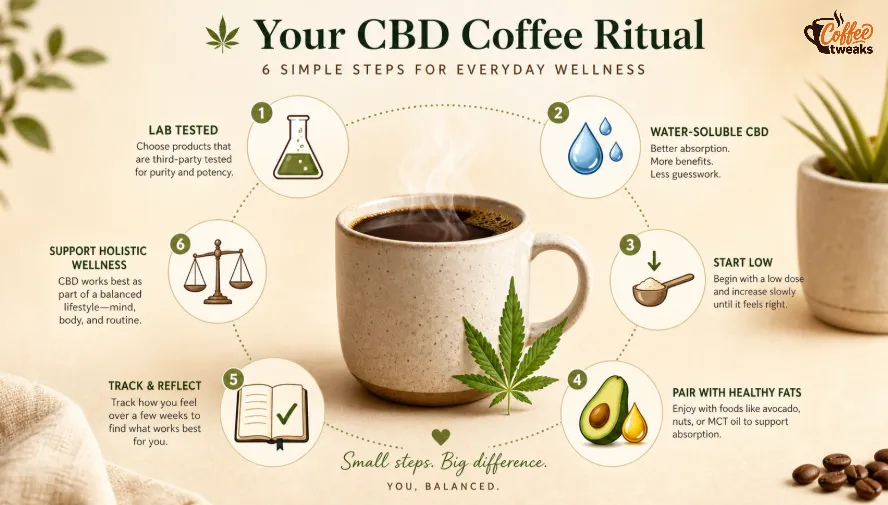
Confirm THC levels are within legal limits if that matters to you. Look for products that use water-soluble or nano-emulsified CBD rather than standard oil infusion, as the bioavailability difference is meaningful.
Start with a lower dose and drink it with food that contains some fat content, which the research suggests can meaningfully increase CBD absorption even from oral formats. Do not expect dramatic results. If you notice a slight reduction in anxiety or a feeling of smoother energy, note whether it persists over time. If you notice nothing after two to three weeks of consistent use, that is also valid data.
Do not buy CBD coffee as an alternative to addressing the underlying causes of your stress, sleep issues, or anxiety. Those deserve proper attention, whether that means better sleep hygiene, professional support, or evidence-based treatment. CBD coffee is, at best, a gentle complement to a broader wellness routine. It is not a substitute for anything.
Is CBD Coffee Legal? A Quick Note
In the United States, hemp-derived CBD products containing less than 0.3% THC are federally legal under the 2018 Farm Bill. However, the FDA has not approved CBD as a food additive or dietary supplement, and state laws vary.
CBD coffee products are broadly sold without restriction in most states, but the regulatory landscape is still evolving. It is worth checking your local regulations, particularly if you travel with CBD products.
Internationally, the legal status of CBD varies considerably by country. Always verify the rules in your specific location before purchasing or traveling with CBD products.
FAQs Related to CBD Coffee Benefits
How much CBD is typically in CBD coffee, and is it enough to do anything?
Most CBD coffees contain 5–25 mg per serving, while studies showing effects often use much higher doses. The benefits at coffee-level doses remain unclear.
Can I just add CBD oil to my own coffee instead of buying pre-made CBD coffee?
You can, but regular CBD oil does not mix well with coffee. Water-soluble CBD works better for absorption and consistency.
Will CBD coffee show up on a drug test?
It could if trace THC is present, especially with regular use. Product quality, dosage, and metabolism can affect test results.
Does CBD coffee affect my regular coffee taste?
Quality CBD coffee usually keeps the same flavor, while lower-quality products may add an earthy taste from oil-based CBD.
Is CBD coffee safe to drink during pregnancy?
CBD and caffeine both require caution during pregnancy due to limited CBD safety research. It is best avoided during pregnancy or breastfeeding.
Can I drink CBD coffee if I take prescription medication?
CBD can interact with certain medications by affecting liver enzymes. Consult a healthcare professional before adding it to your routine.
Is more CBD per cup always better?
No. Higher doses do not always mean better results and may increase side effects like drowsiness or fatigue.
Why is CBD coffee so expensive?
The cost comes from CBD production, testing, and premium coffee ingredients. Higher prices do not always mean better quality.
Are there any types of people who might benefit more from CBD coffee than others?
People sensitive to caffeine-related anxiety may notice the most difference. Those who tolerate caffeine well may notice little change.
How do I find a trustworthy CBD coffee brand?
Choose brands with third-party lab reports, clear CBD dosage details, and transparent sourcing information.
Can I develop a tolerance to CBD in coffee?
Tolerance may develop with regular CBD use, but this has not been well studied at the lower doses found in CBD coffee.
Is full-spectrum CBD better than CBD isolate in coffee?
Neither has a proven advantage in coffee. Full-spectrum contains more hemp compounds, while isolate avoids trace THC.
Does CBD coffee work differently if I drink it in the morning versus the afternoon?
Morning use makes more sense since caffeine later in the day can affect sleep. CBD’s timing benefits are still not fully proven.
A Final Thought From My Kitchen ✨
I started this research skeptical, and I am finishing it something close to cautiously curious, which I think is exactly the right place to land.
Here is what I actually believe after reading everything: CBD coffee is not a scam, but it is also not a breakthrough wellness product backed by strong clinical evidence. It sits in a middle ground that is honest but commercially inconvenient to advertise. The ingredients are real. The biology is plausible. The research, specifically for the combination, is early and limited. The product quality across the market is wildly inconsistent.
No exaggeration when I say the most important decision you will make if you choose to try CBD coffee is not which brand to pick based on the packaging, but whether you have actually read the lab report, understood the dose per serving, and set your expectations accordingly.
If you are looking for a gentle experiment and you buy from a transparent, lab-verified brand and you drink it with breakfast rather than on an empty stomach, you might notice something subtle. A slightly softer edge to your morning caffeine. A bit less of that restless, wired sensation. It is the kind of effect that is easy to miss and equally easy to attribute to the placebo power of intention, which is also real and worth respecting.
What CBD coffee will not do is transform your stress response, replace sleep, reduce chronic inflammation, or give you pharmaceutical-grade cognitive enhancement. Those claims belong in the marketing department, not in your expectations.
And honestly? That is the whole point of understanding the research before you spend your money. You get to decide with clear eyes. Not based on a beautiful campaign or a wellness influencer’s glowing endorsement, but based on what the science actually shows, and what it honestly still does not know.
That feels like a better way to start the morning than any cup of coffee, CBD-infused or otherwise. 🌿☕