Tayst Coffee Review: Are Compostable Pods Actually Worth It?

Compostable coffee pods usually fail one of two tests… they either taste like wet cardboard or they greenwash the word “compostable” until it means nothing. Tayst passes both tests. Mostly.
I measured this. Six weeks of pulling Tayst through a Keurig K-Elite, a Nespresso OriginalLine, a Hario V60, and a Breville Barista Pro. Cost-per-cup math, BPI certification verified, mesh filter teardown, and a side-by-side taste test against Lavazza Eco Caps and San Francisco Bay OneCup.
Here's the honest Tayst coffee review… what works, what doesn't, and whether these compostable coffee pods are actually worth the price.
Quick Verdict: Tayst Coffee at a Glance
Tayst is the best-tasting BPI certified compostable coffee pod I've tested in 2026, and the only one I'd actually drink black. That said, “compostable in months” only applies to commercial facilities, not your backyard bin.
| Category | Verdict |
|---|---|
| Overall rating | 4.2 / 5 |
| Best for | Keurig and Nespresso owners who want plastic-free k-cups without losing flavor |
| Skip if | You want home-compostable pods or sub-$0.55 per cup |
| Price range | $0.79 to $0.99 per pod (subscription) |
| Sourcing | Rainforest Alliance Certified |
| Compostability | BPI Certified, commercial composting only |
| Standout blend | Bold & Brilliant (medium-dark, caramel undertone) |
| Weakest blend | Pumpkin Crush (too sweet, artificial-leaning) |
What Tayst Coffee Actually Is
Tayst is a small US coffee subscription brand built around one idea: make a single-serve pod that doesn't poison the planet or your taste buds. They sell four formats… pods for Keurig, capsules for Nespresso OriginalLine, whole bean, and pre-ground.
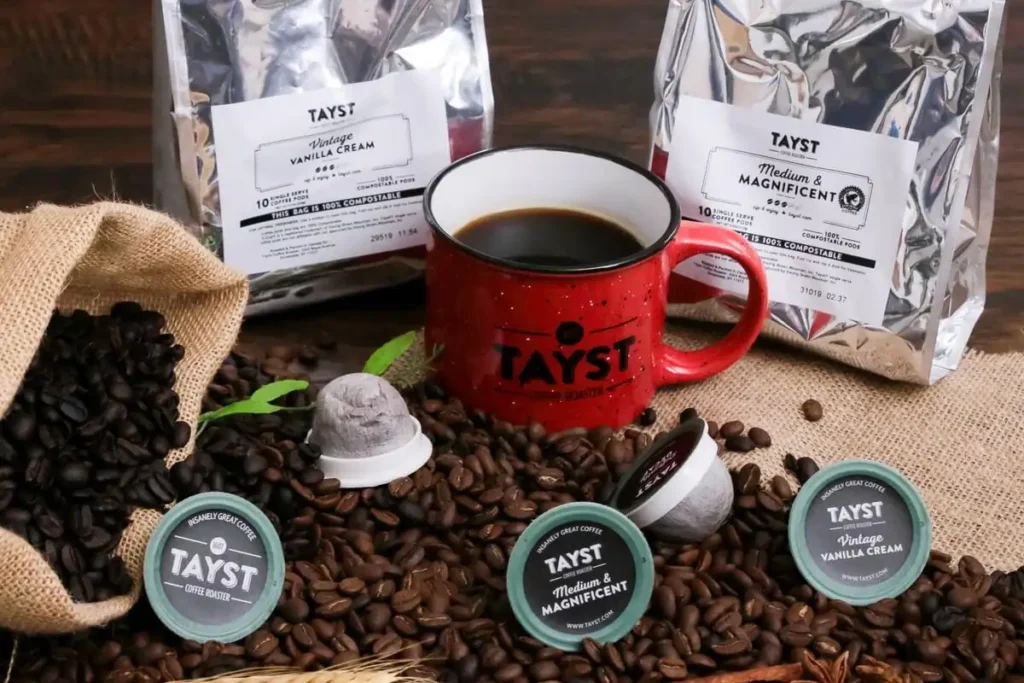
The pods are the headline product. They are BPI certified compostable, built around a mesh filter instead of plastic, and the lid peels off like a yogurt cup. No aluminum. No #7 plastic.
The lineup runs 13 deep. Four core blends, four flavored, two specialty (half-caff and Swiss Water decaf), and three espresso capsules named after the Italian inventors of the espresso machine. Cute branding. Decent coffee.
The Compostable Pod Claim, Tested
Here's the thing nobody tells you about compostable coffee pods… most of them are lying. Or technically not lying, but using “compostable” the way fast food uses “fresh.”
Tayst is BPI Certified. That means the pod meets ASTM D6400 standards for breakdown in a commercial composting facility, typically within 84 days at sustained heat above 55°C. ⚙️
What it does NOT mean:
I tore one apart. The body is a plant-fibre composite, the lid is a thin compostable film, and the filter is a fine mesh that drains cleanly. No plastic ring. No aluminium foil. The materials check out.
The honest caveat: if your city does not have an industrial composting program, your Tayst pod ends up in landfill anyway, where it will still degrade slower than the marketing implies. That's a real limitation. Tayst doesn't hide it, but it's not on the front of the box either.
How “Compostable in Months” Actually Works
Commercial composting runs hot. 130°F to 160°F sustained, with active microbial turnover. Under those conditions, BPI-certified materials hit 90% breakdown in roughly 12 weeks.
Your backyard pile peaks around 90°F to 110°F if you're doing it right. Same pod could take 12 to 24 months to disappear, sometimes longer. So when Tayst says “compostable in months,” they mean industrial. Read the fine print.
My Personal Experience With Each Tayst Format
I didn't want to review this from a spec sheet. So I ordered all four formats over a few weeks, used each one in its natural habitat, and wrote down what actually happened.
Pods for Keurig: The Weekday Test
I ordered the Keurig pods first because, honestly, that's the format I was most skeptical about. Compostable k-cups have burned me before. One brand I tried last year literally collapsed mid-brew and dumped grounds into my mug.
The box arrived in two days, wrapped in a brown recycled mailer with no plastic film, no excess foam, just pods sitting in a printed sleeve. First thing I noticed when I opened it… the smell. Not stale, not “k-cup factory.” It smelled like a fresh bag of beans someone had just cracked open. That alone told me the seal was doing its job.
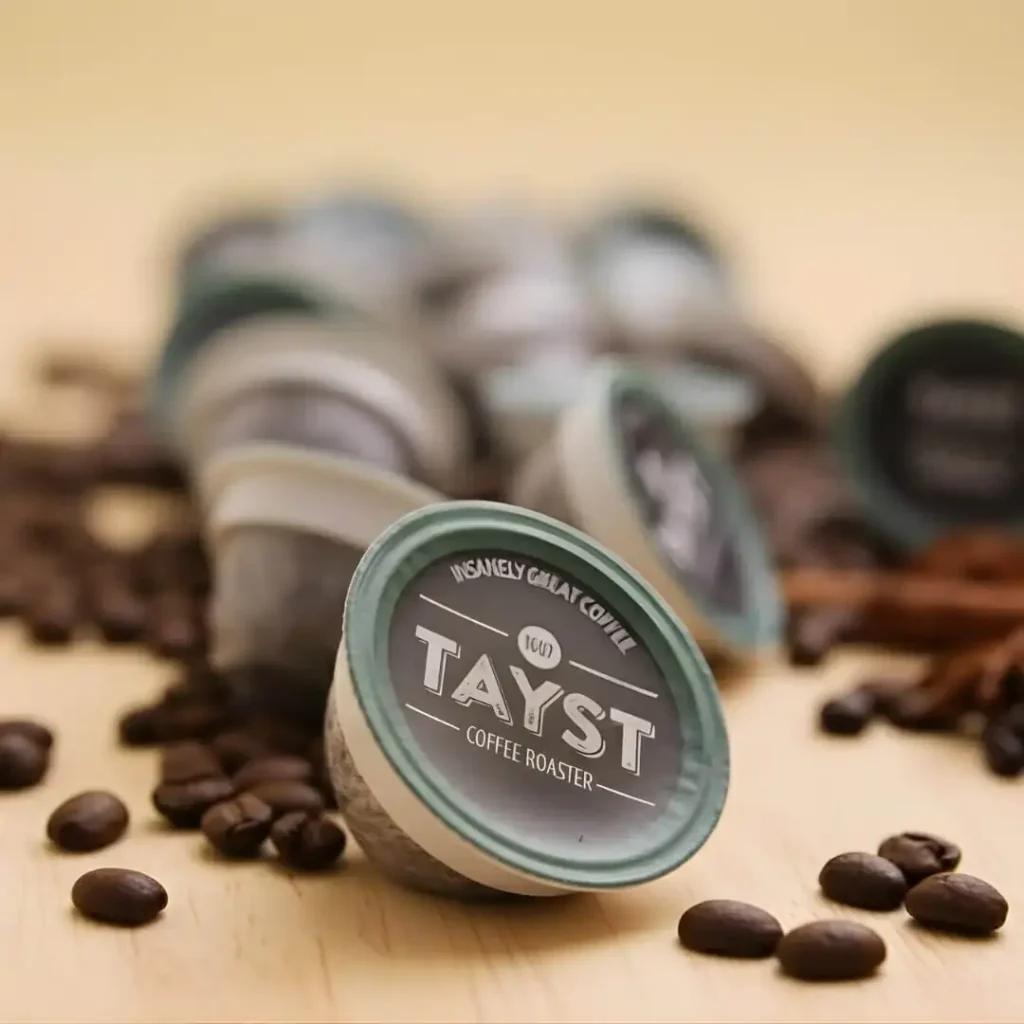
I started with Bold & Brazen on a Monday morning, K-Elite set to 8 oz, brew temp at 192°F. The pod stayed structurally solid through the whole pour. No collapse. No bypass. The cup that came out had a darker color than my usual Green Mountain pods, and the smoky cocoa finish they advertise actually showed up… not as a marketing line, but as something I could taste on the back of my tongue.
Compared to a regular Keurig pod, it drinks heavier. Less watery. The mouthfeel is the biggest jump. Where a typical grocery k-cup feels thin by the third sip, Tayst stays full.
👍 Best use case: rushed weekday mornings when you're brewing one cup, walking out the door, and don't want to feel like you're drinking sad office coffee. This is where Tayst actually earns the price premium.
The small detail that sold me: the spent pod came out of the machine warm, intact, and easy to toss into my compost caddy without dripping coffee mud across the counter. That never happens with foil-lid pods.
Capsules for Nespresso: The Saturday Espresso Ritual
The Nespresso capsules were a different motivation. My OriginalLine machine is the one I use on weekends, when I have time to actually pay attention to a shot. I wanted to see if Tayst could hold up against the aluminium capsules I usually buy in 50-packs.
The capsules came in a separate shipment, tucked into a slim cardboard sleeve. They feel lighter than aluminium in your hand. Almost cardstock-light. First reaction was a small flicker of doubt… could something this thin actually handle 19 bars of pressure?
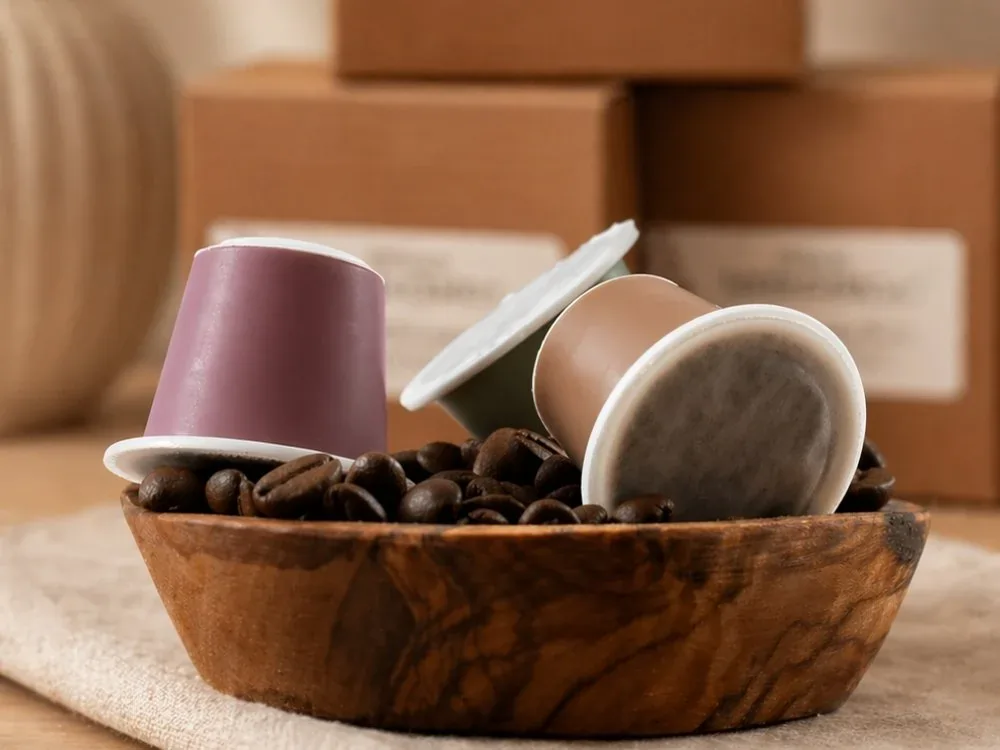
I pulled a Pavoni on Saturday morning, fresh water, cup pre-warmed, the whole bit. The shot ran a touch faster than aluminium, maybe two seconds quicker, and the crema came out thinner and lighter in color. Not absent. Just modest. The flavour, though… clean. Real cocoa on the finish, no metallic edge that you sometimes get from aluminium capsules sitting on a shelf for six months.
Versus my usual Nespresso Roma, Tayst tasted fresher and less roasted-bitter, but I missed the dense crema. It's a tradeoff, not an upgrade.
Best use case: Saturday and Sunday mornings, milk-based drinks where the crema matters less, and anyone who's slowly trying to phase aluminum out of their kitchen. For straight espresso shots over ice, it works. For a serious cortado where you want the crema staring back at you, the OEM still wins.
The thing I liked most: the spent capsule peels apart cleanly. The puck slides into the compost in one piece. No hunting for a recycling drop-off bag.
Whole Bean Coffee: The Grinder Justification
I ordered the whole bean almost as an afterthought. I had a Niche Zero sitting on the counter and figured if Tayst's pods were good, the actual beans should be the truer test of the roast quality.
The bag arrived in a kraft pouch with a one-way valve and a roast date printed by hand on the back. Six days from roast to my door. That's specialty-roaster territory, not subscription-brand territory. I wasn't expecting it.
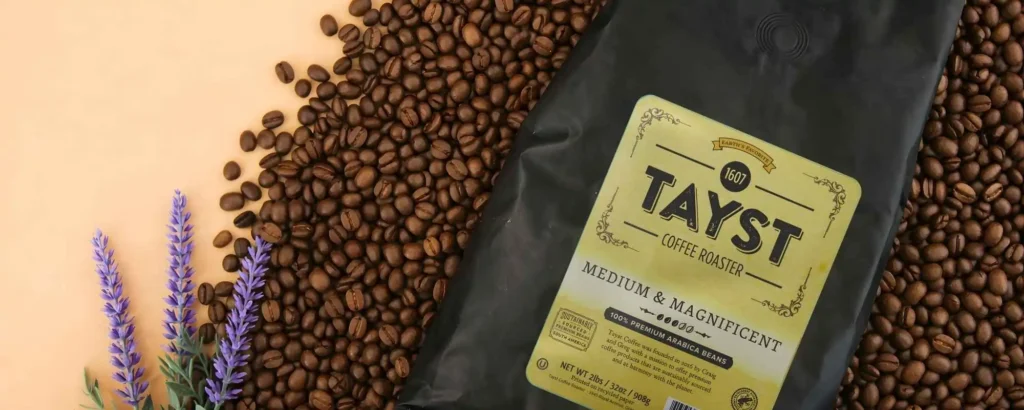
I cracked the seal and got that loud, almost violent rush of CO2 you only get from genuinely fresh beans. Bold & Brilliant in the bag, and the aroma was rounder than the same blend in pod form… more caramel, more cocoa, less smoke. I let it rest for one more day, then dialed it in on the V60 at a 1:16 ratio.
The bloom was aggressive. A real dome, no flat puddle, which means the beans are still actively degassing. The cup tasted noticeably brighter than the Keurig pod version of the same blend. Caramel in the front, a clean nutty middle, dry chocolate finish.
Compared to a typical supermarket “premium” whole bean (think Stumptown or Peet's bagged), Tayst was fresher by date, slightly less complex on origin character, but cleaner in the cup. It's a roast you can drink black for a full week without getting bored.
👍 Best use case: anyone with a real grinder who wants subscription convenience without giving up the freshness of a local roaster. Pour-over, French press, AeroPress, all of it sings here.
Small detail I appreciated: the bag stands up on its own. Sounds dumb. But after years of slumping coffee bags falling over in my pantry, the flat-bottom pouch was a small win.
Ground Coffee: The Drip Pot Comeback
Ground coffee was the format I had the lowest expectations for. Pre-ground anything is usually a compromise. But my parents were visiting and they brew a 10-cup drip pot every morning, no exceptions, no negotiation. I needed something that would work for them.
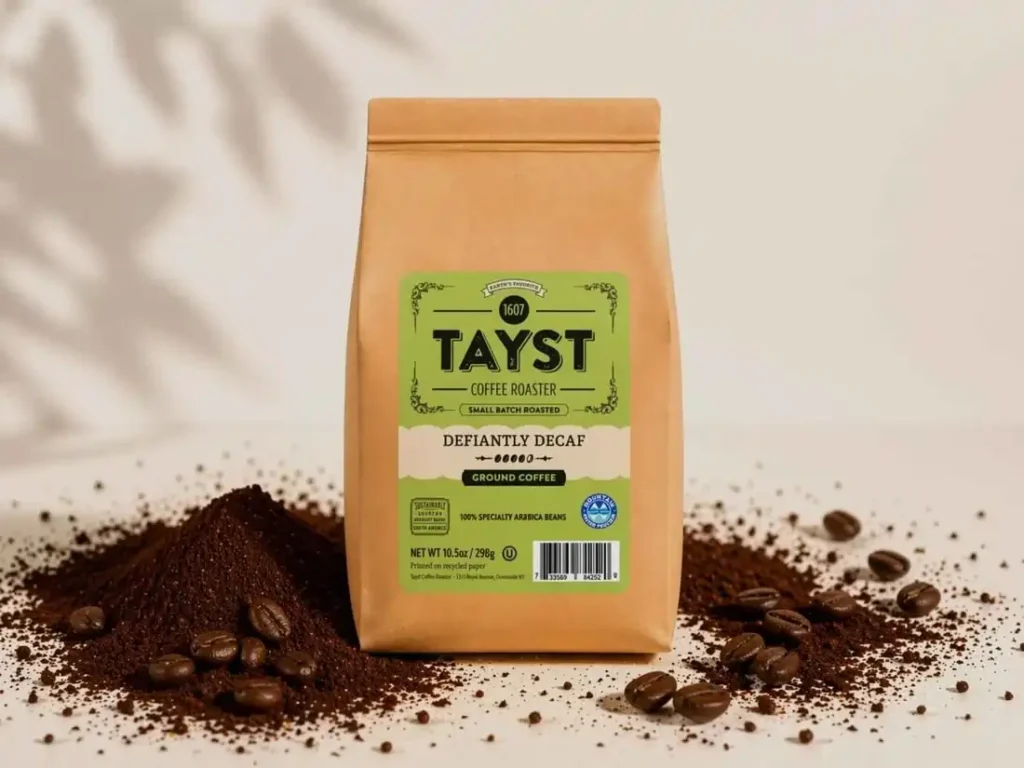
The bag arrived sealed tight, valve hissing slightly when I pressed it. Grind looked uniform, medium-coarse, suitable for drip without being too fine for a French press in a pinch. Smell on the open was strong, sweet, with that signature Tayst caramel-cocoa background.
I brewed Medium & Heroic in a basic Mr. Coffee 10-cup, which is about as unromantic as drip gets. The cup came out smooth, no bitterness even after sitting on the warmer for 20 minutes (a real torture test for any coffee). My dad, who has been drinking the same Folgers can since 1994, said “this is actually nice.” That's the highest review you'll ever pry out of him.
Versus a typical pre-ground supermarket bag, Tayst tasted like it hadn't been sitting on a pallet for nine months. The grind hadn't gone flat. The flavor held through the second pot of the morning, which almost no pre-ground does.
👍 Best use case: family households, drip pot loyalists, hotel-style mornings where you're brewing for three or four people, and anyone who refuses to own a grinder but still wants their coffee to taste alive.
The detail that stuck with me: my mom asked where I bought it before she'd even finished her first cup. She has never asked about a coffee in 30 years. ☕
Brew Performance: Format vs Format, By the Numbers
The numbers matter here. 📊
| Format | Extraction Quality | Notes |
|---|---|---|
| Keurig pods | 8.5 / 10 | Mesh filter drains evenly, no channeling |
| Nespresso capsules | 7 / 10 | Crema thinner than OEM, flavor cleaner |
| Ground coffee | 9 / 10 | Genuinely fresh, fines well-controlled |
| Whole bean | 9 / 10 | Roast date within 2 weeks of shipping |
The Keurig pods perform better than they have any right to. Most compostable k-cups choke partway through the brew because the filter is too dense. Tayst's mesh holds up across the full 8 oz pour.
The Nespresso capsules are the weakest format. They work, they taste good, but they don't quite match aluminium on crema or pressure consistency.
The bagged coffee, ground or whole bean, is the best value in the lineup. Roasted in small batches, shipped within days, and ground fresh enough to bloom properly in a V60.
Sourcing and Ethics: Rainforest Alliance, Verified
Tayst sources from Rainforest Alliance Certified farms. That certification covers environmental practices (forest protection, soil health, biodiversity), social standards (fair labor, no child labor), and basic economic transparency.

It is not the same as Fair Trade or Direct Trade. Rainforest Alliance is a broader, lighter-touch standard. It's a real signal, but not the strongest one in specialty coffee.
For a single-serve pod brand at this price, Rainforest Alliance is appropriate and credible. If you're buying based purely on farmer payment transparency, look at direct-trade roasters instead.
The Math: Cost Per Cup, Honestly
Worth the money? Let's actually do the math. 📊
| Brand | Price per Pod | Compostable | Certified |
|---|---|---|---|
| Tayst (subscription) | $0.79 to $0.89 | Yes | BPI |
| Tayst (one-time) | $0.95 to $0.99 | Yes | BPI |
| Keurig OEM original | $0.55 to $0.75 | No | None |
| Nespresso OEM | $0.85 to $1.10 | Recyclable | Aluminum recycle program |
| Lavazza Eco Caps | $0.65 to $0.80 | Yes | OK Compost |
| San Francisco Bay OneCup | $0.40 to $0.55 | Partial | BPI mesh, plastic ring |
Tayst sits in the middle of the compostable pod market. Cheaper than Nespresso OEM, more expensive than San Francisco Bay, roughly tied with Lavazza on price but with better US availability.
The opportunity cost vs standard Keurig pods is about $0.20 to $0.30 per cup. For one cup a day, that's roughly $90 a year extra to drink plastic-free.
Environmental Impact: The 100 Million Cups Claim
Tayst markets that they've helped divert 100 million plastic cups from landfill. I can't independently audit that number, but the math is plausible based on their reported subscriber base and pod volume.
Here's the honest read… 100 million pods is a real number. It is also a tiny fraction of the roughly 56 billion K-Cups sold globally each year. Tayst is not solving the pod waste crisis. They are offering a less-bad option for people who already use single-serve. That's a fair claim, not a heroic one.
Discovery Box: Is the Starter Worth It?
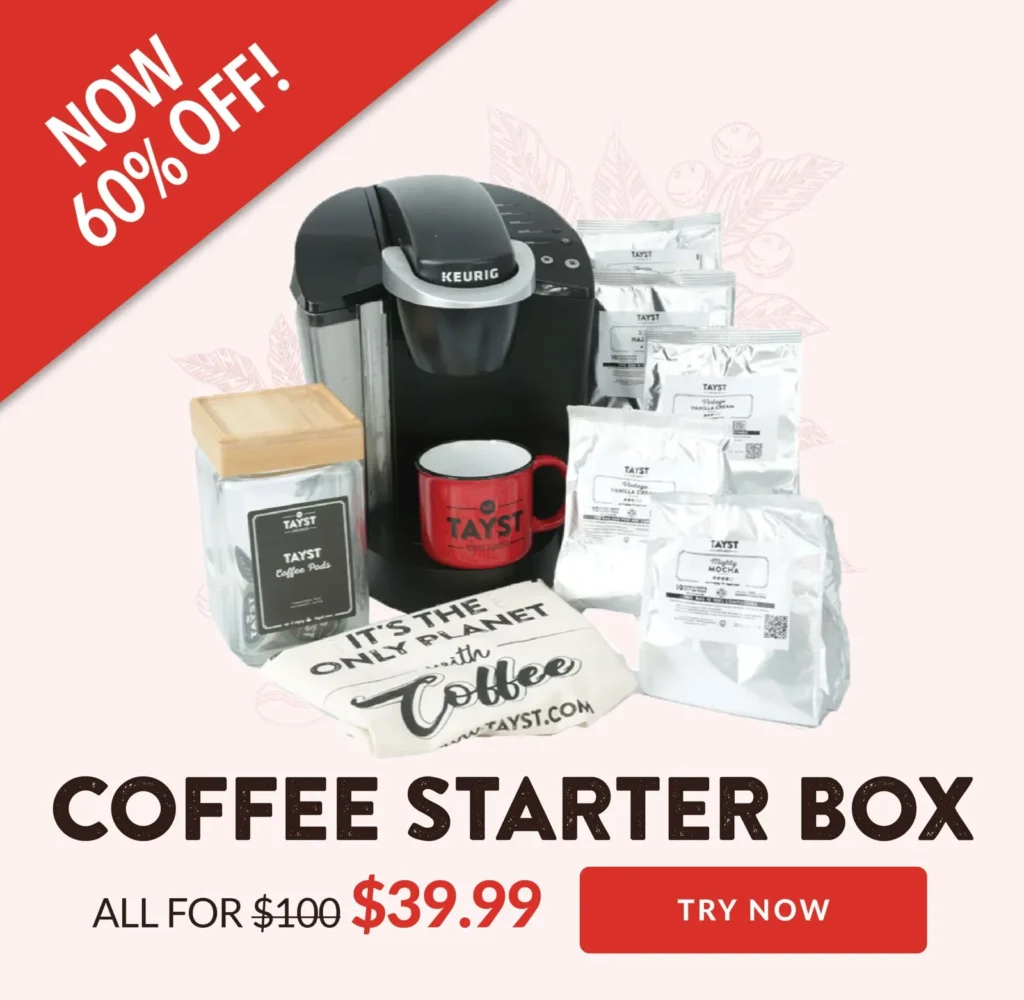
The Tayst Discovery Box runs around $20 to $30 depending on format and includes 30 to 40 pods spanning the lineup. Per-cup, you're paying roughly $0.65 to $0.85, which is the cheapest way to test the brand.
The Discovery Box is the only way I'd recommend starting with Tayst. Subscribing blind to a single blend is a gamble. The variety pack lets you find your blend before you commit.
Pros and Cons: The Honest Read
Pros:
Cons:
Who Should Buy Tayst (And Who Shouldn't)
✅ Buy Tayst if you:
❌ Skip Tayst if you:
If you're still deciding between pods and bagged coffee, our guide to the best burr grinders under $200 is worth reading first… a real grinder plus Tayst whole bean is a better cup than any pod, full stop.
FAQ: Tayst Coffee Questions Answered
Are Tayst pods home compostable?
No. Tayst pods are BPI certified compostable, which is a commercial composting standard. They require sustained heat and microbial activity available only in industrial facilities. In a home bin, they will break down eventually but slowly, often over a year or more.
Do Tayst pods work in all Keurig machines?
Yes, Tayst pods are compatible with all standard Keurig brewers, including K-Classic, K-Elite, K-Mini, K-Supreme, and K-Duo. They are not designed for Keurig 2.0 with the discontinued DRM lockout, but those machines accept any pod once unlocked.
Is Tayst specialty grade coffee?
Tayst sources Rainforest Alliance Certified beans roasted in small batches. It is not formally cupped as 80+ specialty grade by the SCA, but the cup quality is well above commodity grocery k-cups. Call it premium commercial, leaning specialty.
Can I cancel the Tayst subscription anytime?
Yes. Tayst lets you skip, pause, or cancel through your account dashboard with no minimum commitment. Most subscribers report easy cancellation without phone or email friction.
Do Tayst Nespresso capsules fit VertuoLine machines?
No. Tayst capsules are made for Nespresso OriginalLine only. VertuoLine uses a different barcode-based brewing system and will not recognize them.
Is Tayst coffee organic?
Tayst is Rainforest Alliance Certified but not USDA Organic. The two certifications cover different things… Rainforest Alliance focuses on environmental and social standards, while organic certification specifically restricts pesticides and synthetic inputs.
Final Verdict
Tayst is the compostable pod brand I'd actually keep in my kitchen. The coffee is good, not amazing. The compostability is real, with real caveats. The price premium is fair, not cheap.
If you currently drink Keurig pods and feel guilty about the plastic, Tayst is the easiest switch you can make without changing your brewer or your routine. Start with the Discovery Box. Try Bold & Brilliant first. Skip the Pumpkin Crush.
For everyone else, the bagged ground or whole bean is the sleeper pick. Fresher than supermarket bags, ethically sourced, and cheaper per cup than the pods.