Royal Kona Coffee Review: Hawaii’s Famous Bean, Tested Honestly

Okay but hear me out…
I paid $45 for a bag of Hawaiian coffee so you'd know if it's actually worth it. 🌿
Not because I'm rich. Not because I'm a coffee snob. Because I'd been hearing about Kona coffee for years… that mythical Hawaiian bean that supposedly tastes like sunshine and volcanic soil and aloha. And I wanted to know if a budget-conscious coffee drinker like me should ever splurge.
So I bought the Royal Kona Private Reserve Medium Roast 100% Kona Coffee. I brewed it three ways. I also tested their 10% Kona Blend, because that's where most people actually start.
Here's my honest Royal Kona coffee review… the good, the not-so-good, and whether the Kona coffee price is justified.
Royal Kona Coffee: Quick Verdict & Key Facts
| What You Need to Know | The Honest Answer |
|---|---|
| Worth it? | Yes for the 100% Kona. Skip most of the 10% blends. |
| Best for | Budget-conscious drinkers wanting one real Hawaiian splurge |
| Price range | $13.95 (10% blend) to $149.95 (2lb 100% Kona) |
| Taste rating | 4.2/5 for Private Reserve. 2.5/5 for 10% blends |
| Value rating | Fair. Not cheap, but legit Hawaiian origin |
| Biggest red flag | The 10% Kona blend is 90% something else |
| Buy if | You want a treat-yourself moment with real Kona |
| Skip if | You think the 10% blend tastes like 100% Kona |
What Makes Kona Coffee Actually Kona?
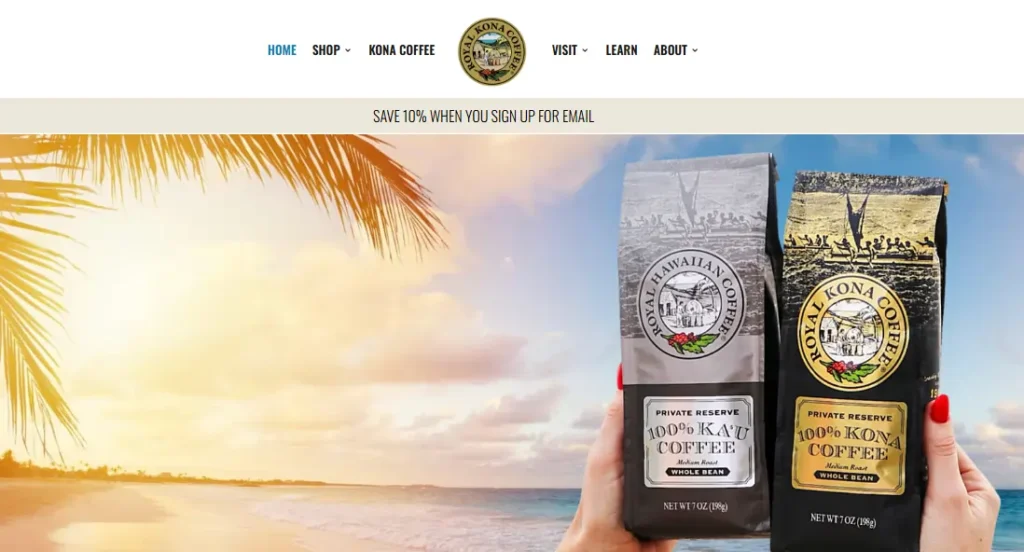
Real Kona coffee comes from a 20-mile strip on the western slopes of Hualalai and Mauna Loa volcanoes in Hawaii.
That's it. That's the whole zone.
The volcanic soil, the elevation, the morning sun and afternoon cloud cover… it creates a microclimate you genuinely can't replicate anywhere else. The beans are hand-picked. The yields are tiny compared to Brazil or Colombia. That's why pure Kona costs what it costs.
Royal Kona has been roasting these beans since 1969. They were one of the first companies to take Kona coffee to the mainland, working directly with the original farmers when nobody outside Hawaii had even heard of it. That history matters… it's why their sourcing feels like the real thing and not a tourist gimmick.
When you see “100% Kona Coffee” on a bag, that means every single bean was grown in that Kona Coffee Belt. When you see “10% Kona Blend”… that's a different conversation entirely. We'll get there.
My French Press Test: Royal Kona Private Reserve Medium Roast
I brewed the Private Reserve three ways. French press. Pour-over. Drip. The French press is where it sang. ☕
No exaggeration when I say… this was one of the smoothest cups I've had in a long time.
The flavor is mellow. Buttery. There's a soft brown sugar sweetness and a finish that tastes faintly like toasted macadamia, even though nothing is added. It's not punchy. It's not loud. It's the kind of coffee that makes you slow down on a Sunday morning.
The Private Reserve is genuinely worth the splurge if you've never tried 100% Kona before.
Pour-over brought out a little more brightness… a soft citrus note I didn't get from the press. Drip was the weakest of the three. Decent, but you lose the body that makes this bean special. If you're spending $34.95 to $149.95 on a bag, brew it manually. Don't waste it on a Mr. Coffee.
What it tastes like
Where I think it falls short
The 10% Kona Blend Scam Warning (Read This Before You Buy)
Okay this is where I have to be honest with you.
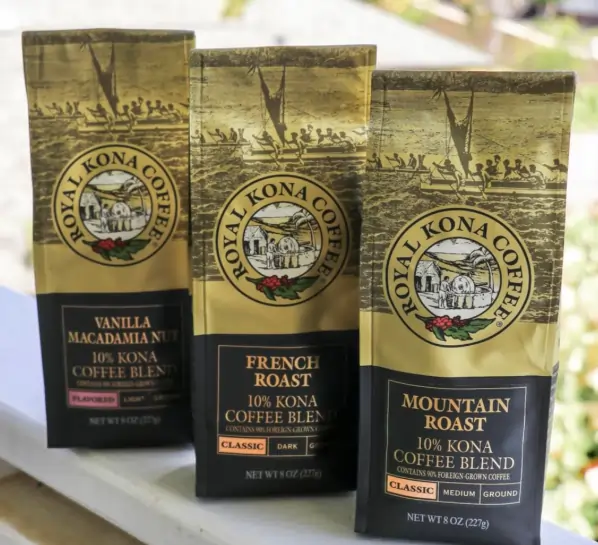
The 10% Kona blend is not Kona coffee. It's 10% Kona and 90% something else, usually unnamed Central or South American beans. Hawaii state law allows the “Kona Blend” label as long as 10% is real Kona. That's the only requirement.
At 10%, you are not tasting Kona. You are tasting filler with a whisper of Kona.
I tested Royal Kona's Mountain Roast 10% Kona Blend ($13.95) side by side with the Private Reserve. The blend tasted… fine. Roasty. A bit generic. Pleasant enough as a daily driver. But if you handed me that cup blind and told me it was Kona, I'd laugh.
The flavored options like Chocolate Macadamia, Vanilla Macadamia, and Toasted Coconut are all 10% blends too. They're tasty in a vacation-souvenir kind of way. The flavoring is the star, not the coffee. If you love flavored coffee and you want a Hawaiian-themed gift, fine, go for it. Just know what you're buying.
This isn't unique to Royal Kona. The whole Hawaiian coffee industry uses these blends because real Kona is too scarce and too expensive to put in a $13 bag. But it's worth saying loud: the 10% Kona blend label is one of the most misleading things in mainstream coffee marketing.
When the 10% blend actually makes sense
When to absolutely skip the 10% blend
Royal Kona vs Koa Coffee: Which Hawaiian Roaster Wins?
This is the comparison I get asked about most. Royal Kona vs Koa Coffee. Both are legacy Hawaiian brands. Both sell 100% Kona and blends. So which one actually delivers?
| Factor | Royal Kona | Koa Coffee |
|---|---|---|
| Founded | 1969 | 1997 |
| 100% Kona price (8oz) | ~$34.95 | ~$39.95 |
| Roast style | Medium, mellow, balanced | Slightly bolder, more complex |
| Best for | First-time Kona drinkers | Coffee people chasing brightness |
| Blend honesty | Clear 10% labeling | Clear 10% labeling |
| Vibe | Heritage, traditional | Boutique, gourmet-leaning |
Royal Kona is the gentler, more accessible cup. Koa Coffee leans a touch more complex and a touch more expensive. If you're new to Hawaiian coffee and you want the classic, smooth, easy-drinking experience… Royal Kona wins. If you've already had Kona before and you want something with more brightness and a bit more attitude… Koa might suit you better.
For my budget-conscious treat-yourself moment? Royal Kona was the right call. The price is slightly lower, the experience is more forgiving, and the heritage means something.
Is the Kona Coffee Price Justified?
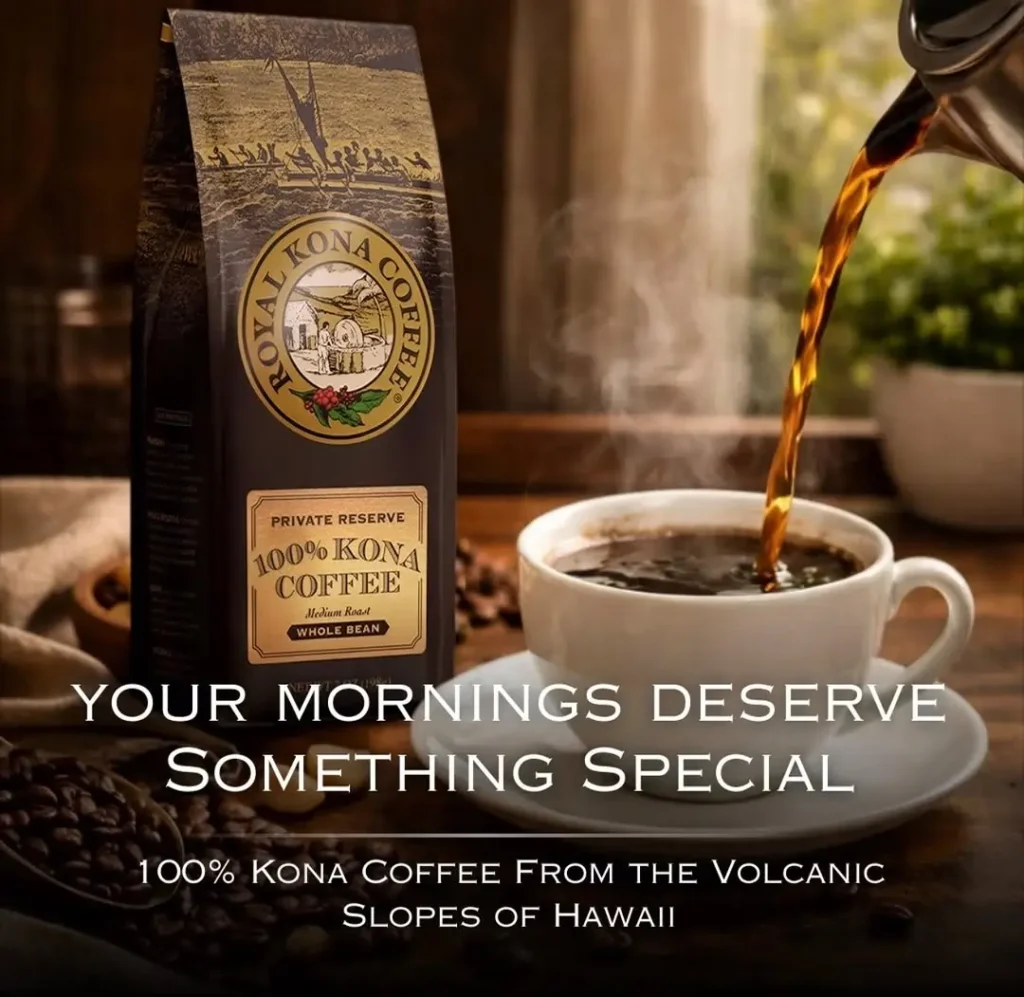
Short answer… yes for 100% Kona, no for the 10% blends if you're paying for “Hawaiian coffee” and getting mostly something else.
Real Kona coffee is one of the most labor-intensive coffees in the world. Every bean is hand-picked because the cherries on a single tree ripen at different times. Hawaiian labor costs are higher than every other coffee-growing region. The total annual Kona harvest is tiny… we're talking under 3 million pounds for the whole region. Compare that to Brazil's billions of pounds.
So when you pay $34.95 for an 8oz bag of Private Reserve, you're paying for:
For one bag a year as a treat? Absolutely justified. For your everyday cup? Not realistic on a normal budget.
That's how I'd frame it. This is special-occasion coffee. Birthday coffee. Gift coffee. Sunday morning when you actually have time coffee. Not Tuesday-rushing-to-work coffee.
If you're looking for an everyday Hawaiian-adjacent option, the Royal Hawaiian 100% Ka'u Coffee at $34.95 is actually a smart move. Ka'u is grown in a different Hawaiian region, slightly less famous, often slightly cheaper bean for bean, and honestly delicious in its own right.
How to Brew Royal Kona to Get Your Money's Worth
If you're spending real money on real Kona, brew it like it deserves. Here's what worked best for me.
This bean rewards a slow morning. It punishes rushed brewing. If you've also been thinking about upgrading your setup, our guide to manual brewing for beginners is worth reading before you spend $35 on beans.
Pros and Cons: Royal Kona Coffee, Honest Edition
What I genuinely loved:
What I didn't love:
Who Should Actually Buy Royal Kona Coffee
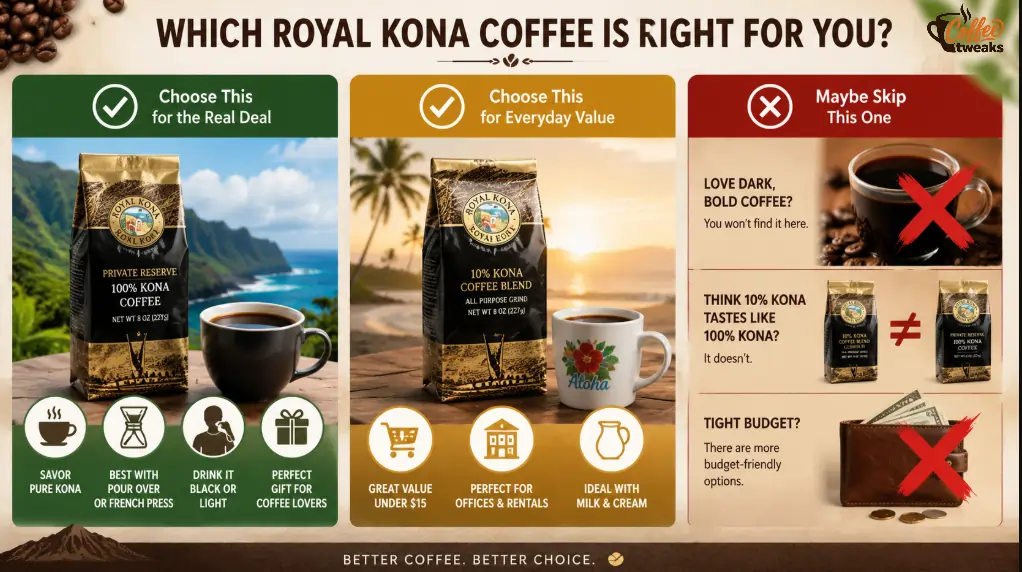
Buy the Private Reserve 100% Kona if:
Buy the 10% Kona Blend if:
Skip Royal Kona entirely if:
Royal Kona Coffee FAQ
Is Royal Kona coffee actually 100% Kona?
Only their products specifically labeled “100% Kona Coffee” are pure Kona, like the Private Reserve Medium Roast. Anything labeled “10% Kona Blend” is 90% non-Kona beans from other origins.
Why is Royal Kona coffee so expensive?
Real Kona coffee is hand-picked on volcanic slopes in Hawaii, grown under US labor standards, and produced in tiny quantities each year. The Private Reserve runs $34.95 to $149.95 because genuine Kona is one of the rarest specialty coffees in the world.
Is Royal Kona or Koa Coffee better?
Royal Kona is smoother, more traditional, and slightly cheaper, which makes it ideal for first-time Kona drinkers. Koa Coffee tends to be brighter and more complex, better for experienced specialty coffee drinkers chasing nuance.
What does Royal Kona coffee taste like?
The 100% Kona Private Reserve tastes mellow and buttery with brown sugar sweetness and a soft toasted nut finish. It's low-acid, medium-bodied, and best black or with very light cream.
Is the 10% Kona blend worth buying?
Only if you want a Hawaiian-themed flavored coffee for under $15 and don't expect it to taste like real Kona. For an authentic Kona experience, the 10% blend is not worth it.
How should I brew Royal Kona for the best flavor?
Use a French press or pour-over with a 1:15 to 1:16 ratio and water at 200°F. Drip coffee makers waste the subtle character of 100% Kona, so manual brewing is the move.
Final Verdict: Royal Kona Coffee Rating
Smooth, mellow, genuinely Hawaiian, and worth the splurge once or twice a year. The French press brings out the best of it. The Kona coffee price is justified for the 100% product. This is treat-yourself coffee done right.
Fine as flavored daily coffee. Not fine as a representation of Kona. Buy with eyes open.
That's the honest take. One bag of real Kona, brewed slowly on a Sunday morning, is one of the nicer things you can do for yourself for under $40. Just don't let the 10% blend label fool you into thinking it's the same coffee. It isn't. ☕✨