How to Make a Latte at Home Without a Machine (Café Quality)


Okay but hear me out… 🌿
I used to spend $6 a day on lattes. That's $180 a month. On milk and espresso. In a paper cup.
Then one rainy Tuesday in Barcelona I made one at home that tasted better than my usual café order. No fancy machine. Just a stovetop pot, a jar, and a bit of patience.
This is the homemade latte recipe I wish someone had handed me three years and roughly $2,000 ago.
Quick Answer: Can You Make a Café-Quality Latte at Home?
Yes. A real milk latte at home takes about 4 minutes, costs around $0.70 per cup, and tastes like a café latte if you get two things right: strong coffee and properly textured milk. You do not need an espresso machine.
Café Latte at Home: The Honest At-a-Glance
| What You Need to Know | The Honest Version |
|---|---|
| Time per latte | 4 to 5 minutes once you've done it twice |
| Cost per cup at home | About $0.50 to $0.90 |
| Cost at a café | $5 to $7 |
| Espresso machine required? | No, genuinely no |
| Hardest part | Steaming milk without a steam wand |
| Will it taste exactly like Starbucks? | No. It'll taste better. ☕ |
Why Make a Latte at Home in the First Place
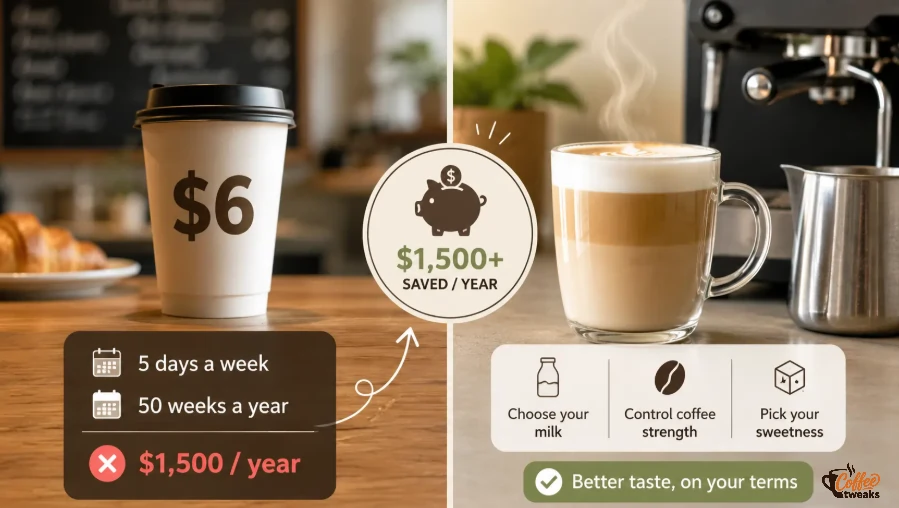
I did the math one morning and almost choked on my croissant. ✨
$6 a day, five days a week, fifty weeks a year. That's $1,500. For something I can make in my kitchen in less time than it takes to walk to the café.
The easy latte recipe below isn't just cheaper. It's also better, because you control the milk, the coffee strength, and how much sugar sneaks in. No more mystery syrup pumps.
What You Actually Need to Make a Latte at Home
Here's the honest list. Not the Pinterest list.
That's it. No $700 machine. No portafilter. No barista certification.
If you already have a Moka pot tucked in the back of a cupboard from that one Italy trip, congratulations. You own an espresso maker.
The Espresso (Or the Strong Coffee Equivalent)
A latte is roughly 1 part espresso to 3 parts steamed milk, topped with a thin layer of foam. So the coffee has to be strong enough to taste through the milk.
Drip coffee won't cut it. I've tried. It just tastes like sad warm milk with a hint of regret.
Best espresso alternatives at home
For a milk latte at home, aim for around 2 oz (60ml) of very concentrated coffee. That's your base.
Grind size matters more than you think
Fine grind for Moka pot and AeroPress espresso style. Not powder fine, not drip coarse. Think table salt. If your coffee tastes sour, grind finer. Bitter? Go a touch coarser.
How to Steam Milk Without a Steam Wand
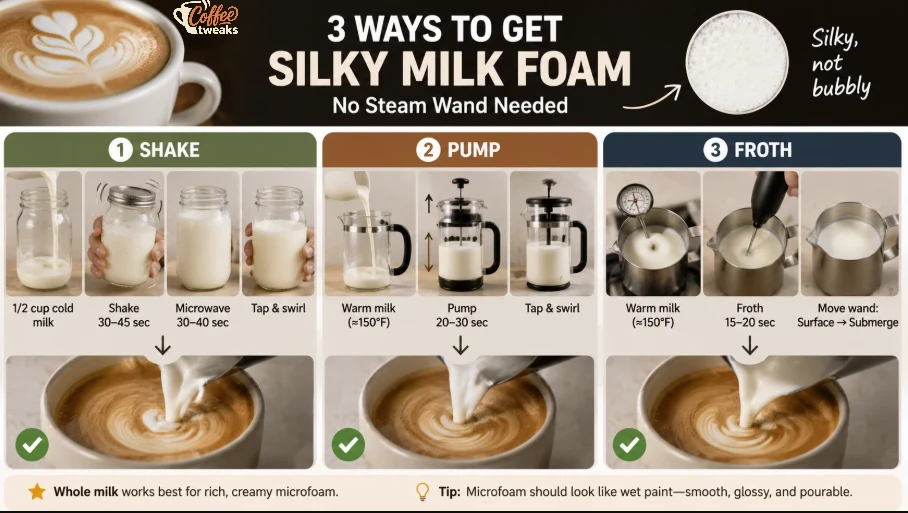
This is where most home lattes fall apart. People pour hot milk over coffee and call it a latte. That's a café au lait. Different drink.
A real latte needs microfoam: silky, glossy milk with tiny bubbles you can barely see. Like wet paint. Not bubble bath foam.
The Mason Jar Trick (My Go-To)
This changed my whole morning routine.
The microwave heat sets the foam and breaks the big bubbles. You'll see it go from bubbly to silky in real time. It's oddly satisfying.
French Press Pump
Better texture than the jar method. Slightly more cleanup.
Handheld Milk Frother
A $15 battery-powered wand. Honestly? The most consistent way to make café-style microfoam at home if you don't want to shake a jar at 7am.
Heat milk first, then froth for 15 to 20 seconds, holding the wand just below the surface to pull air in, then submerge to texture.
Whole milk vs oat milk vs almond milk
| Milk Type | Foam Quality | Taste in Latte |
|---|---|---|
| Whole dairy milk | Best, creamiest microfoam | Classic, rich, sweet |
| Oat milk (barista blend) | Surprisingly excellent | Creamy, slightly nutty |
| Almond milk | Thin, big bubbles | Watery unless barista version |
| Skim milk | Foams big but dry | Tastes hollow |
I didn't expect to love oat milk but… it's now my daily driver. The barista versions are formulated to foam. Regular oat milk in a carton is a sad foam experience.
How to Pour a Latte (And Maybe Attempt Latte Art)
Pull your shot. Pour it into a warm mug. Now the fun part.
- Hold your milk pitcher (or jar) high above the mug.
- Pour a thin stream into the center of the espresso. This mixes the milk under the crema.
- When the cup is half full, lower the pitcher close to the surface.
- Pour faster, into the same spot. The white foam will start to surface.
- As you finish, lift and pull through the center to make a line.
You just made a heart. Maybe. The first ten will look like clouds. Or amoebas. That's normal.
Why your latte art keeps failing
The Step-by-Step Milk Latte at Home (All Together Now)
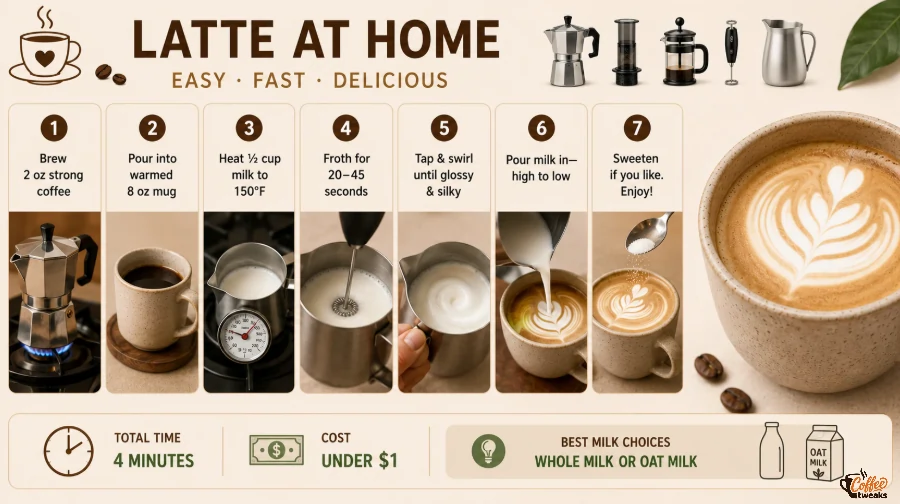
Here's the full easy latte recipe, beginning to end.
Total time: 4 minutes. Cost: under a dollar.
My Honest Opinion After Three Years of Home Lattes
No exaggeration when I say… I haven't bought a café latte in months. Not because I'm proud. Because mine are better.
Café lattes are convenient. But they're often too hot, oversweetened, and made by someone working through 200 drinks an hour. A homemade latte is intentional. Quieter. Yours.
The first week is rough. You'll burn milk. You'll make a watery one. You'll froth so hard the lid pops off the jar (I've been there, twice, on a white shirt).
Then around day five, something clicks. The milk goes silky on the first try. The pour looks almost like a tulip. And you realize you just saved $6 and made something genuinely delicious.
And honestly? That's the whole point.
Latte Variations to Try Once You Nail the Basic

Once the base recipe is muscle memory, the fun starts.
If you're also exploring milk alternatives in depth, our guide to the best oat milks for home lattes is worth a read before your next grocery run. And if you're ready to upgrade your coffee setup, we have a piece on Moka pots vs AeroPress for home espresso that'll save you a few wrong purchases.
Common Beginner Mistakes (I Made All of These)
Is Making a Latte at Home Actually Worth It?
Yes. Without question.
You'll save roughly $1,300 to $1,500 a year if you were a daily café latte person. You'll get better at coffee. You'll start your morning without a 15-minute detour and a tip jar.
The only thing you lose is the cute cup. Buy a nice mug. Problem solved. ✨
Homemade Latte Recipe: Everything in 7 Lines
Frequently Asked Questions
Can you really make a latte without an espresso machine?
Yes. A Moka pot, AeroPress, or even instant espresso powder makes coffee strong enough for a latte. The milk technique matters more than the machine.
What's the difference between a latte and a cappuccino?
A latte is mostly steamed milk with a thin layer of foam. A cappuccino has equal parts espresso, steamed milk, and thick foam. Lattes feel creamier. Cappuccinos feel airier.
Why doesn't my homemade latte taste like the café?
Two reasons. Either your coffee isn't strong enough, or your milk isn't textured properly. Drip coffee with hot milk is not a latte. Use Moka pot or AeroPress espresso and froth your milk to silky microfoam.
What's the best milk for making a latte at home?
Whole dairy milk gives the creamiest foam. Barista-blend oat milk is the best non-dairy option and foams almost as well. Skim and regular almond milk struggle to hold microfoam.
How do I steam milk without a steam wand?
Shake hot milk in a sealed mason jar for 30 seconds, or pump warm milk in a French press. A $15 handheld frother is the easiest option for daily use.
How much does it cost to make a latte at home?
Roughly $0.50 to $0.90 per cup, depending on your beans and milk. Compared to a $5 to $7 café latte, you save around $1,400 a year if you drink one daily.
Can I make a latte with regular ground coffee?
Only if you brew it very concentrated, like a strong AeroPress or Moka pot shot. Standard drip coffee is too watery and will taste flat under steamed milk